SUMMARY: Nuclear expert Arnie Gundersen: Fukushima continues to irradiate the Pacific. Plume reaching West Coast. Where is next American Fukushima? Diablo Canyon in California? Then Naomi Klein's new vision "This Changes Everything".
Welcome to Radio Ecoshock and what a show we have for you this week! Arnie Gundersen covers the world's worst nuclear dangers, from
the on-going poisoning of the Pacific Ocean by the melt-downs at Fukushima Japan, to America's disaster-in-waiting - right in California. Oh yeah, and the nuclear plume is hitting the West Coast right now.
Then we'll talk through the battle of capitalist profits versus the climate, and all of nature. Our guest will be Naomi Klein, author of the new book "This Changes Everything".
Download or listen to this Radio Ecoshock show in CD Quality (56 MB) or Lo-Fi (14 MB)
Or listen to it on Soundcloud right now!
CAN YOU HELP ME KEEP RADIO ECOSHOCK GOING?
If you can afford to help me produce Radio Ecoshock, I would appreciate your support now. Non-profit radio stations and thousands of
people around the world hear our authors and experts for free. No one pays me for this program, and I don't have any secret foundation or corporate support. I depend on my listeners to pay the monthly bills.
There is a small but hardy band of supporters who sign up for the $10 a month subscription. That's easy to do at our web site at
ecoshock.org/about. If you prefer, a donation of any amount is always greatly appreciated. Just click the donate button on our web site or the blog. Hopefully I can raise enough this month to carry Radio Ecoshock through the Christmas holiday season and into the New Year.
The point is to reach as many people as possible, in all countries of the world. It's all I can do. If you can make a donation, or take up a monthly membership, that leaves me free to concentrate on getting the best guests, doing the research, and distributing Radio Ecoshock as widely as possible. Please consider a contribution? Details at ecoshock.org.
You can get a $10 a month subscription/donation here.
Or make a donation of any amount here.
ARNIE GUNDERSEN WITH NEW NEWS ABOUT FUKUSHIMA AND UNSAFE AMERICAN REACTORS
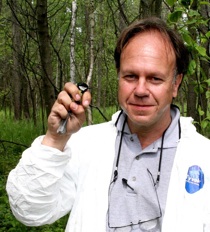
We get an update on the Fukushima mess from our favorite correspondent, Anrie Gundersen. He's a former nuclear industry executive who now gives expert testimony on reactor safety. His videos on the web site fairewinds.com are the best anywhere. This interview ranges from Japan to California reactors unsafe at any speed, and even to the possibility of a massive nuclear melt-down right near New York City. Why not... Tokyo is already radioactive!
We begin by talking about the impact of the big typhoons that just swept over the site of the Fukushima nuclear disaster complex. There were two typhoons in a row, Phanfone and Vongfong. The second one dumped 10 inches of rain (254 mm.) in 24 hours - right on to a site where groundwater running through the melted reactor cores is already overwhelming TEPCO's ability to pump it into temporary storage tanks.
Three hundred tons of radioactive water runs off the site each and every day into the Pacific Ocean. It was much more during these two storms. The operator hasn't said how much more, but we know in one previous incident Fukushima leaked 600 tons of water into the Pacific, twice the "normal" highly nuclear runoff. We also know from other news reports that new record high levels of radiation was measured after these typhoons in various trenches and wells. Consider the giant amounts of radiation previously measured at Fukushima, we don't wan't to hear about new record highs.
The Japan Times reported "Tritium up tenfold in Fukushima groundwater after Typhoon Phanfone"
"Some 150,000 becquerels of tritium per liter were measured in a groundwater sample taken Thursday from a well east of the No. 2 reactor. The figure is a record for the well and over 10 times the level measured the previous week."
"Tepco also revealed that, at a separate well also east of the No. 2 reactor, a groundwater sample was giving off a record 2.1 million becquerels of a beta ray-emitting substance, nearly double the level from a week earlier.
The cesium activity in the sample was 70 percent higher at 68,000 becquerels."
There was even worse news after Typhoon Vongfong, one of the strongest in a generation.
Arnie Gundersen makes this stunning statement: just one month after the accident "there were things they could have done back then. I recommended pumping down the groundwater, but between the pumps and the nuclear reactor [they should] have something called a zeolite trench. Zeolite is a really good material - it's volcanic - that would capture all the radioactive Cesium, and most of the other isotopes.
Well I was told three years ago that Tokyo Electric didn't have the money. It's one of those 'pay me now or pay me later'. Because they didn't keep that groundwater under control three years ago now they are paying the price."
Arnie says the total releases from Fukushima now are much higher than from the Chernobly nuclear accident in the Ukraine in the 1980s. It is without a doubt the world's worst nuclear disaster.
One sign of that: the site is so highly radioactive that even now, three years later, nobody knows where the nuclear cores of those 3 reactors are. Within about a year and a half, the world saw photos of the nuclear cores at Three Mile Island (in Pennsylvania) and Chernobyl. There are no such photos, or any kind of record, of the reactor cores at Fukushima.
By the way, a Korean government report estimates Fukushima may have released up to 4 times as much Cesium as Chernobyl did.
Arnie Gundersen of Fairewinds.org
EARTHQUAKE RISK OF STORAGE TANKS
Every week, TEPCO has to construct two new giant storage tanks to hold still more radioactive water pumped from the site. There is a vast tank farm on the hill above the former reactors. But, Gundersen warns, these temporary tanks are not "seismically qualified". That is, they are not intended to withstand a serious earthquake. If such a quake hits Fukushima, "they'll all fail and run down into the Pacific en masse, which would be an insult to the Pacific which has never occcured in the history of the world". But hey, what are the odds Fukushima will be hit by a major earthquake (again)!
ANOTHER UNTOLD PROBLEM
Arnie Gundersen is the only person I've heard raising yet anothe serious problem arising from this triple reactor melt-down. Major media have completely missed the fact that TEPCO is filtering out up to 90% of the major radioactive materials. Essentially, they are reconstituting nuclear cores in these filters. But what will they do with this brand new form of super-radioactive waste? Where will the filters be stored safely (for at least 300 years)? What place in Japan will have that dark honor? The filters contain not just cesium, but uranium and plutonium. They may need 250,000 years to be really safe.
When the water is filtered, with just 10% of the radiation left, the Japanese want to dump it, and probably already are dumping it, straight into the Pacific Ocean. As Gundersen says, they think 90% is good enough. If any other nation, in any other circumstance, was dumping even that 10% of radioactivity into the ocean (how much is it?) - there would be international outcry. Japan is using the Pacific as a nuclear waste dump.
Gundersen: "So by filtering the water, they've reduce the liquid problem, but they've created a huge solid radioactive waste problem that no one... you've got an exclusive here Alex. No one in the world is talking about where in the world are they going to store all of these filters for a quarter of a million years."
REMOVING THE OUTER SHELL OF REACTOR 1
TEPCO needed to reduce the continuing airborne emissions of highly radioactive materials floating out of the wreck of the Number One
Reactor building. They constructed a fabric shell around the building (which also hid the wreckage from international photographers). Now that shell is absolutely loaded with radioactivity. The company is in the process of removing it. We discuss the dangers.
This week, an unexpectedly high gust of wind shook a crane removing the cover, and tore a large hole in it. It's a very risky operation. Gundersen says without the cover, more radioactivity will be carried away by the winds.
THE HUMAN HEALTH IMPACT: SECRECY IN JAPAN
Alex: In these first few years after the nuclear meltdowns in Fukushima, we've heard almost nothing about the impacts on people in that region. There are accounts of strange tumors, kids dying, pets dying. What have you heard, and can we ever expect an honest accounting from Japanese authorities?
Gundersen: That's a pretty good summary, frankly. We continue to get information from people who live there about cancer rates and illnesses in general. Not just cancer. You know we think of radiation as a cancer-causing thing, but it also causes many other ailments."
Arnie then tells us about a woman 30 miles from Fukushima who has grown and stored seeds for a very long time. Now three years after the accident, she is see "gargantuism" (a.k.a. gigantism) in plants. When plants (or animals) mutate to become abnormally large, or have certain organs or parts growing very large, this is a sure sign of genetic damage caused by radiation.
Gundersen: "We are also working with doctors in Japan. Some brave doctors are saying that they are being threatened, that their hospital rights have threatened. If you tell your patient 'this illness is radiation related' you will lose your right to practice, and things like that. So there's an enormous pressure on the medical community to tell the patients that what they are experiencing is not at all related to radiation."
They key, Gundersen says, is statistics. We haven't received real verifiable date on cancer rates and other illness from Japan, since the reactor accident. We're not likely to get it. It turns out that under a prior agreement, all the statistics and reports have to go first to the International Atomic Energy Agency (IAEA) who must approve them. "Article Two of the IAEA's Charter, is to promote nuclear power" Gundersen tells us.
WILL ANYONE BE PROSECUTED FOR THE ERRORS AND LIES OF FUKUSHIMA?
Reuters news service reports Japanese prosecutors are once again considering criminal charges against executives from the Tokyo Electric Power Company, TEPCO. Last year they said "no charges". But a special citizens' panel is forcing them to reconsider. The almost invincible insider reputation of TEPCO is legendary. Is there any chance those who allowed this disaster to happen will be exposed to justice?
Gundersen thinks it's unlikely under the Japanese system of authority that any charges of TEPCO executives will be successful. The
charges, if any, would not be for allowing the accident to happen (e.g. they knew the sea-wall was too low...) - but for hiding the true risks after the accident (and thereby endangering people's health). Lawyers in Japan are progressive, Gundersen thinks, but the judicial system is legendary for its conservative nature.
Shortly after this interview, we received news that the Japanese prosecutors have delays their recommendation about charges for another three months. Don't hold your breath.
Gundersen has a chance to speak in depth with former Prime Minister of Japan Naoto Kan, who was in charge at the time of the accident. Kan said he got bad information from both TEPCO and MITI, the organization responsible for nuclear matters. TEPCO wanted to abandon the site, Kan told Gundersen, but the Prime Minister said "no".
IS TOKYO RADIOACTIVE? MOVE THE 2020 OLYMPICS?
We also talk about the move by former Japanese Ambasador Mitsuhei Murata to have the 2020 Olympics held somewhere other than Tokyo, due to the continuing health risks. I ask Arnie whether Tokyo is radioactive.
Gundersen: "Yes Tokyo is radioactive. I've spoken to Ambassdor Murata. My problem is we worry about the exposure to Olympic athletes who are going to be there for three weeks, what about the exposure to the people who live in Tokyo for the last ten years - nine years, from 2011 until the two thousand twenty Olympics. I'm afraid it's a little bit elitist to worry about visiting athletes who are going to be there for three weeks, when in fact 35 million people are exposed to this radiation for nine years.
Now I think the government of Japan should be aggressively cleaning up Tokyo. But to do so would spread fear, and that in turn would stop the Olympics, which would then crush nuclear revival that the [current Prime Minister] Abe regime is so desiring. It's so desirable to the Abe regime to get those nuclear plants running again."
WHY TOKYO IS RADIOACTIVE?
Why is Tokyo radioactive? You would need to scan back through my past Fukushima shows, and the special podcasts I sent out at the time to get the details. All of that is available at my web site at ecoshock.org. Just type "Fukushima" into the search box there.
In a nutshell here are just some of the pathways radioactivity took to get to Tokyo:
1. In the first days of the accident, most of the radiation was blown north and west, but there were some reversals of wind, where the radiation was carried south and bathed Tokyo with nuclear particles. These were measured around the metropolis at that time. Various Japanese corporations considered moving their head offices out of Tokyo (some did). It later came out the whole government considered moving out of Tokyo.
2. For weeks after the accident, and especially after three reactor buildings blew up, there was continuing air-borne radiation of
Tokyo.
3. The hills around Tokyo, were also bathed in radioactivity. Each successive rainstorm brought more radiation into the city. Tokyo has a vast amount of undergound water. Some of the city is build out over what was the ocean. Radiation was measured in the underground water.
4. More difficult to quantify, large amounts of radioactive materials were dumped or burned after the accident. Some radioactive hot sewage sludge was trucked around the country. So was radioactive cement, which used that sludge. Some of all that arrived, as almost everything does, in the hub of Tokyo.
The point is this: radioactivity doesn't go away like yesterday's news. It lasts and lasts, for decades, even generations. Residents of Tokyo hosed down some hot spots, but the city never really admitted the magnitude of the problem. There was no massive clean up of Tokyo (which would help but couldn't get it all). Perhaps this was not done to avoid alarming the population, or to save the economy, which would have crashed in Tokyo was abandoned. So this giant metropolis remains radioactive, worse in some places than others. In my opinion, pregnant mothers should go to a less polluted area, and perhaps raise children to at least the age of 5 before returning.
THE SENDAI NUCLEAR PLANT AND VOLCANOES
The Japanese authorities released a report saying the Sendai nuclear plant would not experience a volcanic eruption for the next 30 years. That's convenient, because that would be the expected operating life of this reactor site, if it is restarted. How polite for the volcanoes to wait!
However, on September 27th, there was an unexpected major eruption by another volcano not so near to Sendai. And influential volcanologists in Japan said there is absolutely no way to predict when a volcano will go off, and certainly no 30 year guarantee. br>
Gundersen says the real risk to Sendai is not so much that a volcano would immediately destroy the nuclear plant. The problem is a volcano can dump twelve feet or more of ash on the site, and on all roadways leading to it. It could become impossible to keep cooling the reactor core. If that is not cooled, it blows up, just like Fukshima did. The cooling system has to be kept going at least 5 years without any pause, even after the reactor is shut down. That applies to the nuclear reactor near you! Not that it matters if there is a reactor near you. Fukushima blew radioactive particles around the Northern Hemisphere, and as we are about to find out, the radioactive plume from the leaking site is just now reaching North America.
FUKUSHIMA'S PLUME HITS NORTH AMERICA
This spring of 2014, a citizen found a sample of Cesium-134 in a park in British Columbia, Canada - inland from the ocean. What does that tell us? Unlike Cesium-137, which lasts a long time, Cesium-134 only lasts about two years. That means this particle arrived from Fukushima. I think it may be from continuing airborne radiation, but Gundersen suggests it came from the original blowout three years ago.
Gundersen told us in previous interviews that his company Fairewinds tested automobile air filters from Seattle Washington after the
accident and found highly radioactive hot particles in those filters. We know from another Radio Ecoshock interview that radioactivity from Fukushima was found in seaweed, and in Vancouver, Canada. Similar Fukshima radiation was found in California, and in fact in many U.S. states including Pennsylvania, and those in New England.
Now we're looking at a new wave of radiation reaching the West Coast. The slowly moving ocean currents are finally bringing the first part of the radioactive plume to Canada and the United States.
A Canadian research scientist named John Smith just told the meeting of the American Geophysical Union that this group has measured a
radioactive plume from Fukushima in Canadian waters. The blog Live Science reports:
"Smith and his colleagues tracked rising levels of cesium-134 at several ocean monitoring stations west of Vancouver in the North Pacific beginning in 2011. By June 2013, the concentration reached 0.9 Becquerels per cubic meter, Smith said. All of the cesium-134 was concentrated in the upper 325 feet (100 m) of the ocean, he said. They are awaiting results from a February 2014 sampling trip."
There's a long list of proof and sightings.
Ken Buesseler, the senior scientist at the Woods Hole Oceanographic Institute in Woods Hole, Massachusetts, had to arrange crowd-funding to measure this radioactivity in the Pacific. The American and Canadian governments don't appear to care. So far Buesseler says the radiation found is weak, and not yet dangerous. We're still in the early days. Buesseler set up this web site.
Gundersen says he receives a lot of worried calls and emails about the safety of West Coast beachs. This follows a couple of erroneous reports of high radioactivity on California beaches which turned out to be not from Fukushima, but left over from Cold War days. Yes, radioactivity from atmospheric atomic testing is still with us - which shows how long lasting any radioactivity is! Thanks to the Japanese experiment with nuclear power, the Pacific will still be more radioactive long after you and I are dead.
However, don't panic surfers! Gundersen says the risk is still very, very low for people swimming in the Pacific. Go for it, if you can stand the cold water. The fish living there are not so lucky. The bottom feeders especially will soak up radioactivity, and this will bio-concentrate as these are eaten by other predators. Is that why the local pod of killer whales (Orcas) in southern British Columbia did not have a baby in two years? The pod just had their first birth, but the baby died soon after. There may be many factors at work, but increased radioactivity in the Pacific is not good for marine mammals. Nobody disputes that.
Gundersen also suggests that fresh water fish in British Columbia, and likely the whole West Coast, may also be accumulating radioactivity. The place to test, if anyone cares, would be bottom-dwelling feeders like Catfish, who live in waters above a dam. The runoff from the surrounding mountains would accumulate in those dam lakes.
Arnie says he won't eat any fish from the Pacific until the government starts testing, and releases the actual data found, so he can make an informed decision about his own health.
THE NEXT FUKUSHIMA IN AMERICA
So what American nuclear plant will blow up? There's a too long list of possible candidates. All American plants were built at least 30 years ago, and many are operating on extentions granted by the NRC. All that concrete, all those pipes and equipment deteriorating.
NEW YORK CITY AT RISK
That doesn't even include known design flaws. Arnie and I were talking about earthquake risk and of course the last remaining California reactors at Diablo Canyon. Then he surprised me with this:
"By the way, we think of earthquakes as something that happens in California, but the plant with the highest what we call 'core damage frequency' is actually Indian Point. [38 miles from New York City - Alex] It's only a mile away from a Richter point 7 and a half earthquake fault that wasn't discovered until after it was built. So we could have an East Coast earthquake at Indian Point, which would be disastrous."
We talk about the unsafe storage of 1600 tons of nuclear waste at the now-closed San Onofre nuke plant in California. Gundersen says that waste needs to be put into casks right away. The nuke materials in casks at Fukushima were not damaged by the earthquake or the tsunami.
THE MOST DANGEROUS REACTOR IN AMERICA: DIABLO CANYON, CALIFORNIA
Now to America's biggest nuclear risk: the Diablo Canyon reactors half way between San Francisco and Los Angeles, right on the coast.
Gundersen: "Diablo Canyon is in my mind the most dangerous reactor in the United States. It was known when they built the plant that ground accelerations of .4 G - [which is] four tenths the acceleration of gravity - could hit the plant. And that's the way they built it.
Well, as they were building it, they discovered other earthquake faults that were much nearer to the plant that could double that, to .75 G. They didn't change the plant, they just changed the numberical analysis to make the plant fit an earthquake that was twice as
severe."
The two reactors at the Diablo Canyon site. Photo courtesy of Wikipedia.
INSTRUMENT CHATTER - THE EARTHQUAKE RISK NO ONE WANTS TO TALK ABOUT
TRANSCRIPT:
Gundersen: Fairewinds just produced a report that we sent to the NRC. The big thing that they're ignoring is not the gross collapse of the [reactor] building in the event of a Richter .7 G earthquake. It's something called 'instrument chatter'.
It's really not spoken about very often in nuclear circles, but hopefully Fairewinds can bring it to the forefront. You know you have switches on the wall that turn the light on. Well they have switches in nuclear plants too. We call them 'relays'. And if the ground shakes, the relays turn on and off without any human intervention. Now we found an NRC report that shows that the NRC has said there's a hundred percent probability that in the event of an earthquake, some of those relays are going to end up in the wrong position. So if you want a pump to be 'on' the relay's going to be 'off'. If you want a pump to be 'off' the relay's going to be 'on', because this relay chatter will cause them to bounce back and forth, and at the end of the earthquake they won't be in the right position.
It's a really serious problem that has been un-analyzed at Diablo Canyon. In my opinion, Diablo Canyon should be shut down until they analyze that problem. But of course that would be a four or five year effort and they may as well throw in the towels. So they are choosing to ignore the problem rather than really analyze this relay chatter issue.
Alex: This is the first I've heard of this. I guess we can say we are breaking this on Radio Ecoshock.
Gundersen: You are. You are. You know it's in the deep bowels of the Nuclear Regulatory Commission's files, but they don't want to talk about it either. People who work with relays have seen them buzz. We'll be posting a video in the next couple of weeks about relay chatter. They routinely will buzz when they are not working right, when the springs are worn and tired, they'll sit there and go bzzzz.
Well, in the event of an earthquake that will happen anyway, even if it's a brand new relay, because they'll just bounce. The switches will turn on and off, on and off, and then when the earthquake ends there's no guarantee they'll be where you want them to be."
So what? If a series of pumps need to be on, to cool the reactor, and the quake leaves them off, the reactor could heat up and blow. These reactors are such complicated systems, that we are not talking about one or two switches that some human will reset. We are talking about a vast system of interdependent switches that will reset themselves in chaotic patterns. It may not be easy to recover... in time.
We go on to discuss a report by David Lochbaum, a nuclear expert working with the Union of Concerned Scientists. Lockbaum says Diablo Canyon has never met basic fire regulations, and the NRC doesn't make them meet the standards. Why can anyone operate a nuclear reactor with faulty fire protection? Arnie Gundersen says Diablo Canyon falls into Region Four of the NRC, which has a history of being lax about enforcing nuclear regulations.
The other trick, applied to dozens of American reactors which fail to meet safety standards, is to "grandfather" them. They are built, it's too expensive to fix (the operators say) and so they must be safe, even though they aren't. That's the kind of nuclear logic that led to the Fukushima nuclear disaster in Japan.
DIABLO CANYON VIOLATES FEDERAL LAW
Gundersen: "We published a ... I think it's about q 45 page expert report that was sent to the NRC about a week and a half ago, with a legal filing that was sponsored by Friends of the Earth. Basically we determined that Diablo Canyon never should have been allowed to run. Because it violated a federal law. It's called 10 CFR 50. That's a nuclear law and it's part 50-59, which basically says that when you know a plant has problems, and you change your analytical approach to solve that problem, the public has a right to know it.
That didn't happen at Diablo Canyon. The public was not informed that Pacific Gas and Electric, the owner of Diablo Canyon made gross changes in all of the assumptions in order to get Diablo Canyon qualified to a much larger earthquake. The argument should have been made in 1980 and now Friends of the Earth is taking forward the argument 35 years later."
HOW TO SHUT DOWN NUCLEAR - INSTALL SOLAR!
I asked Arnie Gundersen how can we finally shut down these aging dangerous reactors, before another Fukushima happens in America. His answer surprised me: install as much solar power as you can, personally, as a community, as a State.
It turns out nuclear plants actually lose money at night. They only make money supplying electricity during peak usage hours during the day. That's exactly when solar produces it's peak power. If enough solar power comes on line, nuclear plants will no longer make money. That's when they shut down.
You can also help concerned Californians trying to get the dangerous Diablo Canyon reactors closed forever. Contact Mothers For Peace, check out this article, or watch a video about it from EON here.
The Friends of the Earth document on Diablo Canyon is here. The Petition to the NRC just filed by Friends of Earth is here.
Arnie recommend his latest video talk, given in San Francisco at the WAVE conference. Find it here, on his web site at Fairewinds.org
Please listen to this whole interview. There's more than I could capture in one blog.
Download or listen to this Radio Ecoshock interview with Arnie Gundersen of Fairewinds.org in CD Quality or Lo-Fi
NO NOTES FOR NAOMI KLEIN
Speaking of limitation - apparently Blogger only allows posts of reasonable length, or it chokes. So I'm not going to include my notes on the Naomi Klein interview. She was brilliant as always, pointing out capitalism seems unable to do what is necessary to avoid a global climate disaster. It's a wide-ranging interview with Klein, and I hope more original than the generic Klein interviews now swamping the Net.
Learn which big green groups take money from fossil fuel companies, and which "green" billionaire isn't living up to his 3 billion dollar pledge. Find Naomi's new book "This Changes Everything, Capitalism Versus Climate Change" here. Everyone will be reading it, it's already a hot topic of discussion here and on many blogs around the Net.
Download or listen to my interview with Naomi Klein in CD Quality or Lo-Fi
This is Radio Ecoshock. Post your comments in this blog. If you have tips, or ideas for guests, contact me through our web site at
ecoshock.org - or just write me. The address is radio //at/// ecoshock.org
That's it for this week. Find Radio Ecoshock on Facebook. Subscribe to @ecoshock on Twitter. Look for our popular Soundcloud page. Get all our past shows as free .mp3 downloads at the web site ecoshock.org.
I'm Alex Smith, saying thank you for listening, and caring about our world. And please don't forget to answer the call for our (hopefully short) fall fundraiser. Details here.
Showing posts with label accident. Show all posts
Wednesday, October 29, 2014
Tuesday, March 19, 2013
Deadly Myths of Fukushima
Selections from symposium "The Medical and Ecological Consequences of the Fukushima Nuclear Accident" New York March 11-12 by Helen Caldicott Foundation & Physicians for Social Responsibility. It isn't over. Danger to women, children, wildlife. Radio Ecoshock 130320 1 hour.
Download/listen to the Radio Ecoshock show in CD quality (56 MB) or Lo-Fi (14 MB)
POISONED FLAG
Last week I sent out by podcast a pathetic audio press conference from the New York City symposium. I called it "Poisoned Flag". Two U.S. sailors tell their stories of being soaked with radioactivity aboard the aircraft carrier USS Ronald Reagan during the Fukushima nuclear accident in Japan.
The sailors tell a harrowing tale of being exposed to radiation blowing from Fukushima, over a period of two months, as close as one mile from shore. They were not told of the accident until weeks later, were never properly tested for exposure, received no preventative treatment, and even now get no medical help from the Navy.
Allegedly forced to sign waivers releasing the Navy from any responsibility, the pair are among more than a hundred American sailors suing TEPCO, the Japanese nuclear plant operator.
If you missed that, find it on the Radio Ecoshock web site at ecoshock.org. Click on "past programs" and you'll see this special news audio available for free mp3 download.
Or download the 28 minute press conference here: "Poisoned Flag" in CD quality or Lo-Fi
This press conferences kinda says it all for the common person. We do not get support from the governments allegedly elected to protect our interests. It's easy to see where we all stand when it comes to the military industrial nuclear complex: in the dark and in the radiation zone.
THE MEDICAL AND ECOLOGICAL CONSEQUENCES OF FUKUSHIMA
In this week's Radio Ecoshock show we hear straight from the conference "The Medical and Ecological Consequences of the Fukushima Nuclear Accident" held at the New York Academy of Medicine, March 11th and 12th. My thanks to the Helen Caldocott Foundation and Physicians for Social Responsibility for getting out the truth about Fukushima, about the on-going impact of the Chernobyl nuclear plant explosion, and the radiation still with us from atomic testing. We'll hear scientists and activists explode the myths behind the catastrophe of March 11, 2011 at the TEPCO Fukushima Dai-Ichi nuclear complex.
From speaker Mary Olson, you hear about the unreported higher impact on women, children and babies. We hear a report about disappearing wildlife at Fukushima and Chernobyl from Dr. Timothy Mousseau, Professor of Biological Sciences, University of South Carolina. Arnie Gundersen from Fairwindes, David Lochbaum from Union of Concerned Scientists speak out. Plus everything you wanted to know about Cesium, but were afraid to ask, from Dr. Steven Starr, University of Missouri.
That leave me little time to speak. Please listen to the "Deadly Myths of Fukushima".
LISTEN TO THIS RADIO ECOSHOCK SHOW right now.
MYTH #1 THE ACCIDENT IS OVER

Akio Matsumura
This is the huge lie politicians and power companies most desperately want you to believe. I present a clip from the Q and A period, from Akio Matsumura, Founder of the Global Forum of Spiritual and Parliamentary Leaders. Who is he? Lets just say Mr. Matsumura meets with world leaders one on one. As he tells us, when he was invited to dinner with the Japanese Prime Minister, the whole cabinet was invited to join them. What did he tell them?
1. Japanese children will be part of giant nuclear experiment for hundreds of years.
2. Nobody knows where the nuclear fuel has gone, or what state it is in.
Government policies are based on wishful thinking, says Matsumura, because "Fukushima has no time". That is, the radioactive threat will last and last, beyond us and our descendents.
Then Kevin Kamps, Radioactive Waste Specialist for the non-profit group "Beyond Nuclear" demolished the "it's over" myth when interviewed by Karl Grossman Chief Investigative Reporter for VVW Hamptons TV. You'll hear some of that interview.
See that whole series of Karl Grossman interviews at the 2nd year anniversary of Fukushima conference in NYC on You tube here.
In just one of a thousand examples that the Fukushima accident is far from over, just listen to Arnie Gundersen of Fairewinds.com in that morning Q and A session on March 11th at the symposium. That's right, 400 tons a day of groundwater is mixing with the loose hot nuclear fuel. The contaminated water is being pumping into hundreds of temporary holding ponds that are not rated to withstand an earth quake over 6.0. Fukushima gets lots of earth quakes.
MYTH #2 AMERICAN REACTORS ARE SAFER

David Lochbaum, Union of Concerned Scientists
You think so? Think the next nuclear melt-down isn't just waiting for the USA? Here are two quick clips from David Lochbaum, nuclear engineer from the Union of Concerned Scientists, again from that morning Q and A session. He explains the US Nuclear Regulatory Commission can't even enforce the "no-brainers" like putting vents on the aging Mark I reactors (as every other country has done except maybe India).
Or this one: why can't the NRC force the California nuclear reactors to meet the fire codes? They've had about 25 years to comply, and still get granted more time?
Lochbaum says Californians have won the nuclear lottery - they better hope their number doesn't come up like Fukushima.
MYTH #3 WOMEN AND CHILDREN ARE BEING PROTECTED

Mary Olson, NIRS
This is one of the most important lessons of this symposium. A stream of scientists and investigators have found women, girls, and babies are far more sensitive to radiation than the 30 year old healthy male used to set acceptable radiation standards around the world. If you aren't outraged about what you are about to hear, you aren't paying attention.
You get clips from a presentation by Mary Olson, Nuclear Information and Resource Service, Southeast. She spoke on "Gender Matters in the Atomic Age".
MYTH #4 JAPAN WILL RETURN TO NORMAL

Dr. Steven Starr
This talk March 11th is titled: "The implications of the massive contamination of Japan with radioactive cesium" by Dr. Steven Starr from the University of Missouri (and Physicians for Social Responsibility).
Here is a bio page on Steven Starr and another one with some of his history against nuclear weapons.
Find out everything you wanted to know about Cesium, but were afraid to ask. Yep, the kids get it first. Europe and Japan are loaded with Cesium from Chernobyl and Fukushima. A nice dusting hit the American West coast in 2011 too. Cesium never goes away, even though the news media stops reporting on it, and the government stops inspecting food.
MYTH #5 CHERNOBYL IS AN EDEN WITH ANIMALS RETURNING; JAPAN'S WILDLIFE IS RECOVERING TOO

Dr. Tim Mousseau
Dr. Tim Mousseau, Professor of Biological Sciences, University of South Carolina. We hear a ten minute excerpt from his talk "Chernobyl, Fukushima and Other Hot Places, Biological Consequences".
The story that Chernobyl has become a wild Eden after the accident was founded on zero scientific studies. Mousseau and his team did the studies. They found one third fewer birds even 25 years after the Chernobyl accident. Many fewer insects and species of insects. There are so few mammals that the Ukraine had to install a petting zoo, to provide for the Chernobyl tourists who came to see all the famous wildlife (but they don't see any).
Same again in Fukushima, except the spiders there are doing better, now that there are so few birds to eat them. Radioactive "Eden" isn't going so well, and won't for hundreds of years.
DO BIRDS SMOKE?
Some so-called "experts" in the Ukraine and elsewhere in the nuclear establishment tried to suggest the growing death rates after Chernobly were only due to alcoholism or psychological stress. It's important to find out what happened to the wildlife, who apparently don't smoke or drink. We don't know if birds were psychologically depressed on reading news about the Chernobyl accident, but somehow I doubt it. Mousseau blows up that whole argument, and gets us outside the human-centric paradigm. As Helen Caldicott says, we humans are not the only living things with genes to be damaged by nuclear mistakes.
GETTING THE TRUTH ABOUT FUKUSHIMA OUT TO YOU
As mainstream media fails to report on this frightening new science of nuclear accidents, we have to depend on independent producers. In coming shows, Radio Ecoshock will bring you more from the conference. Maria Gilardin of TUC Radio San Francisco will also bring you more, at tucradio.org. Another stalwart of nuclear truth telling is Robert Knight, host of 5 o'clock Shadow on WBAI New York.
We'll hear directly from Helen Caldicott speaking at the NYC conference next week on Radio Ecoshock. She promises that a book with the full proceedings will be available in the next 6 months or so. That is very important for the record, as these things get buried so quickly by the pro-nuclear lobby and the mainstream media.
I'm Alex Smith. We are out of time. Join us next week.
Please help pay for this program if you can. Make a donation from our main blog at ecoshock.info - or subscribe to the show with easy monthly donations at our web site. Thank you to all those listeners who make Radio Ecoshock possible.
Alex Smith
host/producer
Radio Ecoshock
Download/listen to the Radio Ecoshock show in CD quality (56 MB) or Lo-Fi (14 MB)
POISONED FLAG
Last week I sent out by podcast a pathetic audio press conference from the New York City symposium. I called it "Poisoned Flag". Two U.S. sailors tell their stories of being soaked with radioactivity aboard the aircraft carrier USS Ronald Reagan during the Fukushima nuclear accident in Japan.
The sailors tell a harrowing tale of being exposed to radiation blowing from Fukushima, over a period of two months, as close as one mile from shore. They were not told of the accident until weeks later, were never properly tested for exposure, received no preventative treatment, and even now get no medical help from the Navy.
Allegedly forced to sign waivers releasing the Navy from any responsibility, the pair are among more than a hundred American sailors suing TEPCO, the Japanese nuclear plant operator.
If you missed that, find it on the Radio Ecoshock web site at ecoshock.org. Click on "past programs" and you'll see this special news audio available for free mp3 download.
Or download the 28 minute press conference here: "Poisoned Flag" in CD quality or Lo-Fi
This press conferences kinda says it all for the common person. We do not get support from the governments allegedly elected to protect our interests. It's easy to see where we all stand when it comes to the military industrial nuclear complex: in the dark and in the radiation zone.
THE MEDICAL AND ECOLOGICAL CONSEQUENCES OF FUKUSHIMA
In this week's Radio Ecoshock show we hear straight from the conference "The Medical and Ecological Consequences of the Fukushima Nuclear Accident" held at the New York Academy of Medicine, March 11th and 12th. My thanks to the Helen Caldocott Foundation and Physicians for Social Responsibility for getting out the truth about Fukushima, about the on-going impact of the Chernobyl nuclear plant explosion, and the radiation still with us from atomic testing. We'll hear scientists and activists explode the myths behind the catastrophe of March 11, 2011 at the TEPCO Fukushima Dai-Ichi nuclear complex.
From speaker Mary Olson, you hear about the unreported higher impact on women, children and babies. We hear a report about disappearing wildlife at Fukushima and Chernobyl from Dr. Timothy Mousseau, Professor of Biological Sciences, University of South Carolina. Arnie Gundersen from Fairwindes, David Lochbaum from Union of Concerned Scientists speak out. Plus everything you wanted to know about Cesium, but were afraid to ask, from Dr. Steven Starr, University of Missouri.
That leave me little time to speak. Please listen to the "Deadly Myths of Fukushima".
LISTEN TO THIS RADIO ECOSHOCK SHOW right now.
MYTH #1 THE ACCIDENT IS OVER
Akio Matsumura
This is the huge lie politicians and power companies most desperately want you to believe. I present a clip from the Q and A period, from Akio Matsumura, Founder of the Global Forum of Spiritual and Parliamentary Leaders. Who is he? Lets just say Mr. Matsumura meets with world leaders one on one. As he tells us, when he was invited to dinner with the Japanese Prime Minister, the whole cabinet was invited to join them. What did he tell them?
1. Japanese children will be part of giant nuclear experiment for hundreds of years.
2. Nobody knows where the nuclear fuel has gone, or what state it is in.
Government policies are based on wishful thinking, says Matsumura, because "Fukushima has no time". That is, the radioactive threat will last and last, beyond us and our descendents.
Then Kevin Kamps, Radioactive Waste Specialist for the non-profit group "Beyond Nuclear" demolished the "it's over" myth when interviewed by Karl Grossman Chief Investigative Reporter for VVW Hamptons TV. You'll hear some of that interview.
See that whole series of Karl Grossman interviews at the 2nd year anniversary of Fukushima conference in NYC on You tube here.
In just one of a thousand examples that the Fukushima accident is far from over, just listen to Arnie Gundersen of Fairewinds.com in that morning Q and A session on March 11th at the symposium. That's right, 400 tons a day of groundwater is mixing with the loose hot nuclear fuel. The contaminated water is being pumping into hundreds of temporary holding ponds that are not rated to withstand an earth quake over 6.0. Fukushima gets lots of earth quakes.
MYTH #2 AMERICAN REACTORS ARE SAFER

David Lochbaum, Union of Concerned Scientists
You think so? Think the next nuclear melt-down isn't just waiting for the USA? Here are two quick clips from David Lochbaum, nuclear engineer from the Union of Concerned Scientists, again from that morning Q and A session. He explains the US Nuclear Regulatory Commission can't even enforce the "no-brainers" like putting vents on the aging Mark I reactors (as every other country has done except maybe India).
Or this one: why can't the NRC force the California nuclear reactors to meet the fire codes? They've had about 25 years to comply, and still get granted more time?
Lochbaum says Californians have won the nuclear lottery - they better hope their number doesn't come up like Fukushima.
MYTH #3 WOMEN AND CHILDREN ARE BEING PROTECTED

Mary Olson, NIRS
This is one of the most important lessons of this symposium. A stream of scientists and investigators have found women, girls, and babies are far more sensitive to radiation than the 30 year old healthy male used to set acceptable radiation standards around the world. If you aren't outraged about what you are about to hear, you aren't paying attention.
You get clips from a presentation by Mary Olson, Nuclear Information and Resource Service, Southeast. She spoke on "Gender Matters in the Atomic Age".
MYTH #4 JAPAN WILL RETURN TO NORMAL

Dr. Steven Starr
This talk March 11th is titled: "The implications of the massive contamination of Japan with radioactive cesium" by Dr. Steven Starr from the University of Missouri (and Physicians for Social Responsibility).
Here is a bio page on Steven Starr and another one with some of his history against nuclear weapons.
Find out everything you wanted to know about Cesium, but were afraid to ask. Yep, the kids get it first. Europe and Japan are loaded with Cesium from Chernobyl and Fukushima. A nice dusting hit the American West coast in 2011 too. Cesium never goes away, even though the news media stops reporting on it, and the government stops inspecting food.
MYTH #5 CHERNOBYL IS AN EDEN WITH ANIMALS RETURNING; JAPAN'S WILDLIFE IS RECOVERING TOO

Dr. Tim Mousseau
Dr. Tim Mousseau, Professor of Biological Sciences, University of South Carolina. We hear a ten minute excerpt from his talk "Chernobyl, Fukushima and Other Hot Places, Biological Consequences".
The story that Chernobyl has become a wild Eden after the accident was founded on zero scientific studies. Mousseau and his team did the studies. They found one third fewer birds even 25 years after the Chernobyl accident. Many fewer insects and species of insects. There are so few mammals that the Ukraine had to install a petting zoo, to provide for the Chernobyl tourists who came to see all the famous wildlife (but they don't see any).
Same again in Fukushima, except the spiders there are doing better, now that there are so few birds to eat them. Radioactive "Eden" isn't going so well, and won't for hundreds of years.
DO BIRDS SMOKE?
Some so-called "experts" in the Ukraine and elsewhere in the nuclear establishment tried to suggest the growing death rates after Chernobly were only due to alcoholism or psychological stress. It's important to find out what happened to the wildlife, who apparently don't smoke or drink. We don't know if birds were psychologically depressed on reading news about the Chernobyl accident, but somehow I doubt it. Mousseau blows up that whole argument, and gets us outside the human-centric paradigm. As Helen Caldicott says, we humans are not the only living things with genes to be damaged by nuclear mistakes.
GETTING THE TRUTH ABOUT FUKUSHIMA OUT TO YOU
As mainstream media fails to report on this frightening new science of nuclear accidents, we have to depend on independent producers. In coming shows, Radio Ecoshock will bring you more from the conference. Maria Gilardin of TUC Radio San Francisco will also bring you more, at tucradio.org. Another stalwart of nuclear truth telling is Robert Knight, host of 5 o'clock Shadow on WBAI New York.
We'll hear directly from Helen Caldicott speaking at the NYC conference next week on Radio Ecoshock. She promises that a book with the full proceedings will be available in the next 6 months or so. That is very important for the record, as these things get buried so quickly by the pro-nuclear lobby and the mainstream media.
I'm Alex Smith. We are out of time. Join us next week.
Please help pay for this program if you can. Make a donation from our main blog at ecoshock.info - or subscribe to the show with easy monthly donations at our web site. Thank you to all those listeners who make Radio Ecoshock possible.
Alex Smith
host/producer
Radio Ecoshock
Monday, May 21, 2012
As Darkness Flourishes
Josh Tickell, Director of "The Big Fix" reveals the continuing BP Gulf oil spill cover-up. S. Dutta on mega coal plant construction binge in India. "GM Food Song" by Superweed. Conclusion of tar sands speech by independent scientist Dr. David Schindler.
-----------
From the high desert, from the dry falls of ages past, this is Alex Smith. We have a full menu of audio for you this week.
You'll start out with a main course of awful truth about the continuing BP oil disaster in the Gulf of Mexico. Director Josh Tickell joins us for a look at his dark reality pic "The Big Fix".
Then we go to the coal disaster you never hear about. The government of India has teamed up with one of its biggest corporations to build some of the largest coal plants on the Planet. S. Dutta reports from Delhi about the Tata Mundra mega plant. Their lives and your climate in one big story.
I'll play you a fine activist song about GM foods and wrap up with more from my recording of Dr. David Schindler's breakout speech against the Canadian Tar sands.
Bon appetite.
THE FIG FIX ON THE BP GULF OIL SPILL
Sales of oil and gas leases are the second largest source of revenue to the United States government. About forty percent of that happens in the Gulf of Mexico.
As we learn in this interview with Josh Tickell, only the Internal Revenue Service brings in more (from taxes, with a much bigger overhead). Is it any wonder the fossil fuel industry has so much control over the government?
There is hardly any oversight. That is why BP was allowed to drill in deep waters on the edge of a ridge in the Gulf of Mexico, even after companies like Exxon had abandoned drilling efforts there. The area was known to host pools of explosive gas as well as the oil.
Tickell goes over a long list of illness suffered by cleanup workers and many residents of the Gulf states. Skin rashes, asthma, and many other chronic conditions popped up after BP poured millions of gallons of the toxic oil dispersant Corexit into the Gulf. Exactly how many million gallons is still in dispute.
The Corexit was carried toward the shorelines, where waves and winds whip it up into water droplets which hit Gulf residents, to this day.
Tickell says despite the multi-million dollar advertising campaign saying the beaches are all clean, there are still workers cleaning beaches, and popular beaches have closures now and then. Tickell, who grew up in Louisiana, in a Cajun family, dug into "cleaned up" beaches and found lots of oil deeper in the sand. It isn't just a metaphorical "cover up", he tells us, but the oil is really just covered up for now.
We go into the Obama deception, the multibillions of shareholder profits paid out by BP even during and after the spill, why the military was co-opted by BP and more.
Josh Tickell first came to prominence after driving his grease-powered "veggie van" across America. That became the film "fuel". Now with wife Rachel, "The Big Fix" is winning acclaim at film festivals around the world. It got a standing ovation at Cannes. Our Radio Ecoshock correspondent in Washington D.C., Gerri Williams, saw it at a film festival there. She said the audience was wowed, and recommended this interview with Josh Tickell.
Since many standard theaters are afraid of blowback from the powerful oil industry, it may not play near you. Fortunately, the DVD will be available from Amazon, Barnes and Noble, Netflix and ITunes in June. Or you can get it directly from the film web site, after the June release, at thebigfixmovie.com
COAL IN INDIA
You know Americans are blowing tops of Appalachian Mountains for dirty coal power. Warren Buffet's endless coal trains flow from the America West.
In early May, activists from Vancouver, including two prominent academics, Dr. Bill Rees of the ecological footprint, and energy expert Mark Jaccard, were arrested stopping a coal train there.
Everybody knows China built a coal plant a week. So why don't we hear about the mega mega coal plants springing up in India? Now you will.
Mr. S. Dutta joins us for an in-depth report from India about the growing coal binge there.
The coal mining industry is mainly nationalized, run by the government of India. Politicians have promised to electrify the country, and coal is their main fuel, even as India is hit hard by climate-driven drought, floods, and heat waves.
The center of attention now is the giant 4 gig watt Tata Mundra plant in Northwest India (Gujarat State). It is right on the coast, in one of the most ecologically sensitive and productive areas. Further inland is the great desert, so most people live and work on the coast.
The poorest people, small farmers and fisher people, will be most directly hurt by construction and operation of the many coal plants planned at Tata Mundra.
I ask Mr. Dutta to compare the many anti-coal plants there, and the Occupy movement in the West. Although many people have been arrested at both, there are major differences. The coal-powered electricity will benefit the middle and upper classes, so they are supporting it. The many poor people are those protesting. They do not speak Hindi, the language of their government, and are not consulted or compensated. These poor people need the help of non-profits like the one Mr. Dutta works for.
We go into the larger energy picture of India with lots of facts and figures which may surprise you. Along with the many coal plants either under construction or planned, goes a lot of corruption of land sales. The power will go to fuel shopping malls, which the poor people can never dream to visit. It's a deep interview, with many angles you should hear.
Before we go to our exclusive recording of Dr. David Schindler on the Tar Sands, you'll want to hear this smart new song about a dangerous idea: genetic modification of your food. From You tube, here is the band Superweed.
[Superweed] THE REST OF THE UGLY TRUTH ABOUT THE TAR SANDS - DAVID SCHINDLER
A few weeks ago I played you part of a daring speech by one of Canada's most prominent and honored scientists, Dr. David Schindler. He spoke out about the many dangers of the Canadian Tar Sands, in a speech to a packed audience at the Wosk Centre in Vancouver. Here is David Schindler wrapping up, about the deformed fish, the fake restoration promoted on TV, and the lasting cost to us all.
For example, The First Nations people of Northern Alberta, who depend on fish to live, complained they were finding some too deformed to eat, or even feed to their dogs. Schindler set up a collection point, and in just the first year found fish with tumors, fish with two tails, fish with one big eye and so on. He concludes these are the product of embryos poisoned by tar sands waste.
Still on the subject of fish, we hear another scandal. When a mine pit is finished, the big corporations are allowed to fill them in with tailings, and then add 10 meters (about 32 feet) of water. They call this restored "fish habitat" - even though nothing can live in them. Starting 17 years ago, the Canadian Department of Fisheries and Oceans have approved over 25 of such "fish lakes". The first one from 17 years ago shows no signs of life, much less fish, but the Federal government doesn't care, Schindler says.
The Caribou stocks of the Tar Sands area have been wiped out. Under the law, they should have been treated as endangered species, but the Minister in charge says Canada has lots of caribou - we'll just stuff in some new ones later, when the lands are restored.
Schindler says very little has been restored, and even those projects are an ecological failure. Supposed forests are sparsely treed. The companies try to restore peat bogs - but the tailings are too salty, at least ten times too salty, to host the peat bogs. Instead of 300 species, the "restored" lands are lucky to host a few dozen.
Meanwhile paid "green" spokespeople like Patrick Moore appear on TV and You tube showing off the restored lands. Schindler says real biologist laugh when Moore points out a pleasant yellow plant as an example of new growth. The plant is exotic, shouldn't be there, and is known to accumulate cyanide.
The whole "restoration" game is a Ponzi scheme. The oil companies have saved about 10% of the cost to restore the easiest lands, those built up with removed top soil (not the toxic tailings). Schindler says Canadians under forty years of age will be stuck with the cleanup bill in years to come.
I doubt restoration will ever happen. As the oil runs out, or becomes too expensive for an industrial economy, these ravages lands will be abandoned, with their toxic lakes and pits, a scar the size of a small European country, left on the planet, as signs of a past oil age.
My thanks to Simon Fraser University for permission to record this speech. Dr. David Schindler is an award winning Canadian scientists, of international renown. That he would speak out at this point shows how bad the Canadian Tar Sands situation has become.
The big fix on the Gulf oil spill, the push for coal in India, Tar Sands propaganda - the fossil fuel industry is flourishing - while the species and climate thrash toward catastrophe.
Now you know, but knowing is only half the battle. Action is up to you.
I would say knowing is less than half the battle - but the with all the propaganda paid for by the fossil fuel industry, and the bought-out mainstream media, it is a bit of work to find out what is really going on. That is why I do Radio Ecoshock. To help you know.
Visit our new web site at ecoshock.org.
From Wi-Fi somewhere in America, I'm Alex Smith, thank you for listening and caring about your world.
-----------
From the high desert, from the dry falls of ages past, this is Alex Smith. We have a full menu of audio for you this week.
You'll start out with a main course of awful truth about the continuing BP oil disaster in the Gulf of Mexico. Director Josh Tickell joins us for a look at his dark reality pic "The Big Fix".
Then we go to the coal disaster you never hear about. The government of India has teamed up with one of its biggest corporations to build some of the largest coal plants on the Planet. S. Dutta reports from Delhi about the Tata Mundra mega plant. Their lives and your climate in one big story.
I'll play you a fine activist song about GM foods and wrap up with more from my recording of Dr. David Schindler's breakout speech against the Canadian Tar sands.
Bon appetite.
THE FIG FIX ON THE BP GULF OIL SPILL
Sales of oil and gas leases are the second largest source of revenue to the United States government. About forty percent of that happens in the Gulf of Mexico.
As we learn in this interview with Josh Tickell, only the Internal Revenue Service brings in more (from taxes, with a much bigger overhead). Is it any wonder the fossil fuel industry has so much control over the government?
There is hardly any oversight. That is why BP was allowed to drill in deep waters on the edge of a ridge in the Gulf of Mexico, even after companies like Exxon had abandoned drilling efforts there. The area was known to host pools of explosive gas as well as the oil.
Tickell goes over a long list of illness suffered by cleanup workers and many residents of the Gulf states. Skin rashes, asthma, and many other chronic conditions popped up after BP poured millions of gallons of the toxic oil dispersant Corexit into the Gulf. Exactly how many million gallons is still in dispute.
The Corexit was carried toward the shorelines, where waves and winds whip it up into water droplets which hit Gulf residents, to this day.
Tickell says despite the multi-million dollar advertising campaign saying the beaches are all clean, there are still workers cleaning beaches, and popular beaches have closures now and then. Tickell, who grew up in Louisiana, in a Cajun family, dug into "cleaned up" beaches and found lots of oil deeper in the sand. It isn't just a metaphorical "cover up", he tells us, but the oil is really just covered up for now.
We go into the Obama deception, the multibillions of shareholder profits paid out by BP even during and after the spill, why the military was co-opted by BP and more.
Josh Tickell first came to prominence after driving his grease-powered "veggie van" across America. That became the film "fuel". Now with wife Rachel, "The Big Fix" is winning acclaim at film festivals around the world. It got a standing ovation at Cannes. Our Radio Ecoshock correspondent in Washington D.C., Gerri Williams, saw it at a film festival there. She said the audience was wowed, and recommended this interview with Josh Tickell.
Since many standard theaters are afraid of blowback from the powerful oil industry, it may not play near you. Fortunately, the DVD will be available from Amazon, Barnes and Noble, Netflix and ITunes in June. Or you can get it directly from the film web site, after the June release, at thebigfixmovie.com
COAL IN INDIA
You know Americans are blowing tops of Appalachian Mountains for dirty coal power. Warren Buffet's endless coal trains flow from the America West.
In early May, activists from Vancouver, including two prominent academics, Dr. Bill Rees of the ecological footprint, and energy expert Mark Jaccard, were arrested stopping a coal train there.
Everybody knows China built a coal plant a week. So why don't we hear about the mega mega coal plants springing up in India? Now you will.
Mr. S. Dutta joins us for an in-depth report from India about the growing coal binge there.
The coal mining industry is mainly nationalized, run by the government of India. Politicians have promised to electrify the country, and coal is their main fuel, even as India is hit hard by climate-driven drought, floods, and heat waves.
The center of attention now is the giant 4 gig watt Tata Mundra plant in Northwest India (Gujarat State). It is right on the coast, in one of the most ecologically sensitive and productive areas. Further inland is the great desert, so most people live and work on the coast.
The poorest people, small farmers and fisher people, will be most directly hurt by construction and operation of the many coal plants planned at Tata Mundra.
I ask Mr. Dutta to compare the many anti-coal plants there, and the Occupy movement in the West. Although many people have been arrested at both, there are major differences. The coal-powered electricity will benefit the middle and upper classes, so they are supporting it. The many poor people are those protesting. They do not speak Hindi, the language of their government, and are not consulted or compensated. These poor people need the help of non-profits like the one Mr. Dutta works for.
We go into the larger energy picture of India with lots of facts and figures which may surprise you. Along with the many coal plants either under construction or planned, goes a lot of corruption of land sales. The power will go to fuel shopping malls, which the poor people can never dream to visit. It's a deep interview, with many angles you should hear.
Before we go to our exclusive recording of Dr. David Schindler on the Tar Sands, you'll want to hear this smart new song about a dangerous idea: genetic modification of your food. From You tube, here is the band Superweed.
[Superweed] THE REST OF THE UGLY TRUTH ABOUT THE TAR SANDS - DAVID SCHINDLER
A few weeks ago I played you part of a daring speech by one of Canada's most prominent and honored scientists, Dr. David Schindler. He spoke out about the many dangers of the Canadian Tar Sands, in a speech to a packed audience at the Wosk Centre in Vancouver. Here is David Schindler wrapping up, about the deformed fish, the fake restoration promoted on TV, and the lasting cost to us all.
For example, The First Nations people of Northern Alberta, who depend on fish to live, complained they were finding some too deformed to eat, or even feed to their dogs. Schindler set up a collection point, and in just the first year found fish with tumors, fish with two tails, fish with one big eye and so on. He concludes these are the product of embryos poisoned by tar sands waste.
Still on the subject of fish, we hear another scandal. When a mine pit is finished, the big corporations are allowed to fill them in with tailings, and then add 10 meters (about 32 feet) of water. They call this restored "fish habitat" - even though nothing can live in them. Starting 17 years ago, the Canadian Department of Fisheries and Oceans have approved over 25 of such "fish lakes". The first one from 17 years ago shows no signs of life, much less fish, but the Federal government doesn't care, Schindler says.
The Caribou stocks of the Tar Sands area have been wiped out. Under the law, they should have been treated as endangered species, but the Minister in charge says Canada has lots of caribou - we'll just stuff in some new ones later, when the lands are restored.
Schindler says very little has been restored, and even those projects are an ecological failure. Supposed forests are sparsely treed. The companies try to restore peat bogs - but the tailings are too salty, at least ten times too salty, to host the peat bogs. Instead of 300 species, the "restored" lands are lucky to host a few dozen.
Meanwhile paid "green" spokespeople like Patrick Moore appear on TV and You tube showing off the restored lands. Schindler says real biologist laugh when Moore points out a pleasant yellow plant as an example of new growth. The plant is exotic, shouldn't be there, and is known to accumulate cyanide.
The whole "restoration" game is a Ponzi scheme. The oil companies have saved about 10% of the cost to restore the easiest lands, those built up with removed top soil (not the toxic tailings). Schindler says Canadians under forty years of age will be stuck with the cleanup bill in years to come.
I doubt restoration will ever happen. As the oil runs out, or becomes too expensive for an industrial economy, these ravages lands will be abandoned, with their toxic lakes and pits, a scar the size of a small European country, left on the planet, as signs of a past oil age.
My thanks to Simon Fraser University for permission to record this speech. Dr. David Schindler is an award winning Canadian scientists, of international renown. That he would speak out at this point shows how bad the Canadian Tar Sands situation has become.
The big fix on the Gulf oil spill, the push for coal in India, Tar Sands propaganda - the fossil fuel industry is flourishing - while the species and climate thrash toward catastrophe.
Now you know, but knowing is only half the battle. Action is up to you.
I would say knowing is less than half the battle - but the with all the propaganda paid for by the fossil fuel industry, and the bought-out mainstream media, it is a bit of work to find out what is really going on. That is why I do Radio Ecoshock. To help you know.
Visit our new web site at ecoshock.org.
From Wi-Fi somewhere in America, I'm Alex Smith, thank you for listening and caring about your world.
Labels:
accident,
climate,
climate change,
coal,
energy,
environment,
GE Food,
Gulf of Mexico,
Gulf Spill,
india,
tar sands
Tuesday, April 10, 2012
The Worst Problems In The World
The nuclear accident at Fukushima Japan is far from over. Three reactors continue to melt-down and now there is a storm of international worry about nuclear fuel pools tottering in blown up buildings. The whole Northern Hemisphere is at risk right now.
I'm Alex Smith for Radio Ecoshock. We are joined again by nuclear industry expert Arnold Gundersen, of Fairewinds Associates.
Arnie Gundersen, a year ago, warned us here on Radio Ecoshock, and to anybody who would listen, that a world-scale catastrophe was lurking in the nuclear fuel storage pools of both reactors Three and Four, at the Fukushima Dai-ichi plant in Japan.
Why is this story finally getting wider attention, a year later?
The Japanese press, which has been following the government line, is starting to break out. On April 2nd, Takao Yamada, Expert Senior Writer for the Mainichi paper, said, quote: "The 7-story building itself has suffered great damage, with the storage pool barely intact on the building’s third and fourth floors. The roof has been blown away. If the storage pool breaks and runs dry, the nuclear fuel inside will overheat and explode, causing a massive amount of radioactive substances to spread over a wide area. Both the U.S. Nuclear Regulatory Commission (NRC) and French nuclear energy company Areva have warned about this risk."
We also had the unusual case of Japan’s former ambassador to Switzerland, Mitsuhei Murata, speaking at a public hearing of the Budgetary Committee of the House of Councilors on March 22, 2012. He told the Swiss if the Reactor 4 fuel pool collapses, the cooling water for all six reactors would be shut down, as well as for the nearby spent fuel pool with another 6,000 fuel rods.
Another Japanese diplomat, Akio Matsumura is also blogging about this.
It is very surprising that Japanese officials are speaking out. Why now? Do they know something we don't?
It seems to me, and many Radio Ecoshock listeners from all over the world have written me about this - that the whole world is sleep-walking through this potential global catastrophe. They want to know: Why isn't there an international emergency action plan, to save us from a nuclear disaster which would make Chernobyl look small in comparison?
The average person thinks the Japanese could just dig an in-ground pool, move the fuel rods into a safer place, and then cover all that with a containment building. Why aren't they doing that?
So we have debris over the fuel rods, a broken crane, broken fuel rod assemblies, and a building so shaky any attempts to fix things might cause the building to fall. Is it possible we have a situation which cannot be solved?
Over at MSNBC, Rachel Maddow says Reactor 2 is an example of a technology which has no solution. Humans can't get near such high radioactivity. Even robot electronics fail in such circumstances. The Japanese require a technology that hasn't been invented yet. Should we even be using nuclear technology, if unsolvable accidents can happen?
It is time to think the unthinkable. Arnie walks us through what could happen if we wake up one day, and the Fukushima Dai-ichi Reactor 4 fuel pool collapses.
Arnie tells us the Brookhaven National Laboratory in the U.S. issued a study on the impacts of a nuclear fuel pool fire.
Here is a good article summary of that 1987 Brookhaven study by Stuart Staniford.
In this article from the New England Centre for Investigative Reporting, we find "A 1997 [actually it was 1987] study by the Brookhaven National Laboratory on Long Island concluded that a pool fire at a plant like Millstone Nuclear Power Station in Connecticut or Pilgrim Nuclear Generating Station in Massachusetts could kill 100 people instantly and another 138,000 people eventually. Some $546 billion in damage would result, the study said, and 2,170 square miles of land could be contaminated."
From the selfish point of view of someone living on the West Coast of North America, and for everyone in the Northern Hemisphere, it seems the key point is whether there is a major explosion, driving radioactive materials into the stratosphere. That's what it takes to spread these poisons right around the world.
Gundersen says it is unlikely there would be an explosion if the #4 Fuel pool collapses. But dangerous "hot" particles would still be sent around the world, because within two days of the collapse, the Zirconium and radioactive metals (like Cesium and Plutonium) would burn at a very high temperature, sending particles high into the air. The result would be an everlasting disaster for Japan. Arnie thinks it could create a no-man's land 50 miles across the country, perhaps destabilizing the government.
The famous anti-nuclear activist and pediatrician Dr. Helen Caldicott just said in a speech: if there is a major nuclear release from Fukushima, she would evacuate her family from Boston, and head back to her native Australia, or anywhere in the Southern Hemisphere. Would it be safer south of the equator? Likely, as there is much less mixing of air from the Northern Hemisphere to the Southern. All the countries in the Northern Hemisphere would suffer radioactive fallout if this happens.
We can't evacuate the Northern Hemisphere. The explosion at Reactor 3 showed we have 5 to 7 days before radiation hits the Pacific Coast of North America. Personally, I would definitely leave Vancouver. We get a lot of rain here, so the hot stuff is going to wash into our open water reservoirs. They would be poisoned for hundreds of years. I would try to get east of the Rocky Mountains, to a drier place, with a source of fossil water from deep underground.
What would you do?
In the 1950's, all children were trained in civil defense in case of nuclear attack. It was lame, but it was something. Do you think world governments should be teaching everyone the basics of trying to avoid the worst exposure to radiation, in case Fukushima blows? We would all have to stay indoors, with the windows shut. You should buy a couple of HEPA air cleaners right now, I think. The economy would collapse. Do you have food stored for such an emergency? I hope so.
Surely there must be a better way to reduce our risk of having an accident that would damage the Planet more or less forever in human timescales. What can be done at Fukushima?
Arnie says the nuclear power game is set up so each country handles safety and any accident as an internal affair. But when an accident threatens us all, we need to pressure our own governments to formulate an international response, to help the Japanese acts as fast as they can.
In the interview, Arnie Gundersen, who was an executive at a company which installed nuclear fuel racks in those very same types of reactors, lays out three ways to handle this emergency. None of them are great, but his suggestion to make a smaller fuel canister, and start moving the rods out to an already existing in-ground pool on the site, sounds best to me. It would be slow and painstaking, but would begin to make us all safer every day.
Maybe an earthquake won't strike near Fukushima in the next few years. However, on February 14th, Dapeng Zhao, geophysics professor at Japan’s Tohoku University, published a paper in "Solid Earth", a journal of the European Geosciences Union.
Here is a good article summarizing that paper, in Common Dreams.
Zhao said the giant earthquake in March of 2011 had reactivated a seismic fault close to the Fukushima nuclear plant. Using the latest scientific techniques and measurements, the paper warns another big earthquake could strike even closer to the plant.
Washington's blog concludes "Scientists say that there is a 70% chance of a magnitude 7.0 earthquake hitting Fukushima this year, and a 98% chance within the next 3 years."
In a radio interview with Dr. Helen Caldicott in early February, Gundersen estimated a quake of 7.0 or greater could cause the Reactor 4 fuel pool to collapse.
What have the Japanese done so far to strengthen the building, and could they be doing more?
We have to remind ourselves, we might just get lucky. Maybe the Reactor 3 and 4 buildings will keep standing for few years, while the Japanese invent a solution. We didn't have a major nuclear war so far, maybe we'll squeak through this one. But are our chances good, or not so good, the way things are going?
Robert Alvarez, an expert with the Union of Concerned Scientists, has tried again and again to warn us: this isn't just a problem in Japan. The American reactors have built up even more stored fuel rods, some of them over earthquake fault lines, all of them requiring non-stop cooling, and none of the storage pools have containment if there is an accident.
The spent fuel risk in America is even greater in Japan. Why is no one talking about this?
Arnie Gundersen has not heard of government meetings or plans to get faster action to protect the world against yet another giant nuclear catastrophe at Fukushima. We need citizens organizing everywhere, pushing their governments to stop ignoring the threat, or playing along with Japan, to stop being polite about the danger. I'm sure many people in Japan would welcome international pressure to get faster action.
We could compare this reactor accident to the horror of thermo-nuclear war, hanging over our heads. It took a generation of protests, and a fallen empire, to reduce that threat. A nuclear war is still possible, but it's less likely.
But we don't have a long-time frame, 30 years, to stabilize the Reactor 4 fuel storage pond. I'm surprised we got through this year, and I'm not sure about the next one. Can we scrape through again?
Listen to/download the Arnie Gundersen interview (26 minutes) in CD Quality... or Lo-Fi.
THE SCANDAL OF THE TAR SANDS
I'm Alex Smith and I'm angry. There are lots of sick and ugly things in this world, along with tremendous beauty and love. But there are two giant projects which I know offend God, if there is one.
The first is blowing the tops of mountains, and plowing the rubble into Nature's valleys. The second is the largest and most polluting industrial project on Earth: the Canadian Tar Sands.
The big oil companies are spending millions, even hundreds of millions of dollars, to convince you they produce what they call "ethical oil". It's everywhere. News columnists blather on about the wonderful "oil sands" and why we can't live without them. Never mind the full page ads from tar sands companies in the same newspapers.
I can't even go to a movie without seeing Hollywood-quality ads with butterflies and forests all around the new clean green Tar Sands operations.
Here is the other side of the story - a quick clip of a talk by Mike Mercredi, an aboriginal man from Fort Chipewyan, downstream from the Tar Sands.
(In the audio, Mike lists out his relatives that are dead or dying of cancer, which was unknown to them in previous generations, before the Tar Sands came upstream of their drinking water and fishing grounds)
I recorded that in 2008, when we had no experts to back him up. Listen to the whole Radio Ecoshock program "Climate Terrorism: The Tar Sands" 3 speakers recorded December 5th in Vancouver, listed on our 2008 show archive page at ecoshock.org.
As you will hear in this program, they are lying about being able to reclaim land to their former natural state. The oil companies and the governments who collude with them are faking and hiding the health effects.
The whole tar sands operation is a world-scale Ponzi scheme which will bankrupt future generations with the costs of clean-up, - if any remediation is possible. Or they will do what most mining companies do: leave a massive open scar upon the earth, all for the quick quarterly profits of foreign multinationals.
Why says so? According to Canadian Prime Minister Stephen Harper, and his Environment Minister, anyone who criticizes the Tar Sands is just a foreign-funded radical - unpatriotic environmentalists.
Let's meet one of those radicals. Here is the introduction to Dr. David Schindler, before his speech in Vancouver, on March 28th, 2012. The intro is by John Pierce, Dean, Faculty of Arts, Simon Fraser University.
(audio: Schindler helped discover that phosphorus from detergents and water treatment plants was killing the Great Lakes; he proved acid rain was coming from coal plant pollution; he's recently done a study of Tar Sands pollution. Schindler has an Order of Canada, is a member of the Royal Society, and has many, many honors.)
That's the wild-eyed radical the Prime Minister fears. A life-long scientist who helped clean up the Great Lakes from phosphorus, who proved the source of acid-rain, a world-recognized and heavily awarded expert, David Schindler.
David is no fly-in academic from New York. He lives in Northern Alberta. He's fished in the many streams threatened by the proposed Enbridge northern pipeline. He's measures the water and the air, finding pollution governments denied.
In the program I summarize some of the surprising revelations in this speech, bolstered by selected audio. For example, did you know the tiny amounts of supposedly reclaimed lands can never be returned to their previous state, because the mine tailings are too salty?
I also didn't realize the biggest source of pollution is actually air-borne. We'll learn all that and more in this work-shop from Canada's top Tar Sands expert, a quiet but devastating critic of the world's dirtiest source of oil.
* Tar Sands chemicals flood local rivers, probably explaining higher levels of cancer in aboriginal Canadians downstream. The government won't investigate the many deaths there.
* The former Alberta caribou herds will never return.
* The forests are being stripped in an area projected to be larger than the state of Florida.
* Countless tons of methane are burned and released just to get oil out of the sands. More global warming gases.
* The corrosive raw oil is carried in a network of pipelines, tankers, trucks, and famous spills. It's an industrial spider web reaching down into the United States, indeed all over North America.
* Wherever you live in the world, the Tar Sands are wrecking your atmosphere, as the single largest industrial source of greenhouse gases on the planet.
* The damage can be seen from space, and will last for thousands of years.
Welcome to your secure energy source, your damned "ethical" oil.
-------------------
David begins with the tailing ponds, some of which are just meters away from the Athabasca River. According to Tar Sands Watch, every square meter of oil-bearing bitumen mined creates six square meters of tailing. These are tossed into toxic lakes now covering more than 55 square kilometers, over 13,000 acres and growing rapidly. The tailing dyke of just one company, Syncrude, is the second largest dam in the world. Only the Chinese Three Gorges Dam is larger.
Here is David Schindler...
[SH1_TailingsAthabasca etc. 1:38]
David then makes several key points.
First, development in both the Tar Sands operations, and in the surrounding town and infrastructure has far outstripped any planning process or regulation. It's a wild-west anything-goes oil rush. As that building boom grew, the size of planning and regulatory bodies needed to keep pace. Instead successive governments have cut funding, to the point that hardly anything is monitored, regulated, or planned.
Second: while the many foreign corporations make obscene multi-billions in profits, the Canadian public gets less and less of the revenues. Governments, with political parties heavily funded by oil companies, kept reducing the percentage going to the Canadian public. Later, we'll find the whole cleanup bill is mounting, as reclamation is stalled for decades. Young Canadians will pay those astronomic bills.
[SH2_FastDevleopment_massiveprofits 4:43]
From the recording March 28th, in Vancouver, here is what David Schindler says about "ethical oil".
[SH3_Ethical_Oil 2:58]
OK, now we are going for a long walk through David Schindler's presentation. He talks about cancer in the Native people; how the industry-sponsored river testing found NOTHING, no contaminants from super-polluting smoke stacks. His own team of scientists found a wide range of heavy metals and toxic polycarbonates the industry and government somehow failed to detect.
David Schindler all along gives you the big picture references that nobody else is talking about. For example, there are two giant chemical complexes called "the upgraders" which process the raw bitumen. These are sending out pollution for 50 miles around. It accumulates on the snow, and on the frozen rivers, until the fast Spring melt supercharges all the waters with toxic chemicals. It's the quiet science of the horrific.
[SH4_ScienceTesting 17 min]
That was Dr. David Schindler, an internationally renowned scientist working in Canada, talking about his team research into pollution from the Tar Sands. This was recorded by Alex Smith at the Simon Fraser University Wosk Centre in downtown Vancouver on March 28, 2012.
LISTEN TO/DOWNLOAD THIS RADIO ECOSHOCK SEGMENT ON DAVID SCHINDLER (31 minutes) in CD Quality or Lo-Fi
I hope you got one of the stories Schindler explained. As I understand it, Dr. Schindler and other scientists could not accept the industry-funded government approved study saying that NONE of the dirty pollutants from the tar sands operations could be measured in the Athabasca River or its tributaries. They found the alleged testing set up measuring stations either upstream of the operations, or far down river near the river mouth at Lake Athabasca, where dilution would be greatest. The testing method had a baseline, or used techniques, which eliminated low levels of contaminants.
Three scientists, David Schindler, Jeff Short of NOAA, and Peter Hodson, a toxicologist at Queens University took their own samples. These included sites near the Tar Sands operations.
This independent team used better testing methods. They found low levels of many, many toxic substances, especially near the so-called upgrader plants, where air pollution is strong and obvious. This is a scandal! The First Nations people living downstream from the tar sands complained for years their families were dying of cancer. Industry and the government told the victims there was no pollution in their water.
After the not-so-mysterious cancer deaths of the First Nations people, and after two decades of warnings from scientists, here are the results of the health impacts study done by the Canadian government: nothing!
They don't investigate. They don't care. There are billions of dollars of profits to be made every year. That is what matters.
You aren't going to hear the dirty truth about the tar sands from any authority, and certainly not from the millions spent on propaganda by the multinational oil companies digging out the tar.
We are out of time for this week, but not out of ammunition. In an upcoming Radio Ecoshock show, you'll hear more from famous scientist David Schindler. He'll tell us why the heavily advertised "restoration" of the scoured landscape is fake. Remaking nature is not possible, and it's not going to happen.
The native people like Mike Mercredi know. They live there, eating the polluted fish, breathing the polluted air.
[Mike Mercredi clip 2]
Keep your ears out for more on the Canadian Tar Sands, the world's single largest source of pollution, on Radio Ecoshock.
OUR GLOBAL WARMING COMEDY RANT - FROM LEE CAMP
We also have a short rant by New York Comedian Lee Camp. Here is a comedian who knows that global warming is not all that funny, but it's real. We run a short 2 minute clip from Lee's podcast "A Moment of Clarity" available on You tube.
I'm Alex Smith. Thank you for getting real about your world.
I'm Alex Smith for Radio Ecoshock. We are joined again by nuclear industry expert Arnold Gundersen, of Fairewinds Associates.
Arnie Gundersen, a year ago, warned us here on Radio Ecoshock, and to anybody who would listen, that a world-scale catastrophe was lurking in the nuclear fuel storage pools of both reactors Three and Four, at the Fukushima Dai-ichi plant in Japan.
Why is this story finally getting wider attention, a year later?
The Japanese press, which has been following the government line, is starting to break out. On April 2nd, Takao Yamada, Expert Senior Writer for the Mainichi paper, said, quote: "The 7-story building itself has suffered great damage, with the storage pool barely intact on the building’s third and fourth floors. The roof has been blown away. If the storage pool breaks and runs dry, the nuclear fuel inside will overheat and explode, causing a massive amount of radioactive substances to spread over a wide area. Both the U.S. Nuclear Regulatory Commission (NRC) and French nuclear energy company Areva have warned about this risk."
We also had the unusual case of Japan’s former ambassador to Switzerland, Mitsuhei Murata, speaking at a public hearing of the Budgetary Committee of the House of Councilors on March 22, 2012. He told the Swiss if the Reactor 4 fuel pool collapses, the cooling water for all six reactors would be shut down, as well as for the nearby spent fuel pool with another 6,000 fuel rods.
Another Japanese diplomat, Akio Matsumura is also blogging about this.
It is very surprising that Japanese officials are speaking out. Why now? Do they know something we don't?
It seems to me, and many Radio Ecoshock listeners from all over the world have written me about this - that the whole world is sleep-walking through this potential global catastrophe. They want to know: Why isn't there an international emergency action plan, to save us from a nuclear disaster which would make Chernobyl look small in comparison?
The average person thinks the Japanese could just dig an in-ground pool, move the fuel rods into a safer place, and then cover all that with a containment building. Why aren't they doing that?
So we have debris over the fuel rods, a broken crane, broken fuel rod assemblies, and a building so shaky any attempts to fix things might cause the building to fall. Is it possible we have a situation which cannot be solved?
Over at MSNBC, Rachel Maddow says Reactor 2 is an example of a technology which has no solution. Humans can't get near such high radioactivity. Even robot electronics fail in such circumstances. The Japanese require a technology that hasn't been invented yet. Should we even be using nuclear technology, if unsolvable accidents can happen?
It is time to think the unthinkable. Arnie walks us through what could happen if we wake up one day, and the Fukushima Dai-ichi Reactor 4 fuel pool collapses.
Arnie tells us the Brookhaven National Laboratory in the U.S. issued a study on the impacts of a nuclear fuel pool fire.
Here is a good article summary of that 1987 Brookhaven study by Stuart Staniford.
In this article from the New England Centre for Investigative Reporting, we find "A 1997 [actually it was 1987] study by the Brookhaven National Laboratory on Long Island concluded that a pool fire at a plant like Millstone Nuclear Power Station in Connecticut or Pilgrim Nuclear Generating Station in Massachusetts could kill 100 people instantly and another 138,000 people eventually. Some $546 billion in damage would result, the study said, and 2,170 square miles of land could be contaminated."
From the selfish point of view of someone living on the West Coast of North America, and for everyone in the Northern Hemisphere, it seems the key point is whether there is a major explosion, driving radioactive materials into the stratosphere. That's what it takes to spread these poisons right around the world.
Gundersen says it is unlikely there would be an explosion if the #4 Fuel pool collapses. But dangerous "hot" particles would still be sent around the world, because within two days of the collapse, the Zirconium and radioactive metals (like Cesium and Plutonium) would burn at a very high temperature, sending particles high into the air. The result would be an everlasting disaster for Japan. Arnie thinks it could create a no-man's land 50 miles across the country, perhaps destabilizing the government.
The famous anti-nuclear activist and pediatrician Dr. Helen Caldicott just said in a speech: if there is a major nuclear release from Fukushima, she would evacuate her family from Boston, and head back to her native Australia, or anywhere in the Southern Hemisphere. Would it be safer south of the equator? Likely, as there is much less mixing of air from the Northern Hemisphere to the Southern. All the countries in the Northern Hemisphere would suffer radioactive fallout if this happens.
We can't evacuate the Northern Hemisphere. The explosion at Reactor 3 showed we have 5 to 7 days before radiation hits the Pacific Coast of North America. Personally, I would definitely leave Vancouver. We get a lot of rain here, so the hot stuff is going to wash into our open water reservoirs. They would be poisoned for hundreds of years. I would try to get east of the Rocky Mountains, to a drier place, with a source of fossil water from deep underground.
What would you do?
In the 1950's, all children were trained in civil defense in case of nuclear attack. It was lame, but it was something. Do you think world governments should be teaching everyone the basics of trying to avoid the worst exposure to radiation, in case Fukushima blows? We would all have to stay indoors, with the windows shut. You should buy a couple of HEPA air cleaners right now, I think. The economy would collapse. Do you have food stored for such an emergency? I hope so.
Surely there must be a better way to reduce our risk of having an accident that would damage the Planet more or less forever in human timescales. What can be done at Fukushima?
Arnie says the nuclear power game is set up so each country handles safety and any accident as an internal affair. But when an accident threatens us all, we need to pressure our own governments to formulate an international response, to help the Japanese acts as fast as they can.
In the interview, Arnie Gundersen, who was an executive at a company which installed nuclear fuel racks in those very same types of reactors, lays out three ways to handle this emergency. None of them are great, but his suggestion to make a smaller fuel canister, and start moving the rods out to an already existing in-ground pool on the site, sounds best to me. It would be slow and painstaking, but would begin to make us all safer every day.
Maybe an earthquake won't strike near Fukushima in the next few years. However, on February 14th, Dapeng Zhao, geophysics professor at Japan’s Tohoku University, published a paper in "Solid Earth", a journal of the European Geosciences Union.
Here is a good article summarizing that paper, in Common Dreams.
Zhao said the giant earthquake in March of 2011 had reactivated a seismic fault close to the Fukushima nuclear plant. Using the latest scientific techniques and measurements, the paper warns another big earthquake could strike even closer to the plant.
Washington's blog concludes "Scientists say that there is a 70% chance of a magnitude 7.0 earthquake hitting Fukushima this year, and a 98% chance within the next 3 years."
In a radio interview with Dr. Helen Caldicott in early February, Gundersen estimated a quake of 7.0 or greater could cause the Reactor 4 fuel pool to collapse.
What have the Japanese done so far to strengthen the building, and could they be doing more?
We have to remind ourselves, we might just get lucky. Maybe the Reactor 3 and 4 buildings will keep standing for few years, while the Japanese invent a solution. We didn't have a major nuclear war so far, maybe we'll squeak through this one. But are our chances good, or not so good, the way things are going?
Robert Alvarez, an expert with the Union of Concerned Scientists, has tried again and again to warn us: this isn't just a problem in Japan. The American reactors have built up even more stored fuel rods, some of them over earthquake fault lines, all of them requiring non-stop cooling, and none of the storage pools have containment if there is an accident.
The spent fuel risk in America is even greater in Japan. Why is no one talking about this?
Arnie Gundersen has not heard of government meetings or plans to get faster action to protect the world against yet another giant nuclear catastrophe at Fukushima. We need citizens organizing everywhere, pushing their governments to stop ignoring the threat, or playing along with Japan, to stop being polite about the danger. I'm sure many people in Japan would welcome international pressure to get faster action.
We could compare this reactor accident to the horror of thermo-nuclear war, hanging over our heads. It took a generation of protests, and a fallen empire, to reduce that threat. A nuclear war is still possible, but it's less likely.
But we don't have a long-time frame, 30 years, to stabilize the Reactor 4 fuel storage pond. I'm surprised we got through this year, and I'm not sure about the next one. Can we scrape through again?
Listen to/download the Arnie Gundersen interview (26 minutes) in CD Quality... or Lo-Fi.
THE SCANDAL OF THE TAR SANDS
I'm Alex Smith and I'm angry. There are lots of sick and ugly things in this world, along with tremendous beauty and love. But there are two giant projects which I know offend God, if there is one.
The first is blowing the tops of mountains, and plowing the rubble into Nature's valleys. The second is the largest and most polluting industrial project on Earth: the Canadian Tar Sands.
The big oil companies are spending millions, even hundreds of millions of dollars, to convince you they produce what they call "ethical oil". It's everywhere. News columnists blather on about the wonderful "oil sands" and why we can't live without them. Never mind the full page ads from tar sands companies in the same newspapers.
I can't even go to a movie without seeing Hollywood-quality ads with butterflies and forests all around the new clean green Tar Sands operations.
Here is the other side of the story - a quick clip of a talk by Mike Mercredi, an aboriginal man from Fort Chipewyan, downstream from the Tar Sands.
(In the audio, Mike lists out his relatives that are dead or dying of cancer, which was unknown to them in previous generations, before the Tar Sands came upstream of their drinking water and fishing grounds)
I recorded that in 2008, when we had no experts to back him up. Listen to the whole Radio Ecoshock program "Climate Terrorism: The Tar Sands" 3 speakers recorded December 5th in Vancouver, listed on our 2008 show archive page at ecoshock.org.
As you will hear in this program, they are lying about being able to reclaim land to their former natural state. The oil companies and the governments who collude with them are faking and hiding the health effects.
The whole tar sands operation is a world-scale Ponzi scheme which will bankrupt future generations with the costs of clean-up, - if any remediation is possible. Or they will do what most mining companies do: leave a massive open scar upon the earth, all for the quick quarterly profits of foreign multinationals.
Why says so? According to Canadian Prime Minister Stephen Harper, and his Environment Minister, anyone who criticizes the Tar Sands is just a foreign-funded radical - unpatriotic environmentalists.
Let's meet one of those radicals. Here is the introduction to Dr. David Schindler, before his speech in Vancouver, on March 28th, 2012. The intro is by John Pierce, Dean, Faculty of Arts, Simon Fraser University.
(audio: Schindler helped discover that phosphorus from detergents and water treatment plants was killing the Great Lakes; he proved acid rain was coming from coal plant pollution; he's recently done a study of Tar Sands pollution. Schindler has an Order of Canada, is a member of the Royal Society, and has many, many honors.)
That's the wild-eyed radical the Prime Minister fears. A life-long scientist who helped clean up the Great Lakes from phosphorus, who proved the source of acid-rain, a world-recognized and heavily awarded expert, David Schindler.
David is no fly-in academic from New York. He lives in Northern Alberta. He's fished in the many streams threatened by the proposed Enbridge northern pipeline. He's measures the water and the air, finding pollution governments denied.
In the program I summarize some of the surprising revelations in this speech, bolstered by selected audio. For example, did you know the tiny amounts of supposedly reclaimed lands can never be returned to their previous state, because the mine tailings are too salty?
I also didn't realize the biggest source of pollution is actually air-borne. We'll learn all that and more in this work-shop from Canada's top Tar Sands expert, a quiet but devastating critic of the world's dirtiest source of oil.
* Tar Sands chemicals flood local rivers, probably explaining higher levels of cancer in aboriginal Canadians downstream. The government won't investigate the many deaths there.
* The former Alberta caribou herds will never return.
* The forests are being stripped in an area projected to be larger than the state of Florida.
* Countless tons of methane are burned and released just to get oil out of the sands. More global warming gases.
* The corrosive raw oil is carried in a network of pipelines, tankers, trucks, and famous spills. It's an industrial spider web reaching down into the United States, indeed all over North America.
* Wherever you live in the world, the Tar Sands are wrecking your atmosphere, as the single largest industrial source of greenhouse gases on the planet.
* The damage can be seen from space, and will last for thousands of years.
Welcome to your secure energy source, your damned "ethical" oil.
-------------------
David begins with the tailing ponds, some of which are just meters away from the Athabasca River. According to Tar Sands Watch, every square meter of oil-bearing bitumen mined creates six square meters of tailing. These are tossed into toxic lakes now covering more than 55 square kilometers, over 13,000 acres and growing rapidly. The tailing dyke of just one company, Syncrude, is the second largest dam in the world. Only the Chinese Three Gorges Dam is larger.
Here is David Schindler...
[SH1_TailingsAthabasca etc. 1:38]
David then makes several key points.
First, development in both the Tar Sands operations, and in the surrounding town and infrastructure has far outstripped any planning process or regulation. It's a wild-west anything-goes oil rush. As that building boom grew, the size of planning and regulatory bodies needed to keep pace. Instead successive governments have cut funding, to the point that hardly anything is monitored, regulated, or planned.
Second: while the many foreign corporations make obscene multi-billions in profits, the Canadian public gets less and less of the revenues. Governments, with political parties heavily funded by oil companies, kept reducing the percentage going to the Canadian public. Later, we'll find the whole cleanup bill is mounting, as reclamation is stalled for decades. Young Canadians will pay those astronomic bills.
[SH2_FastDevleopment_massiveprofits 4:43]
From the recording March 28th, in Vancouver, here is what David Schindler says about "ethical oil".
[SH3_Ethical_Oil 2:58]
OK, now we are going for a long walk through David Schindler's presentation. He talks about cancer in the Native people; how the industry-sponsored river testing found NOTHING, no contaminants from super-polluting smoke stacks. His own team of scientists found a wide range of heavy metals and toxic polycarbonates the industry and government somehow failed to detect.
David Schindler all along gives you the big picture references that nobody else is talking about. For example, there are two giant chemical complexes called "the upgraders" which process the raw bitumen. These are sending out pollution for 50 miles around. It accumulates on the snow, and on the frozen rivers, until the fast Spring melt supercharges all the waters with toxic chemicals. It's the quiet science of the horrific.
[SH4_ScienceTesting 17 min]
That was Dr. David Schindler, an internationally renowned scientist working in Canada, talking about his team research into pollution from the Tar Sands. This was recorded by Alex Smith at the Simon Fraser University Wosk Centre in downtown Vancouver on March 28, 2012.
LISTEN TO/DOWNLOAD THIS RADIO ECOSHOCK SEGMENT ON DAVID SCHINDLER (31 minutes) in CD Quality or Lo-Fi
I hope you got one of the stories Schindler explained. As I understand it, Dr. Schindler and other scientists could not accept the industry-funded government approved study saying that NONE of the dirty pollutants from the tar sands operations could be measured in the Athabasca River or its tributaries. They found the alleged testing set up measuring stations either upstream of the operations, or far down river near the river mouth at Lake Athabasca, where dilution would be greatest. The testing method had a baseline, or used techniques, which eliminated low levels of contaminants.
Three scientists, David Schindler, Jeff Short of NOAA, and Peter Hodson, a toxicologist at Queens University took their own samples. These included sites near the Tar Sands operations.
This independent team used better testing methods. They found low levels of many, many toxic substances, especially near the so-called upgrader plants, where air pollution is strong and obvious. This is a scandal! The First Nations people living downstream from the tar sands complained for years their families were dying of cancer. Industry and the government told the victims there was no pollution in their water.
After the not-so-mysterious cancer deaths of the First Nations people, and after two decades of warnings from scientists, here are the results of the health impacts study done by the Canadian government: nothing!
They don't investigate. They don't care. There are billions of dollars of profits to be made every year. That is what matters.
You aren't going to hear the dirty truth about the tar sands from any authority, and certainly not from the millions spent on propaganda by the multinational oil companies digging out the tar.
We are out of time for this week, but not out of ammunition. In an upcoming Radio Ecoshock show, you'll hear more from famous scientist David Schindler. He'll tell us why the heavily advertised "restoration" of the scoured landscape is fake. Remaking nature is not possible, and it's not going to happen.
The native people like Mike Mercredi know. They live there, eating the polluted fish, breathing the polluted air.
[Mike Mercredi clip 2]
Keep your ears out for more on the Canadian Tar Sands, the world's single largest source of pollution, on Radio Ecoshock.
OUR GLOBAL WARMING COMEDY RANT - FROM LEE CAMP
We also have a short rant by New York Comedian Lee Camp. Here is a comedian who knows that global warming is not all that funny, but it's real. We run a short 2 minute clip from Lee's podcast "A Moment of Clarity" available on You tube.
I'm Alex Smith. Thank you for getting real about your world.
Labels:
accident,
energy,
environment,
Fukushima,
Japan,
nuclear power,
pollution,
tar sands
Wednesday, April 4, 2012
Relapse and Recovery
A fresh update on Japan after the tsunami and nuclear accident with Warren Karlenzig. Is it a chance to build new green cities, or a vision of what we all face as the oil runs out? Then a quick interview with anti-nuclear campaigner Helen Caldicott, and Marsha Coleman-Adebayo at the Occupy the EPA protest in Washington. We conclude with an invitation by Susanne Moser to "get real" about our difficult future as we destabilize the climate.
BACK FROM POST NUCLEAR JAPAN - WITH WARREN KARLENZIG
Download this 24 minute interview... in CD Quality or faster download in Lo-Fi.
Do you worry about an energy shortage, a nuclear accident, or a severe economic hit? Welcome to Japan, which is dealing with all three, following the deadly Tsunami and nuclear accident in March 2011. PCI Fellow Warren Karlenzig just returned from the damage zone, with this radio report.
We have a new report from Warren Karlenzig, who just toured Japan with a United Nations group. As the founder of Common Current, Warren advises city and national governments on sustainability. He's a Fellow of the Post Carbon Institute. In 2009, Radio Ecoshock broadcast Warren's speech at a Vancouver panel on building green cities.
We can't get to the impact of the nuclear accident, or Japan's exciting prospects for green energy, without first giving respect to the people who live with the tragic loss of more than 20,000 lives, of whole towns, and a large part of the country. Warren gives us some insight on how are people in Japan are handling unimaginable stress.
Are there immediate lessons we can learn about surviving a large-scale disaster? How much help comes from government, and how much from self-organization by the citizens?
One of the hot button issues in Japan is the national government's plan to redistribute tsunami wreckage, including material contaminated with radioactive waste, all over the country.
With almost all nuclear reactors out of service, how are the Japanese dealing with the lack of energy? Fifty two out of fifty four reactors were out of service when Karlenzig toured Japan, and the 53rd was shutting down the day of our interview.
The Japanese are scrambling to import more LNG (Liquefied Natural Gas) - and burning more coal - but there is still a massive energy short-fall.
It turns out their response could be very close to our future as oil becomes too expensive for most uses, if we can get oil at all.
The Japanese generally were either not heating buildings, or just keeping the pipes from bursting, while wearing winter coats inside. For a special meeting, a kerosene heater was brought in. Only the most necessary energy was used.
Karlenzig says the sudden failure of the Japanese energy supplies is comparable to a peak oil shock.
There an opportunity in Japan to rebuild new green cities and towns. Two cities have proposed "smart growth" models. One is pursuing ideas for renewable energy, and zero emissions. Find the details, and photos from the tour of Japan, in Warren's blog article here.
This reminds me of the astounding Japanese recovery after World War Two. Most cities were flattened, and energy was in short supply. Yet Japan rebounded with new factories, new technologies, and more efficient production.
But there are still major roadblocks to recovery in the region hit by both a tsunami and a triple nuclear melt-down. For one thing, young people were already leaving the central East coast region, which was known mainly for tourism, fishing, and agriculture. Young people were going to larger cities, seeking more modern employment, in computing for example.
This disaster has made the youth drain much more serious. With no work, hardly a place to live, and few prospects, many of the young people needed for rebuilding have left.
Warren raises another challenge. Japanese society tends to organize with male administrators. Women, and the elderly, did not attend most planning meetings, and appear not to be consulted about the new vision for a future. Karlenzig says experience shows real planning has to involve everyone, with meetings, questions, and working through the process. That is not happening in Japan, yet.
I was surprised to learn that after one year reconstruction has not yet begun! One reason is shocking: the land has not yet settled enough to rebuild. Many parts of the Eastern coast are still sinking. Land is sinking anywhere from a few inches, to several feet. With continuing aftershocks, in fact with a continuing wave of serious earthquakes ranging over 6.0, still happening, things are not yet settled for rebuilding.
One personal note: Warren Karlenzig was offered home-made meals with organic food. But should he eat things grown in a radioactive area? All the tour members were concerned. One official told Karlenzig the local mushrooms were much more radioactive than Tokyo was admitting. There are also reports that rice, the staple of Japanese food, is also contaminated.
The simple act of eating can feel threatening, after a nuclear accident.
Be sure and listen to this interview with sustainable cities expert Warren Karlenzig. Keep track of Warren at commoncurrent.com.
FROM THE OCCUPY EPA PROTEST
On March 30th, various groups united to march on the U.S. Environmental Protection Agency. They were protesting the lack of regulations and enforcement to protect the environment, and people's health.
One of the co-organizers was a former EPA employee, and whistleblower, Marsha Coleman-Adebayo. You can hear our previous Radio Ecoshock interview with Marsha here.
This time our Washington D.C. correspondent was on the scene for the march. She interviewed Coleman-Adebayo. We only had time to run this short selection.
MARSHA COLEMAN-ADEBAYO
Gerri Williams: "I'm speaking with Dr. Marsha Coleman-Adebayo, one of the co-organizers of the Occupy EPA march that is going to be taking place. Doctor could you tell me about your motivation for this march, the reason behind it, and what you hope to accomplish."
Marsha Coleman-Adebayo: “I think it's incumbent upon our entire community to really start fighting for an environment that's healthy. And not an environment, and particularly not an EPA [Environmental Protection Agency], that's not controlled by corporations. One of the problems that we have in our community is that the EPA is not taking care of its business.
It's important for African Americans and people of color to become involved with the environmental movement. We are really the first victims of environmental injustice. Our homes are sited closer to environmental facilities than any other homes. Our children are more likely to have lead poisoning or neurotoxic levels of lead in their brains. Our children are more likely to have learning disabilities. Breast cancers in African American women tend to be a bit more stubborn than in Caucasian women. So we are really the first victims of environmental injustice, and it is so important that we become involved.
Recently a report was issued by Deloitte consulting firm that said it takes EPA 15 years - 15 years! - to handle a Title Six complaint.
Now a Title Six complaint, it's a complaint by a community about a facility in their community. Fifteen years is a lifetime in the history of a family. Which means that the agency has turned its back on communities of color that are suffering under the weight of industrialization.
So we have decided to say 'Enough is enough'. We are going to fight for our families and for our communities, and fight for our health. And as far as we are concerned this Administration has really not heard yet the voice of the people on this issue."
DR. HELEN CALDICOTT
An important guest speaker at the Occupy EPA rally was the famous anti-nuclear activist Dr. Helen Caldicott. She never fails to warn us that the two headed nuclear dragon still waits to attack us, much worse than terrorism.
Vast nuclear weapons systems are still on hair-trigger alert in many countries. New nations are still joining the nuclear club.
This weapons complex is married to nuclear power - one supports the other. Here is a short transcript, just part of the seven minute interview with Dr. Caldicott speaking to Gerri Williams of Radio Ecoshock.
ON NUCLEAR POWER IN AMERICA
"I don't think people are accepting it [nuclear power] now after Fukushima. In fact I saw a poll yesterday in the New York Times that said that about 60% of Americans now are cautious and wary and concerned about nuclear power. That's post-Fukushima, which shows that the nuclear industry have spent hundreds of millions of dollars in the past few years, saying that they are the answer to global warming - even though they cause global warming in their own right because they are undergirded by huge industrial infrastructure, mining, milling, enriching uranium and building reactors - that produce a huge amount of CO2 and global warming gases.
They advertise in Scientific American, on NPR [National Public Radio] all over the place. Which was really wicked. I rang NPR and said 'Why are you taking these ads from the nuclear energy industry?' And they couldn't really answer me. Money. 'Underwriting' they call it but it's advertising.
But now the Fukushima accident I predict will lead to the end of nuclear power, not just in Japan, Germany, Italy, Switzerland, Belgium, which have all said 'No'. But China, America... and also when you have a meltdown, and I tell you when you have Americans dying either of acute radiation illness and leukemia - that's it. So it hasn't hit you yet. Do you have to wait until it hits you until you develop some common sense, and do the right thing?"
ON NEW REACTOR TECHNOLOGY
"The new reactors are much, much more dangerous, by orders of magnitude that the present light water reactors. Because they are fueled with Plutonium, where one millionth of a gram is a carcinogen. They are cooled by liquid sodium which explodes when exposed to air. So if you get a hole in a pipe you get a meltdown. And five kilos or ten pounds of is critical mass [the level required for a nuclear explosion]. So if you've got a hundred tons of plutonium in a nuclear reactor, and you lose the coolant, and there's a meltdown, and you get ten pounds of plutonium together, and you get critical mass, and a massive nuclear explosion scattering tons and tons of plutonium to the four winds. It's the most ghastly, hideous machine I could ever imagine. They are the new 'safe' reactors."
There is more. Download this 7 minute interview with Dr. Helen Caldicott in CD Quality or Lo-Fi.
GETTING REAL WITH SUSANNE MOSER
Let’s get real about our situation.
As David Orr put it: "This is not the time for illusion or evasion; it is time for transformation".
In our Radio Ecoshock interview we talk about an article, part of an upcoming book. The title is: "GETTING REAL ABOUT IT: MEETING THE PSYCHOLOGICAL AND SOCIAL DEMANDS OF A WORLD IN DISTRESS".
Our guest is the author, Dr. Susanne C. Moser. She is a researcher and consultant from California, associated with Stanford University. Susanne was previously a scientist at the National Center for Atmospheric Research, and with the Union of Concerned Scientists. She currently has her own research and consulting company in California.
I learned about Susanne's article from a link provided by Carolyn Baker, at carolynbaker.net.
I've looked forward to our talk, ever since I read her refreshing look at where we really are. I ask you a few impossibly difficult questions, but only because Susanne was brave enough to raise them.
Before we get to her prescriptions for living in a sick civilization, she picks out one particular illness as a case study. We could be talking about mass extinctions, or running out of fresh water - but Moser chose the problem of climate change as her example. That is her area of expertise, where she can make the best case study of the ways we fail to look at reality.
After making a convincing case we are hurtling toward completely unknown lives, in a climate never seen by any human, Moser suggests there are two roads ahead. She calls them two kinds of transitions.
But first, I hit a real stumbling block. Moser writes about "environmental leaders".
I wonder if there are any. I see environmentalists, who are more or less powerless in the current political economy. I see leaders who are mostly bought by big fossil fuel companies, and other corporate interests. An "environmental leader" sounds like a hybrid that doesn't exist yet. Who is she you talking about?
Listen to the interview for her answer. For one thing, she is writing a chapter for the upcoming "Sage Reference Handbook of Environmental Leadership." But Moser goes much deeper, looking at the roles we all can play.
Let's imagine that whole populations realize we are in a biosphere on life-support. They elect leaders to save us from more losses, if not extinction. Moser doesn't pull any punches. She says any new system will have to live through, "enormous losses, human distress, constant crisis, and the seemingly endless need to remain engaged in the task of maintaining, restoring, and rebuilding - despite all setbacks - a viable planet..."
Here is another thorny issue we discuss: once people realize a couple of generations have ruined the known natural world, what the heck are we going to do with all the blame? Do we hang a bunch of geriatric "climate criminals"; do we declare an amnesty, or what?
I think the world of mass media, especially advertising, but also the industrial consumer system, has infantilized the whole population - all of us. We don't know how anything is produced, we just wait for it to come, and we don't count all the costs. So how do we transition a whole species away from being irresponsible children, to become responsible adult Earthlings?
Even though Moser's article "Getting Real About It" is aimed at environmental leaders, it is useful for everybody. I think that's why it's bouncing around the Net so quickly.
Download this 23 minute interview with Susanne Moser in CD quality or Lo-Fi
Under our program ending, you can hear the international artist Ariel Kalma, with "Spirit Dancer". Check out his work, as the father of disco, and electronica. Good stuff.
As always, thank you for listening, for daring to think about the tough problems of our times.
Alex Smith
Radio Ecoshock
BACK FROM POST NUCLEAR JAPAN - WITH WARREN KARLENZIG
Download this 24 minute interview... in CD Quality or faster download in Lo-Fi.
Do you worry about an energy shortage, a nuclear accident, or a severe economic hit? Welcome to Japan, which is dealing with all three, following the deadly Tsunami and nuclear accident in March 2011. PCI Fellow Warren Karlenzig just returned from the damage zone, with this radio report.
We have a new report from Warren Karlenzig, who just toured Japan with a United Nations group. As the founder of Common Current, Warren advises city and national governments on sustainability. He's a Fellow of the Post Carbon Institute. In 2009, Radio Ecoshock broadcast Warren's speech at a Vancouver panel on building green cities.
We can't get to the impact of the nuclear accident, or Japan's exciting prospects for green energy, without first giving respect to the people who live with the tragic loss of more than 20,000 lives, of whole towns, and a large part of the country. Warren gives us some insight on how are people in Japan are handling unimaginable stress.
Are there immediate lessons we can learn about surviving a large-scale disaster? How much help comes from government, and how much from self-organization by the citizens?
One of the hot button issues in Japan is the national government's plan to redistribute tsunami wreckage, including material contaminated with radioactive waste, all over the country.
With almost all nuclear reactors out of service, how are the Japanese dealing with the lack of energy? Fifty two out of fifty four reactors were out of service when Karlenzig toured Japan, and the 53rd was shutting down the day of our interview.
The Japanese are scrambling to import more LNG (Liquefied Natural Gas) - and burning more coal - but there is still a massive energy short-fall.
It turns out their response could be very close to our future as oil becomes too expensive for most uses, if we can get oil at all.
The Japanese generally were either not heating buildings, or just keeping the pipes from bursting, while wearing winter coats inside. For a special meeting, a kerosene heater was brought in. Only the most necessary energy was used.
Karlenzig says the sudden failure of the Japanese energy supplies is comparable to a peak oil shock.
There an opportunity in Japan to rebuild new green cities and towns. Two cities have proposed "smart growth" models. One is pursuing ideas for renewable energy, and zero emissions. Find the details, and photos from the tour of Japan, in Warren's blog article here.
This reminds me of the astounding Japanese recovery after World War Two. Most cities were flattened, and energy was in short supply. Yet Japan rebounded with new factories, new technologies, and more efficient production.
But there are still major roadblocks to recovery in the region hit by both a tsunami and a triple nuclear melt-down. For one thing, young people were already leaving the central East coast region, which was known mainly for tourism, fishing, and agriculture. Young people were going to larger cities, seeking more modern employment, in computing for example.
This disaster has made the youth drain much more serious. With no work, hardly a place to live, and few prospects, many of the young people needed for rebuilding have left.
Warren raises another challenge. Japanese society tends to organize with male administrators. Women, and the elderly, did not attend most planning meetings, and appear not to be consulted about the new vision for a future. Karlenzig says experience shows real planning has to involve everyone, with meetings, questions, and working through the process. That is not happening in Japan, yet.
I was surprised to learn that after one year reconstruction has not yet begun! One reason is shocking: the land has not yet settled enough to rebuild. Many parts of the Eastern coast are still sinking. Land is sinking anywhere from a few inches, to several feet. With continuing aftershocks, in fact with a continuing wave of serious earthquakes ranging over 6.0, still happening, things are not yet settled for rebuilding.
One personal note: Warren Karlenzig was offered home-made meals with organic food. But should he eat things grown in a radioactive area? All the tour members were concerned. One official told Karlenzig the local mushrooms were much more radioactive than Tokyo was admitting. There are also reports that rice, the staple of Japanese food, is also contaminated.
The simple act of eating can feel threatening, after a nuclear accident.
Be sure and listen to this interview with sustainable cities expert Warren Karlenzig. Keep track of Warren at commoncurrent.com.
FROM THE OCCUPY EPA PROTEST
On March 30th, various groups united to march on the U.S. Environmental Protection Agency. They were protesting the lack of regulations and enforcement to protect the environment, and people's health.
One of the co-organizers was a former EPA employee, and whistleblower, Marsha Coleman-Adebayo. You can hear our previous Radio Ecoshock interview with Marsha here.
This time our Washington D.C. correspondent was on the scene for the march. She interviewed Coleman-Adebayo. We only had time to run this short selection.
MARSHA COLEMAN-ADEBAYO
Gerri Williams: "I'm speaking with Dr. Marsha Coleman-Adebayo, one of the co-organizers of the Occupy EPA march that is going to be taking place. Doctor could you tell me about your motivation for this march, the reason behind it, and what you hope to accomplish."
Marsha Coleman-Adebayo: “I think it's incumbent upon our entire community to really start fighting for an environment that's healthy. And not an environment, and particularly not an EPA [Environmental Protection Agency], that's not controlled by corporations. One of the problems that we have in our community is that the EPA is not taking care of its business.
It's important for African Americans and people of color to become involved with the environmental movement. We are really the first victims of environmental injustice. Our homes are sited closer to environmental facilities than any other homes. Our children are more likely to have lead poisoning or neurotoxic levels of lead in their brains. Our children are more likely to have learning disabilities. Breast cancers in African American women tend to be a bit more stubborn than in Caucasian women. So we are really the first victims of environmental injustice, and it is so important that we become involved.
Recently a report was issued by Deloitte consulting firm that said it takes EPA 15 years - 15 years! - to handle a Title Six complaint.
Now a Title Six complaint, it's a complaint by a community about a facility in their community. Fifteen years is a lifetime in the history of a family. Which means that the agency has turned its back on communities of color that are suffering under the weight of industrialization.
So we have decided to say 'Enough is enough'. We are going to fight for our families and for our communities, and fight for our health. And as far as we are concerned this Administration has really not heard yet the voice of the people on this issue."
DR. HELEN CALDICOTT
An important guest speaker at the Occupy EPA rally was the famous anti-nuclear activist Dr. Helen Caldicott. She never fails to warn us that the two headed nuclear dragon still waits to attack us, much worse than terrorism.
Vast nuclear weapons systems are still on hair-trigger alert in many countries. New nations are still joining the nuclear club.
This weapons complex is married to nuclear power - one supports the other. Here is a short transcript, just part of the seven minute interview with Dr. Caldicott speaking to Gerri Williams of Radio Ecoshock.
ON NUCLEAR POWER IN AMERICA
"I don't think people are accepting it [nuclear power] now after Fukushima. In fact I saw a poll yesterday in the New York Times that said that about 60% of Americans now are cautious and wary and concerned about nuclear power. That's post-Fukushima, which shows that the nuclear industry have spent hundreds of millions of dollars in the past few years, saying that they are the answer to global warming - even though they cause global warming in their own right because they are undergirded by huge industrial infrastructure, mining, milling, enriching uranium and building reactors - that produce a huge amount of CO2 and global warming gases.
They advertise in Scientific American, on NPR [National Public Radio] all over the place. Which was really wicked. I rang NPR and said 'Why are you taking these ads from the nuclear energy industry?' And they couldn't really answer me. Money. 'Underwriting' they call it but it's advertising.
But now the Fukushima accident I predict will lead to the end of nuclear power, not just in Japan, Germany, Italy, Switzerland, Belgium, which have all said 'No'. But China, America... and also when you have a meltdown, and I tell you when you have Americans dying either of acute radiation illness and leukemia - that's it. So it hasn't hit you yet. Do you have to wait until it hits you until you develop some common sense, and do the right thing?"
ON NEW REACTOR TECHNOLOGY
"The new reactors are much, much more dangerous, by orders of magnitude that the present light water reactors. Because they are fueled with Plutonium, where one millionth of a gram is a carcinogen. They are cooled by liquid sodium which explodes when exposed to air. So if you get a hole in a pipe you get a meltdown. And five kilos or ten pounds of is critical mass [the level required for a nuclear explosion]. So if you've got a hundred tons of plutonium in a nuclear reactor, and you lose the coolant, and there's a meltdown, and you get ten pounds of plutonium together, and you get critical mass, and a massive nuclear explosion scattering tons and tons of plutonium to the four winds. It's the most ghastly, hideous machine I could ever imagine. They are the new 'safe' reactors."
There is more. Download this 7 minute interview with Dr. Helen Caldicott in CD Quality or Lo-Fi.
GETTING REAL WITH SUSANNE MOSER
Let’s get real about our situation.
As David Orr put it: "This is not the time for illusion or evasion; it is time for transformation".
In our Radio Ecoshock interview we talk about an article, part of an upcoming book. The title is: "GETTING REAL ABOUT IT: MEETING THE PSYCHOLOGICAL AND SOCIAL DEMANDS OF A WORLD IN DISTRESS".
Our guest is the author, Dr. Susanne C. Moser. She is a researcher and consultant from California, associated with Stanford University. Susanne was previously a scientist at the National Center for Atmospheric Research, and with the Union of Concerned Scientists. She currently has her own research and consulting company in California.
I learned about Susanne's article from a link provided by Carolyn Baker, at carolynbaker.net.
I've looked forward to our talk, ever since I read her refreshing look at where we really are. I ask you a few impossibly difficult questions, but only because Susanne was brave enough to raise them.
Before we get to her prescriptions for living in a sick civilization, she picks out one particular illness as a case study. We could be talking about mass extinctions, or running out of fresh water - but Moser chose the problem of climate change as her example. That is her area of expertise, where she can make the best case study of the ways we fail to look at reality.
After making a convincing case we are hurtling toward completely unknown lives, in a climate never seen by any human, Moser suggests there are two roads ahead. She calls them two kinds of transitions.
But first, I hit a real stumbling block. Moser writes about "environmental leaders".
I wonder if there are any. I see environmentalists, who are more or less powerless in the current political economy. I see leaders who are mostly bought by big fossil fuel companies, and other corporate interests. An "environmental leader" sounds like a hybrid that doesn't exist yet. Who is she you talking about?
Listen to the interview for her answer. For one thing, she is writing a chapter for the upcoming "Sage Reference Handbook of Environmental Leadership." But Moser goes much deeper, looking at the roles we all can play.
Let's imagine that whole populations realize we are in a biosphere on life-support. They elect leaders to save us from more losses, if not extinction. Moser doesn't pull any punches. She says any new system will have to live through, "enormous losses, human distress, constant crisis, and the seemingly endless need to remain engaged in the task of maintaining, restoring, and rebuilding - despite all setbacks - a viable planet..."
Here is another thorny issue we discuss: once people realize a couple of generations have ruined the known natural world, what the heck are we going to do with all the blame? Do we hang a bunch of geriatric "climate criminals"; do we declare an amnesty, or what?
I think the world of mass media, especially advertising, but also the industrial consumer system, has infantilized the whole population - all of us. We don't know how anything is produced, we just wait for it to come, and we don't count all the costs. So how do we transition a whole species away from being irresponsible children, to become responsible adult Earthlings?
Even though Moser's article "Getting Real About It" is aimed at environmental leaders, it is useful for everybody. I think that's why it's bouncing around the Net so quickly.
Download this 23 minute interview with Susanne Moser in CD quality or Lo-Fi
Under our program ending, you can hear the international artist Ariel Kalma, with "Spirit Dancer". Check out his work, as the father of disco, and electronica. Good stuff.
As always, thank you for listening, for daring to think about the tough problems of our times.
Alex Smith
Radio Ecoshock
Labels:
accident,
climate,
climate change,
environment,
EPA,
Fukushima,
global warming,
Japan,
nuclear,
nuclear power,
protests
Monday, March 12, 2012
Fukushima Disaster - One Year Later
http://bit.ly/wS7C5M From "Fukushima Nuclear Disaster - One Year After" nuke expert Arnold Gundersen & 2 Japanese activists from Fukushima. Music bed credit: drums by Vastmandana
On the anniversary of the world's worst nuclear disaster in Fukushima Japan, I am taking you with me to a heart-breaking conference organized by physicians, to assess the on-going damage.
You will hear the latest from nuclear engineer Arnold Gundersen, just back from Japan. He'll tell us about continuing dangers, spreading waste throughout the country, and radiation in North America, from trees to seafood.
More important still, two Japanese activists tell us how citizens in Fukushima Prefecture are coping. How, in the face of organized denial by governments and universities, they are acting to protect their children.
This story goes well beyond the melt-down of three reactors still out of control in Japan. Listen closely, and you hear how governments fail their citizens in emergencies. How they lied after the Chernobyl and Three Mile Island nuclear accidents. And why you must be prepared to organize your local community when any kind of disaster strikes.
Whether it's a hurricane like Katrina, big floods or tornados, governments cannot, and will not, save us.
This conference was in Vancouver, March 11th 2012. "The Fukushima Nuclear Disaster One Year Later" was organized by Physicians for Global Survival, Washington Physicians for Social Responsibility, Simon Fraser University, and other medical organizations in British Columbia. It was recorded by Alex Smith for Radio Ecoshock.
Let's start with the clearest most honest voice, right from the start of the Fukushima disaster, Arnie Gundersen of fairewinds.com
[Gundersen - main speech 31 min]
Gundersen's talk is filled with important information about the situation in Japan - with implications for American reactors.
We could talk about the weakness of the Mark I GE reactors. Their bad design makes them prone to melt-downs. Everyone knows it, including the U.S. Nuclear Regulatory
Commission, the NRC. Fukushima, with its three operating Mark I type reactors, proved. So why are there more than a dozen similar reactors still running in the United States?
Gundersen explains why this design fails in such dangerous ways.
Then we have the extreme health danger to the people of Japan, especially women and children. Gundersen departs from the official Japanese position that no one has died, and there is a very low health risk. In fact, our speaker predicts a million cancers from Fukushima radiation in Japan in the next 20 years.
Is he an ill-informed fringe speaker? Hardly. Arnie Gundersen worked in the industry, helped write the official government handbook on decommissioning reactors. He's been an official witness in all sorts of inquiries and law cases.
Gundersen explodes the myth that the American Three Mile Island reactor melt-down (and it was a melt-down, though seldom reported as such) - killed anyone. In fact, peer-reviewed studies and reports show a higher cancer death among those people exposed to TMI radiation.
Arnie works from peer-reviewed papers on Chernobyl deaths, and Three Mile Island, comparing that to the radiation dose experienced by the population of Japan. The results look terrible. We'll find out in the coming years.
While in Japan in the last few weeks, Gundersen took a soil sample from five random locations in Tokyo. He brought them back to the States for testing. All five would be classified as "nuclear waste" in America. The residents of Tokyo are walking around on nuclear waste.
The Fukushima one year anniversary conference, organized by Physicians for Global Survival, was attended by doctors, experts, and concerned Japanese people. The questions were penetrating. I play you the complete Question and Answer exchange with Arnie Gundersen.
He explains the forests of Japan were so contaminated with radiation, that when cedar buds open again this spring that will initiate another wave of radioactive Cesium into the environment.
Gundersen calculates that due to the favorable winds during the major releases at Fukushima, about 20 percent of the radioactive plume fell on the Japanese mainland. Another 78 percent dropped into the Pacific Ocean - and two percent of that radiation reached North America, particularly hitting the Cascades region of the West Coast.
A few cedar buds sent to Gundersen from California, right after the winds reached North America, proved positive for the two types of Cesium that could only have come from a fresh nuclear accident (and not from earlier atomic bomb testing.) But Arnie doesn't think there will be any significant re-release of Cesium in North America when cedar buds open there.
However, some seaweed and other sea products were lightly radiated by the accident on the Pacific Coast. But the real concern in North America would be the large migratory fish circulating in the Pacific, like tuna, and especially salmon. The current sea food is safe, because those fish, and those polluted currents, have not reached North America yet. The 2013 fish catch might be suspect.
The authorities in North America have resisted testing Pacific fish for safety, and in some case promised not to test it. Gundersen wonders whether we will find out if a fishing boat sets off alarms set in ports to detect nuclear threats from terrorists. Perhaps public pressure will force the governments to test Pacific fish products in a thorough manner?
In the Q and A, I asked Gundersen about the Japanese government policy to distribute debris contaminated with radioactivity to various parts of the country for disposal, including incineration. Gundersen says this is the very wrong way to go. For one thing, it will make future studies of cancer more difficult, since all of Japan will be irradiated, instead of just the area around Fukushima and the East coast of Japan.
The more serious threat is to spread the danger to the whole country, physically, and by releasing more radioactive particles into the air (they don't burn). Gundersen suggests Japan should ship all contaminate debris to the exclusion zone around Fukushima, and admit the truth, those residents will never be allowed to go back home. At least this would prevent the further spread of radioactive materials.
This entire presentation by Gundersen, both the speech and Q and A, are too loaded with information to summarize it all here. You just have to listen.
As a follow-up, discover a series of helpful videos on Fukushima at the Gundersen's web site, fairewinds.com
This is the Radio Ecoshock special on the one year anniversary of the terrible triple melt down of reactors in Fukushima Japan. I've covered this story since the day it happened. Find our half dozen one hour specials on Fukushima at our web site, ecoshock.org.
Now it's time to hear citizen activists from Fukushima Prefecture. We start with a shocking apology to the world, from Aya Marumori. She is Executive Director of health, at the Japanese non-profit group CRMS. Aya volunteers in shelters in Fukushima, meets with doctors, and helps parents create "Life Notes" to monitor radiation impacts in their kids.
She begins with this admission, not unusual among people in Japan, who know the horror of nuclear radiation, and deeply regret being part of its release into the Pacific, North America, and the rest of the Northern Hemisphere:
"I have known the danger of nuclear power plants, but I have not acted enough to stop it. I like to apologize that this has happened, and radiation has been defusing to the world - till now."
She goes on to tell us about public opinion polls in Japan. In a country and culture of consensus, more than half the people no longer trust the government. That is a stunning change in Japan. Most people in the Fukushima area feel great stress, daily. More than half of women with children would move away if they could, polls show.
Aya Marumori, from the Japanese NGO called CRMS, if very informative about the real situation in the region hit by Fukushima radiation.
Next we hear about citizen efforts to do their own radiation monitoring, helped by donations of equipment from France and Belarus. Wataru Iwata represents the Citizens' Radioactive Measuring Stations, CRMS. He gets help from the French group CRIIRAD, to measure radiation in the air, in food, and in peoples' bodies.
We are told that CRMS had to appeal to specialists outside the Fukushima region - because the government and Fukushima University have a prepared line for all local doctors - which minimizes the risk, and downplays peoples' anxiety.
For the same reason, this local NGO is organizing an international conference for early June, to bring in other opinions from other countries. Local people feel the need to defend their own interests and lives, especially to protect their families.
It is heart-breaking, to find the government refuses to do adequate testing, to protect young lives, to admit the awful truth of radiation.
This recording by Alex Smith comes from the conference “The Fukushima Nuclear Disaster One Year Later" held in Vancouver, Canada on March 11th, 2012.
The conference was Physicians for Global Survival, Washington Physicians for Social Responsibility, Simon Fraser University, the University of British Columbia, and other medical organizations. Find a complete listing of speakers here.
I think this Fukushima story is much more than the death knell for nuclear power on planet Earth. We can't handle a technology that can destroy an entire country, while polluting a whole hemisphere, for thousands of years.
It's also a case of how big governments gather up to protect the status quo, to minimize serious problems. They fail to protect their own citizens. Only you and I, organizing at the local level, can ensure survival when disaster strikes. Don't wait. Organize and act now.
I'm Alex Smith. Thank you for listening, and caring about your world.
On the anniversary of the world's worst nuclear disaster in Fukushima Japan, I am taking you with me to a heart-breaking conference organized by physicians, to assess the on-going damage.
You will hear the latest from nuclear engineer Arnold Gundersen, just back from Japan. He'll tell us about continuing dangers, spreading waste throughout the country, and radiation in North America, from trees to seafood.
More important still, two Japanese activists tell us how citizens in Fukushima Prefecture are coping. How, in the face of organized denial by governments and universities, they are acting to protect their children.
This story goes well beyond the melt-down of three reactors still out of control in Japan. Listen closely, and you hear how governments fail their citizens in emergencies. How they lied after the Chernobyl and Three Mile Island nuclear accidents. And why you must be prepared to organize your local community when any kind of disaster strikes.
Whether it's a hurricane like Katrina, big floods or tornados, governments cannot, and will not, save us.
This conference was in Vancouver, March 11th 2012. "The Fukushima Nuclear Disaster One Year Later" was organized by Physicians for Global Survival, Washington Physicians for Social Responsibility, Simon Fraser University, and other medical organizations in British Columbia. It was recorded by Alex Smith for Radio Ecoshock.
Let's start with the clearest most honest voice, right from the start of the Fukushima disaster, Arnie Gundersen of fairewinds.com
[Gundersen - main speech 31 min]
Gundersen's talk is filled with important information about the situation in Japan - with implications for American reactors.
We could talk about the weakness of the Mark I GE reactors. Their bad design makes them prone to melt-downs. Everyone knows it, including the U.S. Nuclear Regulatory
Commission, the NRC. Fukushima, with its three operating Mark I type reactors, proved. So why are there more than a dozen similar reactors still running in the United States?
Gundersen explains why this design fails in such dangerous ways.
Then we have the extreme health danger to the people of Japan, especially women and children. Gundersen departs from the official Japanese position that no one has died, and there is a very low health risk. In fact, our speaker predicts a million cancers from Fukushima radiation in Japan in the next 20 years.
Is he an ill-informed fringe speaker? Hardly. Arnie Gundersen worked in the industry, helped write the official government handbook on decommissioning reactors. He's been an official witness in all sorts of inquiries and law cases.
Gundersen explodes the myth that the American Three Mile Island reactor melt-down (and it was a melt-down, though seldom reported as such) - killed anyone. In fact, peer-reviewed studies and reports show a higher cancer death among those people exposed to TMI radiation.
Arnie works from peer-reviewed papers on Chernobyl deaths, and Three Mile Island, comparing that to the radiation dose experienced by the population of Japan. The results look terrible. We'll find out in the coming years.
While in Japan in the last few weeks, Gundersen took a soil sample from five random locations in Tokyo. He brought them back to the States for testing. All five would be classified as "nuclear waste" in America. The residents of Tokyo are walking around on nuclear waste.
The Fukushima one year anniversary conference, organized by Physicians for Global Survival, was attended by doctors, experts, and concerned Japanese people. The questions were penetrating. I play you the complete Question and Answer exchange with Arnie Gundersen.
He explains the forests of Japan were so contaminated with radiation, that when cedar buds open again this spring that will initiate another wave of radioactive Cesium into the environment.
Gundersen calculates that due to the favorable winds during the major releases at Fukushima, about 20 percent of the radioactive plume fell on the Japanese mainland. Another 78 percent dropped into the Pacific Ocean - and two percent of that radiation reached North America, particularly hitting the Cascades region of the West Coast.
A few cedar buds sent to Gundersen from California, right after the winds reached North America, proved positive for the two types of Cesium that could only have come from a fresh nuclear accident (and not from earlier atomic bomb testing.) But Arnie doesn't think there will be any significant re-release of Cesium in North America when cedar buds open there.
However, some seaweed and other sea products were lightly radiated by the accident on the Pacific Coast. But the real concern in North America would be the large migratory fish circulating in the Pacific, like tuna, and especially salmon. The current sea food is safe, because those fish, and those polluted currents, have not reached North America yet. The 2013 fish catch might be suspect.
The authorities in North America have resisted testing Pacific fish for safety, and in some case promised not to test it. Gundersen wonders whether we will find out if a fishing boat sets off alarms set in ports to detect nuclear threats from terrorists. Perhaps public pressure will force the governments to test Pacific fish products in a thorough manner?
In the Q and A, I asked Gundersen about the Japanese government policy to distribute debris contaminated with radioactivity to various parts of the country for disposal, including incineration. Gundersen says this is the very wrong way to go. For one thing, it will make future studies of cancer more difficult, since all of Japan will be irradiated, instead of just the area around Fukushima and the East coast of Japan.
The more serious threat is to spread the danger to the whole country, physically, and by releasing more radioactive particles into the air (they don't burn). Gundersen suggests Japan should ship all contaminate debris to the exclusion zone around Fukushima, and admit the truth, those residents will never be allowed to go back home. At least this would prevent the further spread of radioactive materials.
This entire presentation by Gundersen, both the speech and Q and A, are too loaded with information to summarize it all here. You just have to listen.
As a follow-up, discover a series of helpful videos on Fukushima at the Gundersen's web site, fairewinds.com
This is the Radio Ecoshock special on the one year anniversary of the terrible triple melt down of reactors in Fukushima Japan. I've covered this story since the day it happened. Find our half dozen one hour specials on Fukushima at our web site, ecoshock.org.
Now it's time to hear citizen activists from Fukushima Prefecture. We start with a shocking apology to the world, from Aya Marumori. She is Executive Director of health, at the Japanese non-profit group CRMS. Aya volunteers in shelters in Fukushima, meets with doctors, and helps parents create "Life Notes" to monitor radiation impacts in their kids.
She begins with this admission, not unusual among people in Japan, who know the horror of nuclear radiation, and deeply regret being part of its release into the Pacific, North America, and the rest of the Northern Hemisphere:
"I have known the danger of nuclear power plants, but I have not acted enough to stop it. I like to apologize that this has happened, and radiation has been defusing to the world - till now."
She goes on to tell us about public opinion polls in Japan. In a country and culture of consensus, more than half the people no longer trust the government. That is a stunning change in Japan. Most people in the Fukushima area feel great stress, daily. More than half of women with children would move away if they could, polls show.
Aya Marumori, from the Japanese NGO called CRMS, if very informative about the real situation in the region hit by Fukushima radiation.
Next we hear about citizen efforts to do their own radiation monitoring, helped by donations of equipment from France and Belarus. Wataru Iwata represents the Citizens' Radioactive Measuring Stations, CRMS. He gets help from the French group CRIIRAD, to measure radiation in the air, in food, and in peoples' bodies.
We are told that CRMS had to appeal to specialists outside the Fukushima region - because the government and Fukushima University have a prepared line for all local doctors - which minimizes the risk, and downplays peoples' anxiety.
For the same reason, this local NGO is organizing an international conference for early June, to bring in other opinions from other countries. Local people feel the need to defend their own interests and lives, especially to protect their families.
It is heart-breaking, to find the government refuses to do adequate testing, to protect young lives, to admit the awful truth of radiation.
This recording by Alex Smith comes from the conference “The Fukushima Nuclear Disaster One Year Later" held in Vancouver, Canada on March 11th, 2012.
The conference was Physicians for Global Survival, Washington Physicians for Social Responsibility, Simon Fraser University, the University of British Columbia, and other medical organizations. Find a complete listing of speakers here.
I think this Fukushima story is much more than the death knell for nuclear power on planet Earth. We can't handle a technology that can destroy an entire country, while polluting a whole hemisphere, for thousands of years.
It's also a case of how big governments gather up to protect the status quo, to minimize serious problems. They fail to protect their own citizens. Only you and I, organizing at the local level, can ensure survival when disaster strikes. Don't wait. Organize and act now.
I'm Alex Smith. Thank you for listening, and caring about your world.
Subscribe to:
Posts (Atom)