Welcome back to Radio Ecoshock. I'm Alex Smith with a variety show this week.
SHOW SUMMARY
We talk with the scientist with the biggest climate news of 2014. Dr. Steve Sherwood in Australia made a breakthrough on the future of clouds. It's not good news: we are headed over the climate cliff to a world at least 4 degrees Centigrade hotter.
But sometimes the doom talk goes too far. Nuclear Engineer Arnie Gundersen says the West Coast is not highly radioactive from Fukushima, no matter what Net newbies tell you.
Are you concerned about all the pesticides and other chemicals getting into your body? Bruce Lourie has a new book out about toxic stuff getting into us, how to get it out, and which detox methods really work.
While big national governments are failing miserably on climate change, local city governments are trying to make themselves more sustainable. Are we headed in the right direction? Daniel Kammen has advised the White House and the World Bank. He's got some advice for all of us, here on Radio Ecoshock.
Four voices from a turbulent world. You'll find lots of links to follow up below. Let's get started.
Download/listen to this Radio Ecoshock show in CD Quality (54 MB) or Lo-Fi (14 MB)
FEWER CLOUDS = HOTTER WORLD - SCIENTIST STEVE SHERWOOD
Dr. Steve Sherwood, University of New South Wales, Australia.
We may double the amount of greenhouse gases in the atmosphere by 2100. More likely we'll triple them. Scientists have been divided about what that means. Will the temperature go up a liveable 1 or 2 degrees above pre-industrial times or will it be 4 degrees or beyond?
A key unknown has been the behavior of clouds in a hotter world. If the future is cloudier, more sun will be blocked, helping cool the earth. But fewer clouds mean more solar energy will be soaked up by land and sea. Now, thanks to cutting edge new research out of Australia, some of that undercertainty has been cleared up. The future has never looked hotter.
We reached the lead author in this new study, Professor Steve Sherwood at the University of New South Wales, in Australia.
Download/Listen to this 15 minute interview with Steve Sherwood here.
Steve's new paper "Spread in model climate sensitivity traced to atmospheric convective mixing" was just published in the journal Nature. It's caused a stir in the media and climate science, by predicting much more heating than we expected, due to changes in cloud formation.
Paper abstract here.
A video talk by Sherwood on You tube (49 minute talk June 18 2013) "Fundamentals of Modelling the Atmosphere".
For another look at the Steve Sherwood et al paper, check this entry at realclimate.org
Find a video featuring Sherwood talking about the science and its implications here.
Steve's bio on "The Conversation"
As participants in the comments section outline, water vapor that is not drawn high enough to develop into clouds may become atmospheric rivers of moisture instead. That is what flooded Boulder Colorado - not a cloud-driven storm, but an atmospheric river precipitating out rapidly.
I'll be talking more about "atmospheric rivers" next week with Dr. David Lavers, who published a paper showing intense rainfall events will increase in the United Kingdom (and likely the world) as the climate warms. Listen in for that (and my analysis of a super-storm that could wipe out California agriculture and cities).
CALIFORNIA IS NOT WILDLY RADIOACTIVE FROM FUKUSHIMA! ARNIE GUNDERSEN
Arnie Gundersen of Fairewinds
It seems like every week there is a storm of new rumors about Fukushima. The Russians secretly report underground
explosions beneath the reactors. Reactor three is blowing like an atomic bomb. Get out of California these obscure bloggers and fake journalists say.
I've lived in California, Radio Ecoshock plays on a half dozen stations there, and I'm sick of fear-mongers frightening people there when it simply isn't true. Yes there are worries about Fukushima radiation, especially in sea food. Yes, some very weak radiation will arrive on the California coast. But no, my surfer friends don't need to be afraid to get out on the waves!
One particular video has gone viral, showing an unidentified dude carrying a geiger counter down to a California beach. It reads higher than background levels and voila! proof of Fukushima horrors! Except, as Arnie Gundersen tells us, a local group took sand samples from that same beach, and found the radioactivity was NOT from Fukushima. There are identifiable traces for Fukushima radiation, and we now know scientifically those (low) levels of radiation on that beach are from previous nuclear testing, or even natural local sources.
All through this continuing disaster at the triple melt-down in Fukushima Japan, Radio Ecoshock has depended upon several voices of expertise. One is Arnie Gundersen, the nuclear engineer and whistleblower now at Fairewinds and Associates. Here is six minutes of sanity from Arnie's latest podcast and video, courtesy of Fairewinds Energy Education.
Watch the video here.
Don't think for a minute I'm downplaying the super risks of the triple melt-down in Japan. But let's worry about real things, not Net panic.
BRUCE LOURIE - GETTING TOXICS OUT OF OUR BODIES
Are you accumulating harmful chemicals and metals in your body? It's probably so bad - most of us don't want to know. And what about all those magic pills and therapies to detox? Do they work?
Following their book "Slow Death by Rubber Duck," the team of Rick Smith and Bruce Lourie are back with a new book about the toxins we take in, and ways to get them out.
Bruce Lourie
Bruce Lourie is a well-known speaker and writer about ecology. He's the President of the Ivey Foundation, with degrees in environmental studies and geology. He is co-author of "Toxin, Toxout, Getting Harmful Chemicals Out of Our Bodies and Our World".
Download/listen to this Radio Ecoshock interview with Bruce Lourie in CD Quality or Lo-Fi
Before we all get too depressed, the second theme of this book is "Toxout" - the ways people try to clean up what has already arrived. On page one hundred and two of the book, you have a handy chart of detox methods that have or have not been proven effective. We discuss with the methods that don't have any scientific backing so far, and may be a waste of time and money.
Then we get into what does work. For example chelation therapy does remove heavy metals from our bodies, like mercury or lead. But that's only for people who have been diagnosed with that problem by a medical doctor. Bruce says don't try that at home kids.
The team of Smith and Lourie tested out several different detox methods, experimenting on themselves. Surprisingly, a simple sauna can be shown to bring out toxic chemicals from the skin pores. Saunas work! That leads to a discussion about our social drive to stop people from sweating. It turns out sweat is nature's way of removing harmful things from our bodies. Using antiperspirants with aluminum is doubly dangerous: we intake the aluminum, and stop the export of toxic chemicals.
And watch out for toxic chemicals and metals leaching out of cosmetics into your body! It's all in the book.
The book is ""Toxin, Toxout, Getting Harmful Chemicals Out of Our Bodies and Our World" I put off reading if for a week, being nervous about what I might find out. Instead, I found some really useful and sane solutions to protect the body. It's a good readable guide from authors Rick Smith and Bruce Lourie.
Find out more on this book here.
DANIEL KAMMEN - "DENSIFICATION" DOESN'T WORK; SUBURBS POWER CLIMATE CHANGE
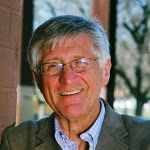
Dr. Daniel A. Kammen
No doubt you've heard people living in dense cities use less energy, and create fewer emissions. Since National Governments are doing practically nothing to confront climate change, cities are trying to lower their carbon footprint. But is the whole concept of densification working?
The answer to that question leads to deeper matters: How can we live with less, doing less damage, and still be who we are?
We're fortunate to get some insight from our next guest. Daniel M. Kammen is a heavyweight in energy research. He's advised everyone from the World Bank to the American government. Daniel is a member of the National Academy of Science and played a leading role in two reports of the Intergovernmental Panel on Climate Change. Right now he's a Professor of Energy at the University of California, Berkeley, and Director of the Renewable and Appropriate Energy Laboratory. He's written 12 books, hundreds of scientific papers, and advised governments on Energy Policy.
Download/listen to this interview with Daniel Kammen in CD Quality or Lo-Fi
Daniel has a brand new paper out in the journal Environmental Science & Technology. The title is: "Spatial Distribution of U.S. Household Carbon Footprints Reveals Suburbanization Undermines Greenhouse Gas Benefits of Urban Population Density."
One of the key concepts in this paper is the Household Carbon Footprint, or HCF.
Find some cool maps that show greenhouse emissions for most of America right here.
On Radio Ecoshock, I've played you several speeches on new urban design. The latest big push is to create super cities to reduce emissions from commuting and other energy use. It's called densification, but is it working? You may be surprised to learn that 20 percent of all emissions world-wide come from just one place - the American suburbs, the place where many listeners live.
One of the prime messages in this new paper on U.S. Household Carbon Footprints - is that the movement to simply pack
more people into cities, to reduce carbon emissions, isn't working in the real world.
Reading Daniel's energyblog in National Geographic, he attends many of the power conferences around the world, from Abu
Dhabi to London. I ask Daniel if he thinks leaders in large institutions and corporations realize we are on the brink of a climate catastrophe. Are people at the top getting the message?
Here is a link to Daniel's blog on the National Geographic web site.
THANKS FOR LISTENING!
I really appreciate you spending valuable time listening to these voices the mainstream media leaves out, or reduces to sound bites.
My special thanks to the many people who supported Radio Ecoshock through our Paypal donation button last week. That
helps me keep going on, finding the people you need to hear.
Download all our past programs as free mp3 at the web site, ecoshock.org
This is Alex Smith. Please join me again next week, for more news and views about our home planet.
Showing posts with label chemicals. Show all posts
Wednesday, January 15, 2014
Thursday, December 10, 2009
BULLDOZE SUBURBIA
Ecocities? Don't make me laugh... Just as Green Mayors finally arrive, the financial collapse is draining cities into poverty. San Francisco has almost half a billion dollars in revenue shortfall. Vancouver is slashing, starting with a 40 year-old plant conservatory. The only stimulus left is for the banksters and dinosaur highway projects.
It's time to call in Richard Register, one of the inventors of the ecological city concept. He knows the time is late. The climate is damaged. Energy is declining, along with the economy. Now Richard is going to take you on a lightening tour around the world, with visions from even the poorest people, with better ways to live. Maybe the big change will give us back living spaces to love.
I'm Alex Smith, for Radio Ecoshock. In our second half hour, we'll explore the currents of microscopic toxins that swirl around the globe, right into our homes and bloodstreams. We'll go chasing molecules with investigative author Elizabeth Grossman.
We'll also get expert tips on cutting your personal footprint up to 40%. That's The Economical Environmentalist, Prashant Vaze from London. He's an economist, formerly a top advisor to the British Prime Minister's office, on climate change policy. But don't expect boring wonk talk - Prashant walked the walk. He ventured to cut his personal carbon footprint drastically, while still working, seeing his extended family, and trying to live in the big city. Like the rest of us. How did he do it?
And bulldozing suburbia? Well, yes - eventually. That's the way Peak Oil and climate change take us, beyond the landscape that cheap oil and cheap money built. Read about it here.
Ecoshock 091211 1 hour CD Quality 56 MB or Lo-Fi 14 MB.
No copyright music. No station ID. And if my blog sucks this week, it's because I have the swine flu...and it ain't pretty. Still, I think it's a good program for you again this week.
No point getting into the Copenhagen mess yet. I'll save that until we see the results, if any.
Alex.
It's time to call in Richard Register, one of the inventors of the ecological city concept. He knows the time is late. The climate is damaged. Energy is declining, along with the economy. Now Richard is going to take you on a lightening tour around the world, with visions from even the poorest people, with better ways to live. Maybe the big change will give us back living spaces to love.
I'm Alex Smith, for Radio Ecoshock. In our second half hour, we'll explore the currents of microscopic toxins that swirl around the globe, right into our homes and bloodstreams. We'll go chasing molecules with investigative author Elizabeth Grossman.
We'll also get expert tips on cutting your personal footprint up to 40%. That's The Economical Environmentalist, Prashant Vaze from London. He's an economist, formerly a top advisor to the British Prime Minister's office, on climate change policy. But don't expect boring wonk talk - Prashant walked the walk. He ventured to cut his personal carbon footprint drastically, while still working, seeing his extended family, and trying to live in the big city. Like the rest of us. How did he do it?
And bulldozing suburbia? Well, yes - eventually. That's the way Peak Oil and climate change take us, beyond the landscape that cheap oil and cheap money built. Read about it here.
Ecoshock 091211 1 hour CD Quality 56 MB or Lo-Fi 14 MB.
No copyright music. No station ID. And if my blog sucks this week, it's because I have the swine flu...and it ain't pretty. Still, I think it's a good program for you again this week.
No point getting into the Copenhagen mess yet. I'll save that until we see the results, if any.
Alex.
Labels:
carbon dioxide,
chemicals,
cities,
climate change,
ecocities,
environment,
solutions,
suburbia,
urban design
Thursday, November 20, 2008
FOOD THREATS & SURVIVAL - PLUS HYBRID HUMAN POWER
We open up this program with a classic 1946 quote from U.S. President Harry Truman. Old Harry begs Americans to save scraps of bread to help feed the starving overseas. We haven't heard much of that recently, although an estimated 860 million something people are hungry to dying.
You get a 24 minute interview with Kathy Jo Wetter of ETC Group. They've just released a report ""Who Owns Nature? Corporate Power and the Final Frontier in the Commodification of Life." That's the title of the 100th newsletter coming from the ETC Group, published in November 2008.
It's an ambitious report naming exactly which corporations are trying to take over the world's food and drug industry, from seeds to processing and chemicals, all the way to your grocery store, and your body. Plus a lot of top ten charts that name names: the companies who control most of your food chain. They'd like to own it all.
Then I look at threats to our wheat supply, which is rapidly dwindling. We've used up more than we grew in 6 of the last 7 years. At their low point, just before the harvest, humans only have 55 days worth of wheat in reserve (as Lester Brown tells us in a quick clip).
Then there is the UG99 black stem wheat rust - a scary fungi that can destroy wheat crops. It was discovered in Uganda back in 1999, and spread up the East Coast of Africa. Then the only force five hurrican ever recorded in the Indian Ocean spread UG99 to the Middle East. It is now in Iran, and threatens to cross over into the Punjab bread basket of India. Maybe the Ukraine too.
Eventually this crop threat will reach North America. We have some fungicides, but not nearly enough, as outlined in this show. The resistant variety might take 5 years to get into the marketplace. A rust in 1954 killed forty percent - that's 40%!! - of the North American wheat harvest, so this is serious stuff.
Also, we don't have the big food warehouses anymore, in your city. The corporations are using a just in time system to deliver food directly from the source to your local food market. They use the trucks themselves as a rolling warehouse. So... if there is an emergency, whether climate, earthquakes, the bird flu, or just crop shortages and stopped trucks - you cannot depend on any outside source of food. Maybe it's time to consider your own food storage at home.
I interview Kari from Survival Foods Canada Business is really picking up there, as Canadians worry about their food supply, in the coming Depression. The same thing is happening in the United States, for companies like readyreservefood.com
FINALLY - WE CHANGE IT UP AND GO FOR HUMAN POWER STATIONS...
How about hybrid humans that produce their own electric power - just by walking around. Not only does this device exist - it makes walking easier, not harder. The invention is in it's earlier stages, led by Max Donelan of the Simon Fraser University Locomotion Lab.
The prototypes are being taken commercial, to provide power for those needing heart stimulation, or other internal body pumps that require a sure and rechargeable source of electricity. But the future possibilities are astounding. You would power your ipod/phone/computer just by walking down to the corner store. Perhaps in the future, all of us will become independent power stations, removing the need for bit climate killing fossil fuel plants.
I caught up with Max Donelan at a Cafe for Scientists in the Vancouver Public Library, on November 19th, 2008. In this 16 minute clip, introduced by CBC radio personality Hal Wake, Max explains his invention, plus the basics of human power use.
All in all, it's a full hour of information tinged with paranoia (or is that reality?)
Alex Smith
host
Radio Ecoshock
Production Notes: 30 second music bed for station ID starting at 29:34
No copyrighted music.
You get a 24 minute interview with Kathy Jo Wetter of ETC Group. They've just released a report ""Who Owns Nature? Corporate Power and the Final Frontier in the Commodification of Life." That's the title of the 100th newsletter coming from the ETC Group, published in November 2008.
It's an ambitious report naming exactly which corporations are trying to take over the world's food and drug industry, from seeds to processing and chemicals, all the way to your grocery store, and your body. Plus a lot of top ten charts that name names: the companies who control most of your food chain. They'd like to own it all.
Then I look at threats to our wheat supply, which is rapidly dwindling. We've used up more than we grew in 6 of the last 7 years. At their low point, just before the harvest, humans only have 55 days worth of wheat in reserve (as Lester Brown tells us in a quick clip).
Then there is the UG99 black stem wheat rust - a scary fungi that can destroy wheat crops. It was discovered in Uganda back in 1999, and spread up the East Coast of Africa. Then the only force five hurrican ever recorded in the Indian Ocean spread UG99 to the Middle East. It is now in Iran, and threatens to cross over into the Punjab bread basket of India. Maybe the Ukraine too.
Eventually this crop threat will reach North America. We have some fungicides, but not nearly enough, as outlined in this show. The resistant variety might take 5 years to get into the marketplace. A rust in 1954 killed forty percent - that's 40%!! - of the North American wheat harvest, so this is serious stuff.
Also, we don't have the big food warehouses anymore, in your city. The corporations are using a just in time system to deliver food directly from the source to your local food market. They use the trucks themselves as a rolling warehouse. So... if there is an emergency, whether climate, earthquakes, the bird flu, or just crop shortages and stopped trucks - you cannot depend on any outside source of food. Maybe it's time to consider your own food storage at home.
I interview Kari from Survival Foods Canada Business is really picking up there, as Canadians worry about their food supply, in the coming Depression. The same thing is happening in the United States, for companies like readyreservefood.com
FINALLY - WE CHANGE IT UP AND GO FOR HUMAN POWER STATIONS...
How about hybrid humans that produce their own electric power - just by walking around. Not only does this device exist - it makes walking easier, not harder. The invention is in it's earlier stages, led by Max Donelan of the Simon Fraser University Locomotion Lab.
The prototypes are being taken commercial, to provide power for those needing heart stimulation, or other internal body pumps that require a sure and rechargeable source of electricity. But the future possibilities are astounding. You would power your ipod/phone/computer just by walking down to the corner store. Perhaps in the future, all of us will become independent power stations, removing the need for bit climate killing fossil fuel plants.
I caught up with Max Donelan at a Cafe for Scientists in the Vancouver Public Library, on November 19th, 2008. In this 16 minute clip, introduced by CBC radio personality Hal Wake, Max explains his invention, plus the basics of human power use.
All in all, it's a full hour of information tinged with paranoia (or is that reality?)
Alex Smith
host
Radio Ecoshock
Production Notes: 30 second music bed for station ID starting at 29:34
No copyrighted music.
Subscribe to:
Posts (Atom)


