Showing posts with label alternatives. Show all posts

Wednesday, October 28, 2015

PERMACULTURE, CLIMATE & SURVIVAL #2

SUMMARY: This is the second program from International Permaculture Convergence, in London. Keynote speech by internationally known Geoff Lawton. 3 interviews by Albert Bates: from UK, Andy Goldring of Permaculture Association; from Germany Declan Kennedy; from USA Andrew Millison.Real solutions for the real world. Radio Ecoshock 151028

Download or listen to this Radio Ecoshock show in CD Quality or Lo-Fi.

Or listen on Soundcloud right now!


FROM AUSTRALIA: GEOFF LAWTON

Would you like a persistent source of short videos of hope, where people like you generate abundant food working with nature, rather than against her? Just get on Geoff Lawton's mailing list. He's turned me on to permaculture do-ers who have ended up as guests on Radio Ecoshock.

After writing books on permaculture, and teaching literally thousands of students, Lawton is among the few who have designed and guided major eco-restoration projects in many countries, including at the request of governments. In the last few years, he's put out tons of videos (many free) and DVD courses for sale. His videos have made him famous. Here is a list of 200 of his videos on You tube!

So it's fitting that despite a belief in non-hierachical networking, Geoff Lawton give a first keynote speech at the 15th Annual International Permaculture Convergence, held in mid-September 2105, in London.


Here is that talk. Download or listen to this 25 minute presentation by Geoff Lawton (lightly edited for radio) in CD Quality or Lo-Fi

The Lawton presentation came at the International Permaculure Convergence, in mid-September in London. Find more about Geoff at http://geofflawton.com/

You can find a whole series of You tube videos of presentations at this Convergence on You tube here.

FROM GERMANY: DECLAN KENNEDY

Next up, Albert Bates interviews the Octagenarian permaculture activist, transplanted from Ireland to Germany, Declan Kennedy.

Wiki tells us:

"Declan Kennedy (born 24 July 1934, in Dublin) is an Irish architect. He was a leader of the Global Ecovillage Network Europe (1995–99), Director of the Permaculture Institute for Europe (1984–89), and Vice President of the Berlin Institute of Technology (1975–78). He has been Professor of Architecture at the TU Berlin since 1972."


Declan Kennedy

Here is Declan's page and bio at Gaia University.

Download or listen to this 5 minute interview by Albert Bates with Declan Kennedy in CD Quality (only)


ABOUT OUR GUEST HOST ALBERT BATES

Albert is the author of books like "The Biochar Solution: Carbon Farming and Climate Change" and "The Post-Petroleum Survival Guide and Cookbook: Recipes for Changing Times". He is the host of "The Great Change" blog at peaksurfer.blogspot.ca. Bates has lived at the iconic Tennessee intentional community "The Farm" for decades.

While attending the Permaculture Convergence, Albert volunteered to interview some of the top permaculture leaders for Radio Ecoshock. Thank you so much Albert!

If you are attending cool conferences, why not take along a good recording device. Think of all the air miles you've save me - and Radio Ecoshock listeners. Best to check with me first, using the contact form at my web site, ecoshock.org, or just write me: radio //at// ecoshock.org.

FROM THE UK: ANDY GOLDRING

Albert's next guest is one of the long-serving leaders and communicators of Permaculture in the United Kingdon. For many years, Andrew/Andy Goldring has been the Co-ordinator and CEO of the Permaculture Association in Britain since 1999.

We find out more in this interview by Albert Bates...

Download or listen to this 13 minute interview by Albert Bates with Andy Goldring in CD Quality or Lo_Fi


Andy Goldring is a driving force toward a greater international organization and wide-spread skill and knowledge sharing.

FROM THE USA: ANDREW MILLISON

Albert Bates contributes our last interview, this time with Andrew Millison, from Corvalis, Oregon. Let's get this American perspective on the highs from the 15th International Permaculture Convergence in London, last September. Andrew Millison is a professional permacultural designer working out of Corvalis, Oregon.


Download or listen to this 13 minute interview by Albert Bates with Adrew Millison in CD Quality or Lo-Fi


ARE WE ON THE ROAD TO PERMACULTURE?

It's fair to say this world, our times, are suffering from growing pains. As a core project of our civilization and existence, we grow food in unsustainable ways, threatening the future, and destroying nature in the present. I'm convinced. In my little village plot, I have started down the road toward a culture than can last through the ages. What about you?

One further note: please help pay the bills at Radio Ecoshock if you can. You can become one of my treasured supporters who pay $10 a month automatically via PayPal, or make a single donation of any amount. Get the details and easy buttons to click on this page.

Thank you for listening to these alternative voices on Radio Ecoshock. And thank you for caring about our planet.

Next week, I'll be covering some very serious news about the climate, and troubles to come in our developing future. Stay tuned.

Wednesday, April 29, 2015

SPINNING WORLD, ANGRY PLANET

SUMMARY: Welcome to a power-packed Radio Ecoshock Show. I'm Alex Smith. My guests are George Kourounis, host of the TV show "Angry Planet", and the solar-powered international musician known as Turtuga Blanku. But first, we'll talk with a high-powered international lawyer who switched from taking multinational companies into China, to creating new alternatives for local economies.

Download or listen to this Radio Ecoshock show in CD Quality (56 MB) or Lo-Fi (14 MB)

Or listen on Soundcloud right now!


LAURENCE BRAHM - TOWARD A NEW ECONOMY FOR A DAMAGED WORLD

Radio Ecoshock has remarkable guests. Our next is no exception. He was a lawyer advising China, to bring big name multinational companies into that Asian economy. Now he's writing about anti-globalization, localizing economies, and the coming eclipse of the Western banking model. His latest book is "Fusion Economics - How Pragmatism Is Changing the World".


Who is Laurence J. Brahm? Let's find out.

In the 1990's, as an international trade lawyer, Laurence Brahm was instrumental in bringing big-name multinational into China. In 1996, he wrote a book called "China's Number One" predicting China would become the world's largest economy. That drew heat and criticism, but now, according to the World Bank, China is the world's largest economy.

More and more, Brahm turned to advising the government of China, which he still does. He wrote a biography of Zhu Rongji, the former Premier of China, and often seen as an architect of the modern Chinese economy.


Laurence Brahm

In 2002 Laurence retired from his practice as an investment lawyer, to seek "Shangri-La". In 2005, he moved to Tibet, and started a business restoring buildings. He helped found the Himalayan Consensus (more about that in the interview). One of his role models is the Bengladeshi Muhammed Yunis, founder of micro-credit banking.

Also in 2011, he helped form the African Consensus. One innovations of this Consensus was to say the true cause of violence and terrorism is economic poverty and identity stripping.

In 2011 Laurence attended the Climate Conference in Durban South Africa. He found it useless, and joined the protesters outside. He says China is more aware of the dangers of climate change, especially since the disappearing Himalayan Glaciers will dry out the Yellow River. Brahm is quite aware of the challenges climate change is posing for many countries and peoples.

In 2014 he attended the Nepal Economic Forum (see You tube presentations here), and in 2013 the G20 Counter Summit in St. Petersburg (You tube here).

On the economy, Laurence sees the end of world domination by the Bretton Woods World Bank IMF model. In the near-term he sees two parallel universes: the Western reserve currency system, and the BRICS (Brazil, Russia, India, China, South Africa) system, based mainly on the Chinese currency Yuan (pronounced Yen) and in Beijing.

He sees the latest sanctions on Russia driving that country closer to China. The two can be natural trading partners, because China needs to import clean food (much of China is not able to produce food, and Chinese food may be contaminated); and water (Beijing itself is facing desertification, China needs a lot of water). To make this trade happen, there needs to be more infrastructure, such as pipelines and roads, connecting the two countries.

His latest book is "Fusion Economics - How Pragmatism Is Changing the World". Brahm is a curious mix of a lawyer at home with CEO's and bankers, who also protests as an activist.

Laurence has his own You tube channel. He talks about "compassionate capital" and "conscientious consumption". Brahm recommends we set up our own alternative financial systems (like local currencies, or bitcoin).

On BBC in December, Brahm said 80% of the wealth of America comes from betting on stocks, currencies and other financial games, and not from producing goods and services. That is not sustainable.

China's super growth came at tremendous cost. Brahm told the BBC that, "about 70% of the underground water in China is undrinkable" (BBC interview 8:49) and "about 60% of all surface water is too toxic for human contact".

Brahm is not a total advocate for all things Chinese. He is critical of their use of fossil fuels, the pollution in major cities, and doesn't think top-down government is good for other countries. He says the emphasis on growth in China was a machine for burning fossil fuels, which has ruined the environment. We can learn from China, but should not try to emulate them.

He says the oil-fossil fuel sector forms an oligarchy that currently runs America. That is why there is no Amercian leadership on climate change. Oil-fossil fuels run in a partnership with the Financial Sector, labelled "Wall Street". Quantitative easing, and over a trillion of tax payer money, went to reboot that financial sector, not to the people. He advises the Chinese that government funding should go to a new green economy, instead of the banks.

Laurence is listed as "Chief Economist" for the New Earth Nation (with Sasha Stone).

Download or listen to this Radio Ecoshock interview with Laurence Brahm in CD Quality or Lo-Fi

GEORGE KOUROUNIS - HOST OF ANGRY PLANET TV

There's so much interest in extreme weather. Almost every news cast features a storm. And with climate disruption, there will be plenty more to see.

That's good news for our next guest, George Kourounis. He travels the world looking for adventure and downright dangerous weather, for his television series "Angry Planet". There's a new batch of shows running right now, so it's a pleasure to welcome George to Radio Ecoshock.

There have been 4 Angry Planet series, running on everything from the Weather Network, the Outdoor Life Netowork in Canada to cable TV channels all over the world (including Finland MTV3, TV8 Sweden, and TVB Hong Kong).

This new season 4 has a special emphasis on stories about the impact of global warming, all over the world, but with a focus on the South Pacific. Some countries there are already flooding regularly, and some will disappear as nations during this century, due to rising seas.

You can watch the free Episode One on the Pivot TV web site here.

George got the storm-chasing bug in the 1990's. He's flow into the heart of hurricanes, and run down the back roads in Oklahoma and the Mid-West looking for the big one. He's also a fan of volcanoes. In fact, he and his wife Michelle hiked into a volcano in their wedding clothes to tie the knot in 2006. It's wasn't a dead mountain either. That one has erupted every 5 minutes for the past 800 years, he tells us.

George has been in Amazon forest fires. One time he landed in the South Pacific island of Tuvalu just as they had 354 mm of rain (13.9 inches, over a foot!) in 24 hours. That's an extreme precipitation event for sure.

It's great that Kourounis is so aware of climate change. He worries we are going to leave a legacy to coming generations they may not be able to deal with. He's getting the word out through this new Angry Planet series: the relationship between extreme weather events and climate change. It's refreshing to find an adventure TV host this climate aware. Catch his new Angry Planet series on Pivot TV if you can.

Download or listen to this Radio Ecoshock interview with Geourge Kourounis in CD Quality of Lo-Fi

TURTUGA BLANKU AND HIS SOLAR STUDIO

Regular listeners know one of my hobbies is writing music using computer synthesizers. Martin, who is known at Turtuga Blanku, got in touch, to tell me about his solar studio in the Caribbean. You can visit the studio in this You tube video.


Here is a You tube listing of his eco music.

Why the name Turtuga Blanku? It literally means "white turtle" but is also a name given in the Caribbean to the green turtle. You see, Martin is also a diver and ocean lover. He was in the Caribbean at one of the finest dive locations in the world. That's where he got his knick-name.

During the interview, I learned something new (as I often do from guests). Martin tells us that solar panels are less efficient in high heat. While he got lots of power from his panels in the Caribbean (enough to run his house and studio) - he's get as much or more from the same panels in France. The sub-tropics are good for solar.

Martin has just moved back to "the middle of France". He'll set up a solar studio again. Plenty of his neighbors have solar installations, some large ones, thanks to the French policy of guaranteeing a good rate for renewable power, and in some cases, helping finance the original purchase.

We talk a bit about music. Martin has more talents than I - he can play a range of instruments, which he records and then tweaks on a studio computer. It's good stuff - hard to describe - you just have to click around to find the songs you like best. I enjoyed his music, and his conversation.

Find all of Martin's songs, or at least a lot of them, on You tube here.

Then head over and buy your favorite tunes (quite inexpensive) at his Bandcamp page here. Martin has also done some podcast interviews, including with Alan Weisman, the author of the World Without Us, who also spoke on Radio Ecoshock. Find Martin's interview with Alan here.

And here's a bunch more contact info:

Web: http://www.TurtugaBlanku.com Facebook: https://www.facebook.com/TurtugaBlanku Soundcloud: https://soundcloud.com/turtuga_blanku Download or listen to this Radio Ecoshock interview with Turtuga Blanku in CD Quality (recommended for the best music) or Lo-Fi (not recommended unless you have a very slow internet connection).


In this program I play a clip from a Turtuga Blanku tune called "No More" from his album Golden Bubble.

BLOG READERS AND PODCAST SUBSCRIBERS SUPPORT THIS PROGRAM, GETTING IT OUT TO NON-PROFIT RADIO STATIONS IN 4 COUNTRIES.

My special thanks to those who sent donations this week, and particularly the person who arranged a $10 a month contribution. All that helps me get through the summer, when donations crash. In a way, it's almost unfair that blog readers, and podcast subscribers pay the whole cost of Radio Ecoshock. The non-profit stations prohibit anyone asking for money, other than themselves. So a few people are really paying to get Radio Ecoshock to all those radio listeners on 87 non-profit stations! You are doing a good thing.

If you can help, click here for details.

Thanks for joining us this week. Stay tuned for more shocking news from Planet Earth. I'm Alex Smith. Keep caring about your planet.

Tuesday, October 29, 2013

Desperately Seeking Solutions

SUMMARY: A medley of ways. From New Zealand, green alternative economy with Laurence Boomert. Dr. Sharon Gourdji, U of Fla. on crops & climate. Josh Fox (Gasland) riff on fracking. Pacific growing expert Lorene Edwards Forkner.

QUICK WRAP: Laurence Boomert green business and politics in New Zealand. After founding a biz network, he now runs the Bank of Solutions. Terrific ideas for all of us.

Dr. Sharon Gourdji, Stanford University, researches the impacts of climate heating on crops - especially during the critical period when they flower. We talk the case study of her recent trips to Nicaragua.

At Powershift 2013, the Director of the movie "Gasland" wowed the crowd with his anti-fracking speech/rant. France banned it, the Netherlands is next, and fracking protests explode in the U.S. & Canada. Australia and UK take note!

Lorene Edwards Forkner is editor of Pacific Horticulture Magazine, and a home-grower extraordinaire. Tips for grow-it-yourself and local production. This interview was recorded in June 2013 at the Mother Earth News Fair in Puyallup Washington.

Download/listen to this Radio Ecoshock Show 131030 in CD Quality or Lo-Fi

LAURENCE BOOMERT: REAL SOLUTIONS


Almost every week Radio Ecoshock details our head-long flight into a complex series of environmental, economic, and social disasters. But where are the solutions?

There are many answers out there. What we need is a collection place to gather the things we need to know. Enter Laurence Boomert and the "Bank of Real Solutions".

Boomert is a long-time New Zealand activist who founded the successful Environmental Business Network in the 1990's. Along with a group called "Living Economies", Laurence co-published and wrote for the book "Fleeing Vesuvius: Responding to the effects of economic and environmental collapse”.

Laurence Boomert is currently on a tour of North America with our previous guest Nicole Foss.

Download/listen to this 18 minute Radio Ecoshock interview with Laurence Boomert in CD Quality or Lo-Fi

Most of the doomers I track, picture New Zealand as the place to run, after Fukushima or the economy blows up. At least New Zealand could feed itself. Is it all a green garden party there down-under?

Laurence says New Zealand has a lot going for it, but the current political climate is anti-green. In fact the Prime Minister formerly worked for a big investment house, Merrill Lynch. Previous green legislation is being dismantled, just like in Australia.

We talk about the political party Laurence co-founded, (the New Economics Party) - but more about his web site The Bank of Real Solutions. Currently it is a collection of things that really work to change the world in New Zealand. Take a look, you will get some great ideas for your own area.

Laurence is just now taking it global, working on founding The World Bank of Real Solutions. Watch for that.

Laurence Boomert, in You tube videos and writing, says cities could be sustainable. Looking at cities designed entirely around automobiles and fossil fuels, I'm not so sure. Can mega-cities really transition?

We also talk about collapse. It can happen quickly, Boomert says. Just look at Argentina in 2001. Or Ireland trying to recover right now.

In the United States, we are seeing shadows of collapse already. Detroit went bankrupt. The federal government shut down. Food stamps stopped working for a few hours, leading to mini-riots. Is there still time to organize and launch local economies? Boomert says yes, if we can get going now.

He offers some terrific examples from New Zealand, like community currency, and time banking that even helps the needy. Ten percent of his own small community operates on local currency.

Boomert suggests you visit this web site from South Africa for a look at more solutions being tried around the world: ces.org.za The full name is Community Exchange.

Laurence also has an ebook - a $3 manual on local currency "Get A Handle on Hands." More info about that here. Or buy it here.

This interview is full of useful tips. Like this organization "Living Economies".

Oh, by the way, Laurence also adapted an Irish idea, helping to organize and publish the solutions book called “Fleeing Vesuvius: Responding to the effects of economic and environmental collapse.” That book is hard to find at the moment. Look here.

In this You tube video, Boomert says the financial system is "horrifically ruined" and fragile. He claims we have a corrupt parasytical system build on fraud. Then he outlines how you and I can bypass that system to create our own.

Part 2 of that You tube video is here.

Contact Laurence Boomert by email: laurenceboomert@xtra.co.nz

SHARON GOURDJI: THE SCIENCE OF CROPS AND CLIMATE


Since gaining her PHD in Environmental Engineering, and moving to Stanford University, Sharon Gourdji has specialized in the impacts of climate change and food production around the world.

Her latest co-authored paper was published in Environmental Research letters in June 2013. It's title tells us something important for everyone who eats: "Global crop exposure to critical high temperatures in the reproductive period: historical trends and future projections."

Here is the official citation: Environmental Research Letters, Vol. 8 no. 2, page(s) doi:10.1088/1748-9326/8/2 June 14, 2013

Your can read the abstract, and the full paper online here.

Download or listen to this interview with Sharon Gourdji in CD Quality or Lo-Fi

I was introduced to this subject by an unlikely source. A hippie You-tuber from Texas complained his garden flowered but set no fruit - because night-time temperatures stayed too high at a critical time. So it's not just that it's hotter, but WHEN it's hotter that counts for agriculture - and gardens.

That full video from "humptydumptytribe" is worth a watch.

But in this show we head for the real science. Sharon Gourdji has just finished a year-long Fulbright Nexus program focused on climate change and adaptation strategies in the Western Hemisphere.

I'm going to quote a communication from Sharon here to explain some of her other work:

"Prior to the extreme heat study, I published a paper looking at gains in breeding wheat for heat-tolerance by the world's preeminent wheat breeding organization CIMMYT (or International Center for the Improvement of Maize and Wheat in Spanish, based in Mexico, primarily responsible for developing the germplasm behind the Green Revolution in Latin America and Asia). The results were that most of the gains in breeding wheat for high yield potential have come in optimal environments with high radiation, cool temperatures and irrigation."

On a down-to-earth level, Sharon has just returned from Nicaragua, where she visited farming regions to determine how climate has affected the bean crop.

Apparently the red beans so loved by Nicaraguans are stressed by excess heat and the yields are declining. Black beans do better in the new growing conditions, but Nicaraguan farmers grow them mainly for export at this time. Folks in Columbia, where Gourdji also did research, like the black beans as a staple.

Complicating all this: Nicaragua has lost at least one third of it's forest cover since 1980. This changes microclimates, rainfall, and soil erosion. Deforestation and climate change can play off against one another.

Lester Brown from the Earth-Policy Institute has stressed some major crops, including rice, are already near their temperature limits. I've covered that on Radio Ecoshock. We discuss these important limits with Sharon.

It's hard to imagine a more important subject for scientific study! How will we feed the world's increasing population if climate change harms the growing cycle at critical times? Gourdji is fairly optimistic. She says farmers have always had to adapt to changes in weather - and there are international organizations working to breed plants better able to produce - even without Genetic Modification (GMO's).

Here is Sharon's professional page.

JOSH FOX RANTS AGAINST FRACKING AT POWERSHIFT 2013

In previous Radio Ecoshock shows we've had young people testifying about their drive to save the climate and find eco-justice - partly through the Powershift 2013 program in Pittsburg in October.

This week I run an 8 minute riff from Josh Fox, the Director of the anti-fracking expose "Gasland".

You can see the Powershift video here. (It will take a couple of minutes to load to the Josh Fox clip I've selected. Hang in, it's worth it).

France has banned fracking. The Netherlands is about to. People all over the world question why we need to blow up the underground, poisoning it with super toxic chemicals, just to get more dangerous fossil fuels.

Josh's follow-up to Gasland is now playing on HBO.

LORENE EDWARDS FORKNER - PACIFIC SUPER GARDENER


When I was at the Mother Earth News Fair last June, I had the pleasure of talking with Lorene Forkner.

Her blog is called "Planted at Home".

Lorene is the editor of Pacific Horiculture Magazine, and author of several books. Her latest is "Handmade Garden Projects: Step-by-Step Instructions for Creative Garden Features, Containers, Lighting & More".

She's the co-author of 3 previous titles published by Sasquatch Books including: "Growing Your Own Vegetables: An Encyclopedia of Country Living Guide" and "Canning and Preserving Your Own Harvest: An Encyclopedia of Country Living Guide".

With all that going for her, you can bet we have a great conversation about growing food - from California right up to Washington State. People around the world can learn from Lorene Forkner. I did.

Download or listen to this interview with Lorene Edwards Forkner in CD Quality or Lo-Fi

THREE INTERVIEWS PLUS ONE RANT

That was a packed show. I hope you pass it around.

I'm Alex Smith. Help support Radio Ecoshock and get free downloads at the web site ecoshock.org.

Welcome to all our new listeners, and thank you for listening - and caring about your world.

Tuesday, May 21, 2013

Who Will Control the Climate of the World?

Australian author Clive Hamilton on geoengineering & his new book "Earthmasters". Plots by big oil, Bill Gates & nuke scientists. Shocking new science shows Arctic could melt at current carbon levels. Plus world-wide growth of bike sharing with Janet Larsen of Earth-Policy. Radio Ecoshock 130522 1 hour http://tinyurl.com/mg5uj4w

Welcome traveller. Can you handle the truth?

I didn't think so. Me neither.

But it will happen anyway. Science is beginning to prove we have already changed the planet's climate in dangerous ways.

A small group of climate scientists, backed by a billionaire and big oil, are considering taking over control of the climate, to stave off disaster. Then we'll find proof our current 400 parts per million will melt so much Arctic and Antarctic ice, warming up to 8 degrees C, flooding the world's largest cities.

We'll wrap that up with one of the few positive alternatives growing in this disturbed scene: a wave of bike sharing around the world. Includes Europe, U.S., Mexico, South America, China.

FREE MP3 AUDIO DOWNLOADS FOR THIS PROGRAM

Listen to/download this Radio Ecoshock Show (1 hour) in CD Quality (56 MB) or Lo-Fi (14 MB)

Listen to/download the Clive Hamilton interview on "EarthMasters" (geoengineering 25 min) in CD Quality or Lo-Fi

Listen to/download Janet Larsen from Earth Policy Institute on world-wide bike sharing (24 min) in CD Quality or Lo-Fi

LISTEN TO THIS RADIO ECOSHOCK SHOW RIGHT NOW (courtesy of archive.org)


==========

CLIVE HAMILTON - EARTHMASTERS
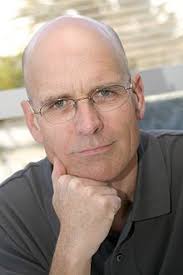


Clive Hamilton

Gather round boys and girls as we tell the story of the Earthmasters - the men who would take over from nature, to run the climate of the world. Or do they mean to save us from our fossil-addicted selves?

For all who love a conspiracy, geoengineering has it all. The oil companies, far-right think-tanks, nuclear weapons scientists, and even Bill Gates. But you'll have to hang in, while we first look at a few small problems in their plans.

Our guide is Clive Hamilton. After careers in the Australian public service as an economics and resource advisor, and several stints at Universitites like Yale, Cambridge, and Oxford, Hamilton founded and ran a progressive think-tank called the Australia Institute. Now he's Professor of Public Ethics in a program run by two Australian universities.

You may have heard of books Clive's written or co-written, including "Growth Fetish", "Affluenza", "Silencing Dissent" and more recently "Requiem for a Species: Why we resist the truth about climate change." But his latest is "Earthmasters, The Dawn of the Age of Climate Engineering."

We reached Clive Hamilton in Canberra.

We cover a lot of important points. One of the big questions: if we start cooling the planet, say with Solar Radiation Management, what happens if we stop? Answer: the temperature goes up very quickly in a matter of months or even weeks, as the aerosols are rained out. It could be a jump of several degrees.

That leads to an absolutely key point: the RATE if temperature increase is possibly more important than the overall increase. If we gain a half a degree per decade, some plants, animals and ocean species will have time to migrate further toward the poles, or higher up mountains, to survive. But if there is a relatively sudden jump of one or two degrees global mean temperature, (more in some areas) - then mass extinctions will result. That is one of the supreme risks of geoengineering.

It's easy to picture a scenario where a fleet of aircraft spraying sulfates, or a fleet of ships spraying up salt water continuously, could stop. A financial crash, war, plague, or terrorism could end the program. Then all of the heating we've covered up with geoengineering would strike the planet. No one has a tenable answer for this problem.

A second key issue: who will decide when and how to start geoengineering? A single country could do it, like Russia, the United States, or even Malaysia. It's possible a billionaire could decide to cool off the planet, with no public consultation. In fact, we learn that Bill Gates, the Microsoft Founder, has been pouring millions into a research fund to develop science - and patents! - to cool the planet. Some businessmen hope to make money controlling the technology that could save us from extreme climate change.

The Gates foundation has been advised by two scientists in particular, Ken Caldeira and David Keith. These are highly regarded climate scientists, Caldeira from Stanford and Keith from Harvard. David Keith is a great example of a man who seems to deny climate change, or at least thinks it won't matter to humans, we can adapt - and yet he gets money from Canadian Tar Sands billionaire N Murray Edwards to further the cause of geoengineering. How can Conservatives have it both ways? Another important player in this "geo-clique" is Brad Allenby.

Gates has started several companies investigating geoengineering, one called "Intellectual Ventures". The CEO is Nathan Myhrvold, formerly Chief Technology Officer at Microsoft.

Another associate at Intellectual Ventures is Lowell Wood, a former nuclear weapons researcher at Lawrence Livermore National Laboratory and protege of the late Edward Teller, inventor of the hydrogen bomb. Before his death, Edward Teller was promoting a scheme to launch millions of mirrors into space to deflect the sun away from the Earth. Teller was a Cold Warrior who also championed the "Star Wars" scheme under President Ronald Reagan. Wood is one of a collection of people who moved from nuclear weapons research into geoengineering. And why not? If you think humans should control the Earth by force, why not control the climate the same way? In fact, some of these men want to control Nature entirely. Former Vice President Dick Cheney or the current Dictator of North Korea would probably agree that's a good thing.

Such schemes reduce sunlight for all creatures on Earth, including our own needs for agriculture. And they do nothing to stop the equally deadly acidification of the oceans from our fossil fuel pollution.

Obviously, big oil and coal companies would love to have a technological solution that lets them burn even more of their polluting produces. In the interview, and in his book Earthmasters, Clive Hamilton tells us how Exxon/Mobil and Shell are investing in geoengineering schemes.

Strangest of all, the right-wing think tank the American Enterprise Institute also backs Solar Radiation Management, or geoengineering, to stave off global heating. The AEI was previously given millions of dollars, and acted to deny global warming was even happening. That's quite a switch, going from denial straight to demanding emergency action to stop climate change!

Clive Hamilton suggests the problem of global warming indicates a failing of the free market system - since the true cost of polluting the atmosphere was never factored in. But now, with geoengineering, the capitalists system tries to vindicate itself by converting a horrible problem into a wonderful victory with technology it controls.

Due to time limitations, we didn't cover technologies to suck carbon dioxide out of the air. People are going to have to buy the book to get that.

Part of the reason Clive wrote the book, and is now touring North America, is to wake up the public and get a real discussion going about who should control this tech, if we ever need it. Naturally, the far better solution is to drastically reduce our greenhouse gas emissions before we lose the climate civilization depends on.

Find out more at Clive's web site.

Now in fairness, we have to say there are genuine and worthy climate scientists who are terrified about the way the climate trap is going. They don't get money from the military or Bill Gates. They just see the Arctic meltdown and species leaving the stage forever, and think "we've got to do something fast". What could we do that isn't too crazy or dangerous?

I think there will be a "climate emergency". We get two years where crops don't grow. It could be floods or extreme heat, whatever. Millions die and there is a call for action. The geoengineers step forward with a plan. Will we be able to say "no"?

That's why I didn't ask Clive about international negotiations or laws. It's still the Wild West of the atmosphere, where just one determined dictator, billionaire, or president could decide to cool the world.

NEW SCIENCE FROM THE ARCTIC: WE MAY HAVE ALREADY PASSED THE BIG MELTING POINT

In the last year, scientists discovered a climate record going back over 3 million years - long beyond the ice core records of 800,000 years. Research led by Professor Julie Brigham-Grette, from the University of Masschusetts, Amherst drastically changes our understanding of the world.
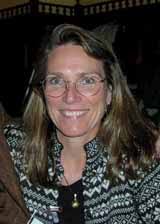


Julie Brigham-Grette

She's been studying a meteor-impact lake called El' gygytgyn on the Eastern tip of Siberia.Drilling into a lake in the Russian Arctic, created from a meteor strike ages ago, she found several periods where the Arctic was up to 8 degrees warmer than today. That despite carbon dioxide levels thought to be similar to, or below, today's 400 parts per million. Zoom out on this Google Map to see where that lake is.

The Greenland Ice sheets have repeatedly shrunk to half current size. The West Antarctic Ice Sheet completely disappeared 1.1 million years ago. The sea level was tens of meters higher than today.

All this happened not with carbon levels like the 600 parts per million and above projected by politicians and planners, but at only 400 parts per million, our current level. It appears we may have already arrived at greenhouse gas levels sufficient to drastically warm the poles, make sea ice history, melt Greenland and parts of Antarctica, and flood coastal areas around the world. All that may be only a matter of time.

In the radio show I play a selection of key clips recorded from a You tube video presentation by Dr. Julie Brigham-Grette, at Amherst, in the summer of 2012 - almost a year ago, and yet hardly anyone has heard of these startling findings. Find out more at frontierscientists.com, hosted by University of Alaska, Fairbanks.

I highly recommend you watch this full Youtube video of Julie Brigham-Grette with all the graphs and charts. Scary stuff.

FINALLY SOME GOOD NEWS: BIKE SHARING IS EXPLODING AROUND THE WORLD!

Quick quiz: what way of getting around is growing faster than "any mode of transport in the history of the planet?"

If you said cars, motorbikes, or skateboards... nope. The right answer is "bike sharing". It's almost enough to give us hope - and that's the intention of the the ongoing work called "Plan B" from Lester Brown's Earth Policy Institute.

Here to brighten our day with news about the wave of carbon-friendly bicycle travel around the world is Janet Larsen. She's the Director of Research for the Earth Policy Institute. Over 500 cities world-wide have installed millions of share-able bikes.


Janet Larsen, Earth Policy Institute

There's plenty of bike action in North America, but we start with Europe. They have been the world leaders in urban biking, other than China. A few of us heard about free bikes in Amsterdam back in the day, but those were stolen to be sold off in Eastern Europe. We talk about bicycle solutions today in Amsterdam and Copenhagen.

The Copenhagen "Bycyklen" system just shut down at the end of 2012, as part of "austerity". There was such a big public outcry, the government has now promised a new modern bike sharing system to replace it.

The French were never known for their biking, but Citi Group helped pioneer a sharing system in Rouen that was very successful. Now every tourist to Paris enjoys the great bike sharing system there.

I wince with pain when I think about what happened in China. In the early 1990's, we all saw video of throngs of commuters biking into work in most of China's cities. Now that's been wiped out by the same polluting car culture developed in America, and pushed by many of the same car companies, like General Motors. That car-culture is beginning to fail them. China is still the world's largest bicycle maker, and some Chinese cities have installed a lot of shared bikes, up to 90,000 in one city alone. There are lots of exciting things going on with biking in China.

In our interview, we also look at the challenges facing bicycle transport in Mexico, and innovative programs in Central and South America.

NORTH AMERICAN BIKE SHARING

Another whole aspect of this is bike messengers and inner-city deliveries. We have a small fleet of tricycle "freight" bikes operating in downtown Vancouver.


Freight Tricycle Vancouver (photo Alex Smith)

No doubt you've heard that New York City will be opening a giant new bike sharing program later this Spring. The first 5,000 subscriptions for shared bikes sold out quickly. Other cities, even Tusla Oklahoma, are scoring successes with new bike paths and bike sharing.

The list of bike benefits is so long. They offer independence, even if the main grid goes down, or oil prices skyrocket. You help save the climate, and help save your health at the same time. I wonder, is anyone doing the calculations about how fast we need to develop the bicycle transportation network, to be energy secure, and to make a major dent in climate-damaging car emissions?

This bicycle update is part of a series on the positive news coming from the institute, covering everything from clean alternative energy to climate-friendly diet changes. It's called "Plan B" as advanced by the Institute's founder, Lester Brown.

Track it down at earth-policy.org.

============= Please support Radio Ecoshock if you can, at our web site, ecoshock.org And grab lots of our free mp3 downloads of past shows.

Are we out of time? Find out next week, as I look into human extinction. I'm Alex. Thanks for hanging in.

Wednesday, December 1, 2010

Local Food - Growing Sane

Avocados from South America. Apples from New Zealand, instead of the next valley. Industrially-grown carrots with no taste, no vitamins, but a microscopic coating of carcinogenic pesticides.

Meanwhile we are paving over the nearby farms, leaving our cities utterly dependent on global corporations. On cruelty to workers and animals. On oil and daily long-distance trucks. If something breaks down, or just runs down into collapse, your city can go to a starvation in a single week.

And the great food system keeps heating the planet, threatening all agriculture.

Against all that, is a rising tide of support for local food producers. It is a food revolution, and I don't use that word lightly. You will hear two voices of sanity, and yes, of hope.

The local food movement started with a book "The 100-Mile Diet" by Alisa Smith and James MacKinnon. In Vancouver, Canada, this couple went a year, eating only locally produced food. It wasn't easy then. It is much easier now, in many North American cities, as the idea of sustainable cities catches on.

Five years beyond the success of their first book, Smith and MacKinnon give us a rapid-fire tour of great ideas, the 10 best local food projects in the United States and Canada. With a culture check against a tiny village in Northern Spain. Are the Europeans really better with their food?

You'll be surprised as local food networks spring up in Toronto, New York, Michigan, and Los Angeles.

This talk was recorded by Alex Smith, for Radio Ecoshock, at the Museum of Vancouver, Canada, on November 25th, 2010. The Museum was one of the sponsors, along with the Tyee magazine, and the Tides Canada Foundation, who funded a series of 10 talks on transition and localization.

We'll tune in just after the introduction by David Beers, the editor of The Tyee, close friend and a food activist at the beginning of this localization of food.

If you want to know more, I'm going to share a few of my rough notes from the talk - but I encourage you to listen to the real thing!

Alex
Radio Ecoshock

READ MORE - MY NOTES ON SUSTAINABLE CITY MOVEMENTS from the speech, with many helpful links.

Wednesday, November 3, 2010

KILLED BY COMPLEXITY

Radio Ecoshock Show November 5, 2010

SHOW CREDITS: (for radio stations)

Jeff Tumlin recorded by Alex Smith, at the Gaining Ground Summit, Vancouver October 7th, 2010.

Odd clips from "Telstar" by the Tornados (1962); the Discovery Channel special (2006) "Perfect Disaster: Solar Storm"; global warming song (via You tube) from FLEP09, The Family Life Education Pasefika, New Zealand.

----------------------

There is optimism - and then there's the facts. Welcome to Radio Ecoshock. We have a triple-header for you this week.

The Watchman is going to rattle out danger - with a brain wave escape hatch - as I interview California author Rebecca Costa.

Transportation planner Jeff Tumlin gives a short, stark warning speech about how cars make us fat, sick, and dead. Good commuting fare.

And we'll wrap up with happy bad news for the inner Doomster - NASA's new project to blackout your city, before the next Solar Storm starts the Long Emergency. Could it be the knock-out blow?

I don't mind if the future is scared and miserable. I just want my toilet to keep on working - and now the Sun wants to screw with my plumbing!

Do you think I'm crazy? NASA said so!

Keep listening.... and reading.

READ MORE - for all the links, my comments on this show, and the Solar Storm script, with more links to follow.

Thursday, April 15, 2010

Back to the Land!

Radio stations: you can also get Radio Ecoshock as two 29 minute segments, leaving time for station ID and announcements, or even as a 24 minute opener, followed by a 29 minute second part, for those who need lots of extra time for news, fundraising, Democracy Now! etc. Write me, radio@ecoshock.org for details.

Bumper music credits:

Crow Black Chicken Ry Cooder, album Boomer's Story; Barnyard Dance Bill Hinkley and Judy Larson, album A Prairie Home Companion; Henry Hall & His Orchestra - The Teddy Bear's Picnic (1932); Songs from the Wood Jethro Tull, album: Songs From the Wood; "Back to the Land" (WWII Bedfordshire Women's Land Army) performed by Alison Young, accompanied by Kenneth Young, 2006.

=========

Get back to where you once belonged. Get your hands dirty, with this week's grow-op on Radio Ecoshock.

We'll hear from the young farmers movement, with film maker and dirt farmer Severine von Tscharner Fleming of Greenhorn Radio. Community supported agriculture, organic, getting out, or grow where you are, feed the city, from the city.

Our second guest, Sharon Astyk, says we need a nation of farmers. As the oil and fertilizer get scarce, as climate disrupts the rivers and the crops, we all may need to know, how to feed yourself from the ground up. Places to start, ways to get going.

Radio Ecoshock digs in.

"Greenhorns" - it's an old term from the American West, meaning a beginner. And Severine is part of a movement of new farmers. Many have not come from farming families, and so they need to start from scratch.

Severine describes many ways to get started. She took courses at an agricultural college, while working each summer on an organic farm. The Severine went around the world "WOOFING" - Working (Willingly) On Organic Farms. It is possible to follow the crops, learn from many different farming techniques, and get "free" room and board, in return for your hard work.

Severine also decided she was an animal person. Some folks specialize in raising vegetables, others fruit and nut trees, but our guest felt most at home with animal husbandry. So Severine traveled to Switzerland, where some of the world's best small-scale dairies still operate. Learning to make cheeses in the old ways, and how to handle cows, in humane ways.

She also worked at Community Supported Agriculture (CSA's). This is an excellent way for beginning growers to get going. Expensive land can be a barrier to new farming. You'll need some capital to prepare and plant, and banks don't want to lend to greenhorns.

But CSA's can be set up on leased or rented land, or even, as we'll hear, on state or city owned land (where available). You get the end consumers, the "eaters", to pay for the coming crop up front. Then, as various crops come in, the customers get a box of the freshest organic food anywhere, every week.

There is another variation, for those with access to a producing orchard, where customers (usually in the city) pre-pay for the crop from a specific tree. When the fruit comes in, they often pick it themselves, getting bushels of fruit the day it ripens.

I expect, as the economy tightens (and it will), and as more unemployed people want good food, that governments everywhere will look for plots of land that could be used for local food production. CSA's could be the way to go - unless you have that lucky inheritance, or hard won savings, to buy your own property.

Either way, as Severine tells us, only 6 percent of farmers are under the age of 35 in America. The vast majority are around age 57, and want to retire soon. That is going to leave a huge gap in food production, and a possible loss of knowledge. And that is why the Greenhorns movement is finding new ways to support young people who want to get growing.

For example, when I was doing subsistence farming in Canada, I was lucky to find the very last of the old-time farmers still around. I went out to help them, herding in cows, or shoveling shit, which is honorable work on the land (especially if you get a pickup truck load of manure for your own big garden - that's gold!). But we didn't have a Wiki or contact with like-minded folks around the country.

Now the Greenhorns and many blogs provide that. You'll find a country growing knowledge Wiki at thegreenhorns.net - plus a lot of other resources.

And maybe keep your eyes out for collections of old Mother Earth News magazines, plus the Rodale publications.

SHARON ASTYK

What a great resource we find in Sharon Astyk. Here is a young woman who can grow things, explain matters well, stimulate new thought, and still admit life isn't perfect or easy.

I've followed Sharon's blogs (she has two) for over a year. There is her main growing blog (http://sharonastyk.com) and another at the science blogs collection (http://scienceblogs.com/casaubonsbook/).

Sharon, husband, and child moved to a country property in New England. She dug in with subsistence farming, starting from scratch. Eventually Sharon had a CSA feeding about 20 families, but then had to decide between having time to write, or having time to feed a lot of other folks.

We're lucky she chose to write, now with three books from New Society Publishers. There is the classic "Depletion and Abundance: Life on the New Home Front", "A Nation of Farmers, Defeating the Food Crisis on American Soil" (written with Aaron Newton), and now "Independence Days, A Guide to Sustainable Food Storage & Preservation".

All of them are tips on surviving with style, as you grown your own food and medicinal herbs.

We also talked about the relationship between city folks and those who go back to the land. Not everyone can just take off to try growing food. But everyone can help support community agriculture, buy only local organic food, and start growing right in the city.

When the oil was cut off to Cuba, the people of Havana started planting gardens everywhere. Eventually, the city largely supported its own need for produce.

Peak oil is upon us, and sooner or later oil and gas based fertilizers and pesticides will become very expensive, or hard to get. So it's past time to get cities into growing mode.

We should tell that to the dunces at the University of Victoria, in British Columbia, Canada. A group called "Food Not Lawns" dug in some raised beds at the lawn outside the university library. They planted good food and Permaculture shrubs. But the Administration had all that bull-dozed! Way to go, recognizing your students who know what is really happening! Way to support young people in their need to grow food! Idiots...

The students returned, replanted, and that was bull-dozed again. Now there is a fence around the site, with warnings to stay away. An institution firmly planted in the last century, holding on to lawns, not food.

But things are going much better in many parts of North America, Britain and elsewhere in Europe. Cities are re-evaluating their anti-growing attitudes.

Here in Vancouver, the local council has just passed a by-law making chicken-keeping legal in the city. You must have a little room for them, and no roosters please! Roosters keep everyone awake, and are not needed to get eggs. It's a progressive move, by a citizenry that are waking up to the need for local food production, and good farming practices.

Anyway, there is a lot for you to chew on in this Radio Ecoshock "Back to the Land!" special. I wouldn't trade my ten years growing for anything else on Earth. And some day, I'll get back to it.

Alex Smith
Radio Ecoshock

Wednesday, December 30, 2009

THE SIMPLICITY MOVEMENT

Are you trying harder and harder to get things done? Stop it. Stop right now, and enjoy your life. You might live longer, and help save the planet as well.

That's the message from Cecile Andrews, author of "Slow Is Beautiful". Her book tour speech of the same name has been heavily downloaded from our web site.

Now Cecile has a new book out this year, called "Less Is More, Embracing Simplicity for a Healthy Planet, A Caring Economy and a Lasting Happiness"
- co-authored with Wanda Urbanska.

Way back last Spring, in our May 22nd 2009 Radio Ecoshock Show, I teased listeners with the first 15 minutes of Cecile's book tour speech. Now you'll hear the rest.

If we want to seriously save the planet, we need to bail out of consumerism, measuring ourselves by the brand names we buy. It turns out, we shop because we're unhappy with ourselves. And we're unhappy, because we have so few connections with family and community. The answer: build community and the simplicity movement.

It's something you can do yourself. Cecile Andrews tells you how. But why be so serious about it? Cecile's speech made me laugh out loud, and she wants you to have fun too.

Here is Cecile Andrews, continuing her talk called "Simplicity".

We're examining our need to rush around and buy things. Maybe there's a better way. Cecile Andrews is a community educator, with a doctorate and a wicked sense of humor. She and her husband Paul are founders of the Phinney Ecovillage, a project to build Sustainability and Community in her North Seattle Neighborhood.

Andrews' previous books include "Slow Is Beautiful" and "Circle of Simplicity". The new book contains short essays from many helpful authors. For example, Sarah Susanka talks about the role of clutter in our lives, while David Korten works on connecting and caring.

Andrews is also involved in the Take Back Your Time campaign, which has asked Congress to make 3 weeks vacation a minimum for all Americans. Find that at www.timeday.org.

Find Cecile's blog at http://lessismoresimplicity.blogspot.com/ You can download her full talk from the Speeches section of our Audio on Demand menu, at ecoshock.org.

I'd like to thank Josh Reimer of VIP Video in Vancouver for his recording.

So what do you think? Can we give up our compulsion to go for the fast lane, no matter what it costs the planet - or our own sanity? Are you ready for slow talk activism, and community building?

I started living the simple life a couple of decades ago, and I'm so thankful I did. The seasons don't pass, the moon doesn't change it's phases, without me knowing about it.

Join us in reclaiming our lives from the machine!

I'm Alex Smith, your host on Radio Ecoshock. Write me any time. The address is radio [at] ecoshock.org.

Thanks for tuning in.

Our end song is from the debut album "Audio Visuals" by The Administrators singing "Stuck In Our Ways". Find it on You tube.

Friday, February 8, 2008

End of the Age of Oil - Kunstler - Part 2

How will we live as oil declines - and the price keeps going up?

In our previous program, we ran the first hour of a speech by James Howard Kunstler, given as the first visiting scholar to the Urban Studies Program at Simon Fraser University, in Canada.

Today, we present the conclusion of the speech followed by a moving question and answer period, uncut. The audience reacts with admiration, animosity, and tough questions for author Kunstler.

Hear what your neighbors think, their worries, suggestions - and the brilliant wit of Kunstler as he fields all questions.

Recorded 080124 by Ecoshock.

This is the Ecoshock Show for 080208 1 hour CD Quality 56 MB was podcast, (or listen by clicking the title above) but you can also get the Lo-Fi 14 MB mono version if downloading by telephone.

Production Notes: 30 second music bed for station ID at 31:25 Also: Clip from David Rovecs song "End of the Age of Oil"

Alex Smith
host
Radio Ecoshock
www.ecoshock.org