Summary: Australia fires climate scientists while expanding coal. Ellen Roberts of GetUp! reports. From Netherlands, scientist Arjen Hoekstra finds 4 billion people in water scarcity. From Hong Kong, Stuart Heaver on nuclear fear next door. Radio Ecoshock 160217
A new paper by Australian scientists find that that the number of bushfires in Australia is up 40 percent just since 2007. Find that study here.
Another hot summer is just ending in Australia, with another round of fires. Meanwhile, Tasmania is burning, with fires so hot they create their own lightning - self-sustaining fires.
What does the government do? It hires a thug to fire 110 climate scientists who report on the growing impacts of climate disruption. The premier climate study agency CISRO, is being converted into a for-profit tech research agency with industry in mind. Why? The new boss says climate change has already been proven, so why keep all those climate scientists?
Over 3,000 scientists around the world have petitioned to stop the carnage at CISRO. No matter. The government has other fish to fry, literally, as the waters around Australia heat up beyond the survival limits of the famous Great Barrier Reef (just look at this recent example from Fiji). That doesn't matter anyway, as the Australian government just approved a massive new coal mine complex, and a coal shipping port just a few kilometers from that reef.
That's the real reason climate science has to go. It's the coal business, mate.
We'll get to the scientist who led a study showing billions of people experience "severe water scarcity", and listen to more nuclear fears about reactor mania in China.
Welcome to your dose of world news and science, this week on Radio Ecoshock.
Download or listen to this Radio Ecoshock show in CD Quality (56 MB) or Lo-Fi (14 MB)
Or listen on Soundcloud right now!
ELLEN ROBERTS, GETUP! AND AUSSIE COAL CRAZIES
There are crazy projects, and then there are plans so dangerous we can't believe any government or corporation would do it. Here is one of those. In Australia, just before Christmas, the government announced approval of a mega-coal shipping terminal just a few kilometers from the World Heritage Great Barrier reef. Australia is busy expanding production with absolutely giant mines, to ship more climate-wrecking coal to India. What could go wrong?
Here to tell us about it is Ellen Roberts of the Australian activist organization GetUp! The GetUp! group in Queensland covers a wide range of issues, from climate change to mistreatment of refugees. They help organize the public to get action, despite the current reactionary government in Australia.
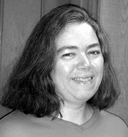
Ellen Roberts. Photo credit: Australian Financial Review at afr.com
Here is part of a GetUp email to their members:
"Earlier this year, we helped the Mackay Conservation Group defeat the Carmichael mine in Federal Court. And in 2013 GetUp members funded two court cases that stopped the Abbot Point expansion in its tracks. They were historic cases that forced new laws banning dredge spoil from being dumped out at sea.
But, under huge pressure from the coal lobby and conservatives within his party, Greg Hunt has just re-approved Adani's destructive, unprofitable coal disaster.
This port will involve more than a million cubic metres of dredging in Great Barrier Reef World Heritage waters. It will make way for a company with a documented history of bribery, corruption and environmental destruction to build one of the biggest coal mines in the world.
The mine would create more carbon emissions than most countries. It will heat the oceans, bleach our coral and undermine international efforts to stop global warming. On every level, this is a disaster.
We've done it before. Now, we have no choice. To stop this project, we have to do it again."
If it makes you feel any better, the Adani Group in India have announced they will delay opening their super coal mines in Australia, and the new coal port. Perhaps they've noticed that stock in coal companies around the world have crashed so badly that many are going bankrupt. The Australian government is still optimistic though, hoping they can help crash the world climate with more coal. This adds to my conviction that only a major economic crash can possibly stop civilization from environmental suicide.
All along, the Aussie coal industry has foot tooth and nail against any subsidy for solar or wind power. Now that Asian coal demand has fallen, and Australia's mines running at a loss, here comes the coal industry looking for billions more in taxpayers dollars - aside from the multiple subisides they already get in public infrastructure.
More on falls in Asian coal demand lower down in this article.
By providing coal, Australia is helping India avoid the transition to clean fuel. India and that whole region is hard hit by climate change. Plus literally millions of Indians are killed every year by air pollution caused by burning coal. I think Australians need to take some responsibility for the impacts in India, but here we also have an Indian corporation using Australian coal to pollute their own people.
Here is the kicker. Coal companies in the United States and Europe are going bankrupt. Their stock is almost worthless. Nobody wants to invest in them. Why is Australia the last place to hear that the coal age is over?
Download or listen to this 17 minute interview with Ellen Roberts in CD Quality or Lo-Fi
WATER SCARCITY EXPERIENCED BY 4 BILLION PEOPLE - ARJEN HOEKSTRA
Word about this scary study is spreading around alternative media, even as it fades from it's 15 seconds of fame on mainstream outlets like the Guardian. Hardly anyone has a full interview with him. Radio Ecoshock does.
If you need water, just turn on a tap. Take as much as you want. Unless of course you are one of the four billion people on this planet who often can't.
You heard that right. A new study from the Netherlands is titled "Four billion people facing severe water scarcity." It's another jaw-dropping signal from the real world in trouble.
Dr. Arjen Hoekstra co-authored the paper with Mesfin Mekonnen. I think it's safe to say that Dr. Hoeskstra is a world authority on water use. His latest book "The Water Footprint of Modern Consumer Society" was translated into Chinese, with his other titles appearing in many languages.
He advises governments and international institutions like UNESCO and the World Bank. He founded the Water Footprint Network. And he's Professor in Water Management at the University of Twente, in the Netherlands.
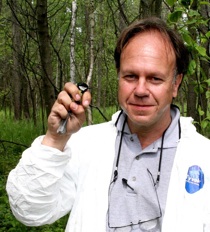
Dr. Arjen Hoekstra
Essentially this study finds that 4 billion people experience at least 1 month of severe water scarcity a year. About half that number have to survive through many months of where water is hard to find, and some countries, like Libya, have severe water stress all year round.
To be accurate, here are the hard numbers from the Hoekstra paper:
""We find that about 71% of the global population (4.3 billion people) lives under conditions of moderate to severe water scarcity (WS > 1) at least 1 month of the year.
About 66% (4.0 billion people) lives under severe water scarcity (WS > 2.0) at least 1 month of the year.
Of these 4.0 billion people, 1.0 billion live in India and another 0.9 billion live in China. Significant populations facing severe water scarcity during at least part of the year further live in Bangladesh (130 million), the United States (130 million, mostly in western states such as California and southern states such as Texas and Florida), Pakistan (120 million, of which 85% are in the Indus basin), Nigeria (110 million), and Mexico (90 million)."
"The number of people facing severe water scarcity for at least 4 to 6 months per year is 1.8 to 2.9 billion.
Half a billion people face severe water scarcity all year round. Of those half-billion people, 180 million live in India, 73 million in Pakistan, 27 million in Egypt, 20 million in Mexico, 20 million in Saudi Arabia, and 18 million in Yemen. In the latter two countries, it concerns all people in the country, which puts those countries in an extremely vulnerable position.
Other countries in which a very large fraction of the population experiences severe water scarcity year-round are Libya and Somalia (80 to 90% of the population) and Pakistan, Morocco, Niger, and Jordan (50 to 55% of the population)."
Picture women walking a few miles, every day, with a jug of dirty river water on their heads, and you get the idea. Crops can't be watered. It's hard to wash dishes or keep kids clean. This is not a statistic, but a snapshot of very difficult lives that most of my listeners have never encountered.
I'm wondering about the possibility of more abrupt water shortages. For example, farmers in parts of India and China are drilling deeper and deeper to suck out groundwater. California is doing the same, and last year some of those wells ran dry. Is there a point where groundwater can no longer make up for rainfall losses - and could we reach that point soon?
Another comparatively abrupt cause of water shortage would be pollution of rivers and lakes. For example, many rivers in China that are now too toxic to drink or unfit for irrigation. Add in ever-growing populations, and the increased need for water to satisfy new demand for meat, and we have a mess.
This whole picture, as bad as it is, will change significantly with climate change.
In a previous paper, Hoekstra published with Wiedmann, in the journal Science June 2014, they found that humanity's total environmental imprint, not just water use, was "unsustainable". We all know this is true.
There are pressure points where countries are moving toward such extreme water stress that their economies, political systems or even survival are at stake. It's already happened in Libya and Syria, with many more to come.
Arjen's latest book is "The Water Footprint of Modern Consumer Society". We discuss his new paper, with co-author Mesfin Mekonnen, titled "Four billion people facing severe water scarcity." That was published in January 29 in the journal "Science Advances".
Download or listen to this 20 minute interview with Arjen Hoesktra in CD Quality or Lo-Fi
Follow the work of Arjen Hoekstra though his web site here.
Here is a recent (January 2016) presentation by Arjen on You tube called "Breaking the Wall to Water Security."
Or try this You tube video: Prof. Arjen Hoekstra on Virtual Water: The Water Footprint of Modern Society.
DANGEROUS NUCLEAR NEIGHBORS IN CHINA - STUART HEAVER
Why am I back talking about the wave of nuclear plant construction in China? First of all, we all do care about other people, even on the other side of the world. A nuclear plant accident among tens of millions of people could be the greatest tragedy ever seen. It's bound to happen eventually.
When it does, there will be no place to go. Those millions will continue to live in radioactive hot zones. If you still don't care, remember that the plume of very radioactive dust spread from Fukushima in Japan all the way around the world. Uranium from Fukushima was found in New England, and radiation arrived in
Europe and Scandinavia. A nuclear accident anywhere in the Northern Hemisphere pollutes the whole Northern Hemisphere, for thousands of years. Now maybe you care what happens in China, where dozens of reactors with new designs never successfully run anywhere else are being built right now.
Lately there have been riots on the streets of Hong Kong. It's about freedom of speech, about continuing a free market, about a way of life. Behind it all, there is a growing dark shadow of worry about the new reactors being build right next door on the mainland. Radio Ecoshock investigates.
Stuart Heaver is a journalist with the South China Morning Post in Hong Kong. His article in the Post Magazine, January 10, 2016, alerted me to this under-reported nuclear danger. The headline is: "Radiation fear in Hong Kong from China's unproven and possibly faulty nuclear reactors nearby."
Journalist Stuart Heaver from Hong Kong.
China is building and planning a wave of new nuclear reactors. There are eight under construction right now in Guangdong Province, all within 150 kilometers (93 miles) of the crowded super-city of Hong Kong. There are 120 million people in that small area. Trust me, there is absolutely no way to evacuate Hong Kong in any timely manner, should a nuclear accident like Fukushima occur.
There is a contingency evacuation plan for Hong Kong, Heaver tells us, but no one takes it seriously. The biggest and nearest fear is the multiple reactor complex at Daya Bay. There are at least two operators there. Suspicion abounds.
China is not famous for transparency. At least Western privately owned reactor companies have to file some information for their shareholders. The reactors being built by the Chinese government don't. Who knows if the public will even be told if there is a leak of radiation to the air or water? The Soviets didn't tell people in Kiev about the Ukranian nuclear blow-up at Chernobyl, until the Swedes outed them four days later!
One or the reactor complexes uses untested technology from AREVA, the French government controlled nuclear company. French regulators just revealed there is a serious flaw in the reactor core design. Chinese regulators did not inform the public. As we heard a few weeks ago in my interview with Mycle Schneider, this flaw is so serious, the current construction may have to be ripped down and start again.
China will also be the testing ground for the new Westinghouse AP-1000, so-called Third Generation reactors. It's almost like the government decided to try one or two of everything, to see what works and what doesn't. But it's a terrible thing when nuclear technology doesn't work!
Meanwhile, as Stuart Heaver tells us, Chinese industrial culture has a very bad record for safety. You may recall recent news footage of a major port in China blowing up. That's just the tip of the iceberg. Hong Kong media reports every week on deaths, explosions, leaks, and general accidents in industry on the Chinese mainland. The safety culture is not there, and that's terrible news when nuclear reactors are involved.
Even a government survey showed only 34% of Chinese people are confident nuclear power will be handled safely. Another reactor inland is built in an earthquake zone. The last big one was in 2012.
I don't want to pick on China. So far the nuclear record of other countries is worse. China is already a leader in alternative energy, and becoming pro-active on climate change. It's just that we now know nuclear power is literally a dead-end path. It's time to stop the construction and go for alternative energy all the way.
Download or listen to this Radio Ecoshock interview with Stuart Heaver in CD Quality or Lo-Fi
Follow Stuart Heaver through his blog here. His Twitter handle is @StuartHeaver.
I'm Alex Smith. Please support making and distributing this program if you can. Find out how here.
Thank you for listening, and caring about our world.
Showing posts with label nuclear power. Show all posts
Wednesday, February 17, 2016
HARD NEWS, TROUBLED PLANET
Labels:
australia,
change,
china,
climate,
coal,
ecology,
ecoshock,
energy,
environment,
global warming,
nuclear power,
radio,
reactors,
science,
water
Wednesday, January 21, 2015
The Engines of Life Hit Stall Speed
SUMMARY: The world could warm 17 degrees hotter - scientist Thomas J. Goreau. Plus America's most dangerous nuclear reactor, Indian Point 25 miles from New York City. Lawyer/activist Susan Hito-Shapiro. Radio Ecoshock
“I’ve heard some folks try to dodge the evidence by saying they’re not scientists; that we don’t have enough information to act. Well, I’m not a scientist, either. But you know what –- I know a lot of really good scientists at NASA, and NOAA, and at our major universities. The best scientists in the world are all telling us that our activities are changing the climate, and if we do not act forcefully, we’ll continue to see rising oceans, longer, hotter heat waves, dangerous droughts and floods, and massive disruptions that can trigger greater migration, conflict, and hunger around the globe. The Pentagon says that climate change poses immediate risks to our national security. We should act like it.”
- U.S. President Barack Obama in his State of the Union address, 2015.
INTRODUCTION
You can't make this stuff up. The hub of world financial activity, Wall Street and all, is gambling every day that two old reactors just 25 miles away won't finally melt-down, Fukushima-style. Even the Nuclear Regulatory Commission thinks Indian Point has the most at-risk-for-an-earthquake reactors in the country. Later in this program we'll talk with environmental lawyer, activist and local resident Susan Hito Shapiro about the real threat.
But first, I found another jaw-dropping, gasp-for-breath story in climate science. Is two degrees Centigrade of warming safe? What about 17 or 20 degrees hotter? That's right. The United Nations panel on climate change doesn't tell you the ultimate destination. When our current emissions at 400 parts per million finally stabilizes, London will be a tropical swamp with hippos and crocodiles - again.
I've been on the climate watch since 1990. How come nobody told us? And our source is not a blogger from nowhere-istan. He's a scientist with decades of experience and a who's who of scientific connections. The only good news is there is some good news. Dr. Goreau can also see a way to bring the world's climate back to the place we can recognize, and survive. It's all in a day's work at Radio Ecoshock.
Download or listen to this Radio Ecoshock show in CD Quality (56MB) or Lo-Fi (14 MB)
Or listen on Soundcloud right now!
THOMAS GOREAU INTERVIEW: TOWARD A WORLD IMPOSSIBLY HOT
Are we heading toward a super-tropical planet with today's coastlines deep underwater? We're going to talk about what the United Nations doesn't tell you, and the best way to save what's left. Our guest is Dr. Thomas J. Goreau. He studied planetary physics and astronomy, before getting his doctorate in biogeochemistry at Harvard. Born in Jamaica, among many fields of expertise, Thomas Goreau is an expert in coral reef science. He is President of the Global Coral Reef Alliance.
But I've asked Dr. Goreau to join us because of a startling speech he made last November at Tufts University. The conference was called "Biodiversity for a Livable Climate".
WATCH THE TUFT SPEECH FOR YOURSELF, HERE.
Download or listen to this Radio Ecoshock interview with Thomas J Goreau in CD Quality or Lo-Fi.
Let's just go over a few main points from my interview with Thomas Goreau. You probably haven't heard that news before, and may not hear it again. I'm not a scientist. This is just what I've found in Google searches, which you can do for yourself.
The actual climate record says that the world will keep warming for thousands of years. At our current level of 400 parts per million carbon dioxide in the atmosphere, it may settle out between 17 degrees and 20 degrees C. warmer, at least 30 degrees hotter in Fahrenheit. The seas will be some 27 feet higher, at least. Back in the last great warming period, the Emian, most of the world's coral reefs died, sea levels were super high, and the CO2 levels in the atmosphere were only 280 parts per million, much lower than today.
I found that hard to believe. So I went back into the charts myself. Has the Earth ever been that hot? We won't count the very early days of the planet, or the time when a collision split off the moon. NASA estimates temperatures in the atmosphere may have hit 3600 degrees Fahernheit. There was no life then.
According to Wiki, the hottest point in the last 500 million years was around 15 degrees C warmer than the 1960 to 1990 average global mean temperature.
In days of living things, Earth was at least 5-8 degrees C, 13 degrees hotter in Fahrenheit than today, reaching 73 degrees global mean temperature, versus our 60 degree Fahhrenheit global average today. That was the the Paleocene-Eocene Thermal Maximum or (PETM) around 55 million years ago. There was no ice on Earth, but palm trees and crocodiles around the Arctic sea. Many species went extinct.
There are two striking points about the United Nations approach to climate change, coming out of this interview with Thomas Goreau. First, the Intergovernmental Panel on Climate Change has been blinkered to look at just the next 100 years at the most. We've all become conditioned to that, without asking what happens in the NEXT 100 years, or 500 years.
Sure, we'll all be dead by then. But think back. If people in Medieval Europe developed this fossil-fuelled civilization, right about now we'd all be struggling to avoid extinction, living on mountain-tops or in the Arctic. Most of our animal and plant friends, including our food, would have been long gone. That's what we apparently agree to leave to our descendants.
In his Tufts lecture, at 6 minute 30 seconds into the video, Goreau says the actual long-term climate change operates on a sensitivity about 10 times what IPCC projects, sea level 100 times, and CO2 much more again.
The second big point about the U.N. climate framework is they don't count carbon soil at all. They don't measure it. Nobody rewards people who can put carbon back in the soil. Our whole effort is not agricultural, but industrial. Let's cut back carbon emissions, close the coal mines and the Tar Sands. Sure, but that won't stabilize Earth's climate at all. It just makes our future less worse, or stalls the big change one or two hundred years.
The UN watered down the language on sinks, and focused on fossil fuels, wanted credits for photosynthesis, but not respiration. The whole carbon accounting system makes no sense. You can get credits for planting trees, even if they burn, or die. But there's no credits for putting carbon in the ground. Soils need to be counted as carbon sinks, and use that as the ultimate measurement. Governments are running away from reality.
IS 350.ORG AIMING TOO LOW?
I know plenty of so-called realists who blast Bill McKibben's 350.org for being so whimsical demanding we go backwards in carbon emission time. It's obvious carbon in the atmosphere is going up, up, up. Except... that does mean we are doomed, and our world with it. Thomas Goreau is part of a growing chorus of scientists and activists who expose the awful truth: even 350 parts per million CO2 in the atmosphere is too high. We need to wind the carbon clock way back, to about 260 ppm.
Here is another video of Goreau on a panel, worth watching if you want to dive deeper.
Goreau says: Biochar treated at high temps doesn't decompose. There are forest fire ashes 350 million years old, still recognizable, didn't decompose.
We spend half the Radio Ecoshock interview talking not about climate catastrophe, but about the real solution that is out there in soil carbon. We do know how to do it! We could avoid climate catastrophe!
MORE SOIL CARBON RESOURCES
Find a lot more sources on soil carbon here at ecowatch.com.
Also listen to my interview with soil carbon champion Alan Savory. Here is the blog for that 2011 show on the soil carbon solution.
And listen to my 2014 interview with Courteny White on putting carbon back in the soil, to save the earth. Download/listen to this Radio Ecoshock interview with Courtney White in CD Quality or Lo-Fi
Or read about in this Radio Ecoshock blog entry.
Goreau's latest book book is more of a scientific textbook (at $100-something dollars). It's "Geotherapy: Innovative Methods of Soil Fertility Restoration, Carbon Sequestration, and Reversing CO2 Increase" by Thomas J. Goreau, Ronal W. Larson, and Joanna Campe, published in December 2014.
ALBERT BATES AND THE BIOCHAR MOVEMENT
I just had an interesting email conversation with Albert Bates, the counter-culture thinker from The Farm. He's really into dirt, and getting carbon back into it. Albert is off teaching the ways of permaculture and carbon farming, this time in Belize. Some of the most ardent students, and maybe our best hope, come from South America, where the whole idea of biochar originated some 5,000 years ago. Some big names are getting interested in the soil carbon solution. Expect to hear more about it. If you don't, our great grand-kids may be cooked.
Perhaps coincidentally, Albert Bates' blog "Peaksurfer" has this in-depth article on the folly of nuclear power.
My second interview for this program looks at another way the world financial system can melt down, just like Fukushima.
THE REACTOR THAT COULD CAUSE US TO ABANDON NEW YORK CITY FOREVER
Today, and every day, tens of millions of Americans in and around New York City risk a Fukushima-style melt down of two nearby reactors. The Indian Point Energy Center is just 25 miles north of New York City. These old reactors have leaks, fires, and shutdowns galore. The reactors are within a mile of a known earthquake fault. For all this and much more, Indian Point could be America's most dangerous nuclear plant.
The triple melt-down of the Fukushima nuclear reactors in Japan taught us that a nuclear accident is not a local issue. If you live in the Northern Hemisphere, or anywhere near an ocean, this is your problem. This is your story.
Two Indian Point Nuclear Reactors On the Hudson River, Outside of New York City
Radio Ecoshock investigates with long-time nuclear activist and New York State environmental lawyer Susan Hito-Shapiro.
Download or listen to this interview with Susan Hito-Shapiro in CD Quality or Lo-Fi
There are so many dangerous problems there, I hardly know where to begin. Why don't we start with mega-risk: the possibility of an earthquake. This was just in the news, as the Nuclear Regulatory Commission turned down an attempt by the reactor operator to avoid doing proper quake risk studies.
The NRC is amazingly slow to protect the public. Entergy has until 2017 to come up with a plan to protect against a quake - and then more years to implement whatever hardening is needed. We just have to hope it doesn't blow before then!
MORE OVERLOADED SPENT FUEL POOLS - DANGEROUSLY EXPOSED
The other huge risk, revealed by the Fukushima melt-down in Japan, is the stupendous amount of highly radioactive spent fuel stored on site. What is the situation at Indian Point?
The Boraflex liners of storage ponds are aging, the battery backup is questionable, the pools are fantastically overcrowded beyond their design, some materials have been moved to dry cask, but not enough, there is no real protection for the ponds to contain nuclear radiation, and absolutely nothing to stop a jet-liner from crashing into these waste pool buildings, which have the strength of an average WalMart roof.
Other than that there's nothing to worry about, except of course the high earth quake risk and good old human error. While looking into all this, I came across news that a former supervisor at the Indian Point nuclear plant, Daniel Wilson, has been charged with lying to federal regulators about having reliable quality fuel for the emergency power generators.
AN EASY TERRORIST TARGET
There are 2800 tons of poorly protected, poorly guarded high level radioactive waste just sitting at Indian Point, on the edge of New York City. Remember, the 911 terrorists considered flying a plane into Indian Point, but decided to hit the World Trade Center instead. One of the 911 planes flew right over the nuclear reactors. There is nothing to stop that. Shapiro says today you can paddle a kayak right up to the reactor.
But Shapiro says the real every day risk is not terrorism - it's those old corroded reactors, unsafe at any speed. In a sense, until we shut these ageing reactors down, WE are the terrorists.
FIRE CODES? WE DON'T NEED NO STINKING FIRE CODES!
Amazingly, the Nuclear Regulatory Commission has granted an exemption to Entergy at Indian Point when it comes to fire regulations. The Indian Point reactors don't begin to meet basic fire safety requirements.
Here's just one example that Susan explains. The equipment is supposed to have fire suppression material. They used a material called "Hemyc" that was meant to give hours of protection, but under real-world testing only lasts about 24 minutes. That's how long before a major fire and nuclear accident can happen.
Here is a .pdf report "Fire When Not Ready" on the whole fire protection mess in pretty well all American nuclear reactors. The NRC knows some materials were simply falsified in testing, while others don't work even for an hour.
EVACUATION IS A SICK JOKE
Let's talk about getting out of Rockland County, or maybe even New York City, if and when the Indian Point nuclear plant blows. It looks to me like the NRC is only requiring an evacuation plan for a ten mile radius around Indian Point. That's strange, considering the American government advised its citizens to pull back 50 miles during the Fukushima nuclear accident.
Even the Governor of New York State acknowledges that there is no workable way to evacuate ten or twenty million people. As Susan Shapiro tells us, New York City is actually surrounded by the remains of an ancient mountain range. There are geographical bottlenecks which make an evacuation a nightmare.
We talk about the high cancer rates around the Indian Point reactor. Thyroid cancers near the Indian Point reactors are way, way above the average for the United States. Go to radiation.org for all the details on that. Then there's the incessant fish kills as hot reactor water goes into the Hudson River.
The list of negative effects just goes on and on - and that's even before there is a big accident there. When Indian Point melts down - think about it! Fukushima was much further from Tokyo, but the Japanese government at one point considered abandoning Tokyo. Only a fortunate wind saved that city. The prevailing winds in New York blow straight from the Indian Point reactor site.
If there is a nuclear melt-down, 25 miles from Times Square, it could cause a world-wide financial melt-down. Wall Street would be evacuated, along with the core of American media production. We're talking about trillions of dollars worth of real estate as well, all poisoned for centuries.
I said at the start of our chat, that a blown reactor is everybody's problem. That's triple-true of New York City, the world's financial capital. You would think Wall Street might worry they could have to leave town permanently due to a nearby nuclear accident.
Here are some notes from Susan Hito-Shapiro, as a follow-up to our interview. The study she refers to about putting solar on NYC municipal buildings was some years ago.
Susan writes:
"More recently the City University of New York did a study - the link is here - that show NYC rooftops can generate up to 5,847 MW. Indian Point only produces 2200 MW and since 2014 NYC only purchases 550 MW from Indian Point."
Other key points Susan forwards:
"Earthquake Risk:
* NRC doesn't use the Richter Scale , instead they useg-force ground acceleration. Indian Point containment buildings and spent fuel pools are designed to withstand .15g
* The 5.8 Earthquake in Virginia in 2011 registered .26g -.28 g.
* The Epicenter of North Ana was 10 miles from the Reactor, Indian Point's reactors are one mile from the intersection to two intersecting faults.
Energy Use:
* The 2013 Consolidated Edison Annual Report says 350 MW are being contracted from Indian Point. An unspecified amount of additional energy goes into the Lower New York State Grid, through daily auction of NYISO. NYS has not required Entergy to provide recordson sales and profits.
* New York City must have internal capacity tosupply 80% of its own energy."
ACTIVIST GROUPS TO CONTACT FOR MORE INFORMATION ON SHUTTING DOWN INDIAN POINT
Hudson River Clearwater (founded by Pete Seeger) and their Indian Point Campaign
River Keepers and their close Indian Point campaign
Scenic Hudson
All these groups co-operate as part of the Indian Point Faith Energy Coalition
...and this activist blog "Shut Down Indian Point Now!"
Here is Susan Hito-Shapiro's Facebook page.
What I didn't know, is that Susan Hito-Shapiro is also a film-maker, who more recently started up a biodynamic farm with her husband, Santi Hitorangi, in New York State. It's called "Goshen Green Farm". This is one high-powered woman, who can go from growing green to making formal legal presentations at nuclear waste hearings. Thanks Susan for all you do!
END WRAP
You may have heard more bad news about ocean extinction. I'll be talking with lead author Douglas McCauley about that. Paul Beckwith is coming back. Maybe we'll argue about Arctic methane. And I've got more mind-boggling climate science for you, as Radio Ecoshock paces back and forth inside the carbon cage.
Until then, keep calm and carry on.
Get this program, and all our past shows, as free mp3 downloads from our web site at ecoshock.org. Or visit the Radio Ecoshock Soundcloud page to listen in.
I close out this program with a tune from my buddy, California musician Dana Pearson, also known as vastmandana on soundclick. It's his new creation "The Engines of Life".
I also run a clip from British rap poet Dave Allen performing his piece "Serotonin Fix". Find it on You tube here. Warning, Dave's piece contains some rude words, and some hard truth.
“I’ve heard some folks try to dodge the evidence by saying they’re not scientists; that we don’t have enough information to act. Well, I’m not a scientist, either. But you know what –- I know a lot of really good scientists at NASA, and NOAA, and at our major universities. The best scientists in the world are all telling us that our activities are changing the climate, and if we do not act forcefully, we’ll continue to see rising oceans, longer, hotter heat waves, dangerous droughts and floods, and massive disruptions that can trigger greater migration, conflict, and hunger around the globe. The Pentagon says that climate change poses immediate risks to our national security. We should act like it.”
- U.S. President Barack Obama in his State of the Union address, 2015.
INTRODUCTION
You can't make this stuff up. The hub of world financial activity, Wall Street and all, is gambling every day that two old reactors just 25 miles away won't finally melt-down, Fukushima-style. Even the Nuclear Regulatory Commission thinks Indian Point has the most at-risk-for-an-earthquake reactors in the country. Later in this program we'll talk with environmental lawyer, activist and local resident Susan Hito Shapiro about the real threat.
But first, I found another jaw-dropping, gasp-for-breath story in climate science. Is two degrees Centigrade of warming safe? What about 17 or 20 degrees hotter? That's right. The United Nations panel on climate change doesn't tell you the ultimate destination. When our current emissions at 400 parts per million finally stabilizes, London will be a tropical swamp with hippos and crocodiles - again.
I've been on the climate watch since 1990. How come nobody told us? And our source is not a blogger from nowhere-istan. He's a scientist with decades of experience and a who's who of scientific connections. The only good news is there is some good news. Dr. Goreau can also see a way to bring the world's climate back to the place we can recognize, and survive. It's all in a day's work at Radio Ecoshock.
Download or listen to this Radio Ecoshock show in CD Quality (56MB) or Lo-Fi (14 MB)
Or listen on Soundcloud right now!
THOMAS GOREAU INTERVIEW: TOWARD A WORLD IMPOSSIBLY HOT
Are we heading toward a super-tropical planet with today's coastlines deep underwater? We're going to talk about what the United Nations doesn't tell you, and the best way to save what's left. Our guest is Dr. Thomas J. Goreau. He studied planetary physics and astronomy, before getting his doctorate in biogeochemistry at Harvard. Born in Jamaica, among many fields of expertise, Thomas Goreau is an expert in coral reef science. He is President of the Global Coral Reef Alliance.
But I've asked Dr. Goreau to join us because of a startling speech he made last November at Tufts University. The conference was called "Biodiversity for a Livable Climate".
WATCH THE TUFT SPEECH FOR YOURSELF, HERE.
Download or listen to this Radio Ecoshock interview with Thomas J Goreau in CD Quality or Lo-Fi.
Let's just go over a few main points from my interview with Thomas Goreau. You probably haven't heard that news before, and may not hear it again. I'm not a scientist. This is just what I've found in Google searches, which you can do for yourself.
The actual climate record says that the world will keep warming for thousands of years. At our current level of 400 parts per million carbon dioxide in the atmosphere, it may settle out between 17 degrees and 20 degrees C. warmer, at least 30 degrees hotter in Fahrenheit. The seas will be some 27 feet higher, at least. Back in the last great warming period, the Emian, most of the world's coral reefs died, sea levels were super high, and the CO2 levels in the atmosphere were only 280 parts per million, much lower than today.
I found that hard to believe. So I went back into the charts myself. Has the Earth ever been that hot? We won't count the very early days of the planet, or the time when a collision split off the moon. NASA estimates temperatures in the atmosphere may have hit 3600 degrees Fahernheit. There was no life then.
According to Wiki, the hottest point in the last 500 million years was around 15 degrees C warmer than the 1960 to 1990 average global mean temperature.
In days of living things, Earth was at least 5-8 degrees C, 13 degrees hotter in Fahrenheit than today, reaching 73 degrees global mean temperature, versus our 60 degree Fahhrenheit global average today. That was the the Paleocene-Eocene Thermal Maximum or (PETM) around 55 million years ago. There was no ice on Earth, but palm trees and crocodiles around the Arctic sea. Many species went extinct.
There are two striking points about the United Nations approach to climate change, coming out of this interview with Thomas Goreau. First, the Intergovernmental Panel on Climate Change has been blinkered to look at just the next 100 years at the most. We've all become conditioned to that, without asking what happens in the NEXT 100 years, or 500 years.
Sure, we'll all be dead by then. But think back. If people in Medieval Europe developed this fossil-fuelled civilization, right about now we'd all be struggling to avoid extinction, living on mountain-tops or in the Arctic. Most of our animal and plant friends, including our food, would have been long gone. That's what we apparently agree to leave to our descendants.
In his Tufts lecture, at 6 minute 30 seconds into the video, Goreau says the actual long-term climate change operates on a sensitivity about 10 times what IPCC projects, sea level 100 times, and CO2 much more again.
The second big point about the U.N. climate framework is they don't count carbon soil at all. They don't measure it. Nobody rewards people who can put carbon back in the soil. Our whole effort is not agricultural, but industrial. Let's cut back carbon emissions, close the coal mines and the Tar Sands. Sure, but that won't stabilize Earth's climate at all. It just makes our future less worse, or stalls the big change one or two hundred years.
The UN watered down the language on sinks, and focused on fossil fuels, wanted credits for photosynthesis, but not respiration. The whole carbon accounting system makes no sense. You can get credits for planting trees, even if they burn, or die. But there's no credits for putting carbon in the ground. Soils need to be counted as carbon sinks, and use that as the ultimate measurement. Governments are running away from reality.
IS 350.ORG AIMING TOO LOW?
I know plenty of so-called realists who blast Bill McKibben's 350.org for being so whimsical demanding we go backwards in carbon emission time. It's obvious carbon in the atmosphere is going up, up, up. Except... that does mean we are doomed, and our world with it. Thomas Goreau is part of a growing chorus of scientists and activists who expose the awful truth: even 350 parts per million CO2 in the atmosphere is too high. We need to wind the carbon clock way back, to about 260 ppm.
Here is another video of Goreau on a panel, worth watching if you want to dive deeper.
Goreau says: Biochar treated at high temps doesn't decompose. There are forest fire ashes 350 million years old, still recognizable, didn't decompose.
We spend half the Radio Ecoshock interview talking not about climate catastrophe, but about the real solution that is out there in soil carbon. We do know how to do it! We could avoid climate catastrophe!
MORE SOIL CARBON RESOURCES
Find a lot more sources on soil carbon here at ecowatch.com.
Also listen to my interview with soil carbon champion Alan Savory. Here is the blog for that 2011 show on the soil carbon solution.
And listen to my 2014 interview with Courteny White on putting carbon back in the soil, to save the earth. Download/listen to this Radio Ecoshock interview with Courtney White in CD Quality or Lo-Fi
Or read about in this Radio Ecoshock blog entry.
Goreau's latest book book is more of a scientific textbook (at $100-something dollars). It's "Geotherapy: Innovative Methods of Soil Fertility Restoration, Carbon Sequestration, and Reversing CO2 Increase" by Thomas J. Goreau, Ronal W. Larson, and Joanna Campe, published in December 2014.
ALBERT BATES AND THE BIOCHAR MOVEMENT
I just had an interesting email conversation with Albert Bates, the counter-culture thinker from The Farm. He's really into dirt, and getting carbon back into it. Albert is off teaching the ways of permaculture and carbon farming, this time in Belize. Some of the most ardent students, and maybe our best hope, come from South America, where the whole idea of biochar originated some 5,000 years ago. Some big names are getting interested in the soil carbon solution. Expect to hear more about it. If you don't, our great grand-kids may be cooked.
Perhaps coincidentally, Albert Bates' blog "Peaksurfer" has this in-depth article on the folly of nuclear power.
My second interview for this program looks at another way the world financial system can melt down, just like Fukushima.
THE REACTOR THAT COULD CAUSE US TO ABANDON NEW YORK CITY FOREVER
Today, and every day, tens of millions of Americans in and around New York City risk a Fukushima-style melt down of two nearby reactors. The Indian Point Energy Center is just 25 miles north of New York City. These old reactors have leaks, fires, and shutdowns galore. The reactors are within a mile of a known earthquake fault. For all this and much more, Indian Point could be America's most dangerous nuclear plant.
The triple melt-down of the Fukushima nuclear reactors in Japan taught us that a nuclear accident is not a local issue. If you live in the Northern Hemisphere, or anywhere near an ocean, this is your problem. This is your story.
Two Indian Point Nuclear Reactors On the Hudson River, Outside of New York City
Radio Ecoshock investigates with long-time nuclear activist and New York State environmental lawyer Susan Hito-Shapiro.
Download or listen to this interview with Susan Hito-Shapiro in CD Quality or Lo-Fi
There are so many dangerous problems there, I hardly know where to begin. Why don't we start with mega-risk: the possibility of an earthquake. This was just in the news, as the Nuclear Regulatory Commission turned down an attempt by the reactor operator to avoid doing proper quake risk studies.
The NRC is amazingly slow to protect the public. Entergy has until 2017 to come up with a plan to protect against a quake - and then more years to implement whatever hardening is needed. We just have to hope it doesn't blow before then!
MORE OVERLOADED SPENT FUEL POOLS - DANGEROUSLY EXPOSED
The other huge risk, revealed by the Fukushima melt-down in Japan, is the stupendous amount of highly radioactive spent fuel stored on site. What is the situation at Indian Point?
The Boraflex liners of storage ponds are aging, the battery backup is questionable, the pools are fantastically overcrowded beyond their design, some materials have been moved to dry cask, but not enough, there is no real protection for the ponds to contain nuclear radiation, and absolutely nothing to stop a jet-liner from crashing into these waste pool buildings, which have the strength of an average WalMart roof.
Other than that there's nothing to worry about, except of course the high earth quake risk and good old human error. While looking into all this, I came across news that a former supervisor at the Indian Point nuclear plant, Daniel Wilson, has been charged with lying to federal regulators about having reliable quality fuel for the emergency power generators.
AN EASY TERRORIST TARGET
There are 2800 tons of poorly protected, poorly guarded high level radioactive waste just sitting at Indian Point, on the edge of New York City. Remember, the 911 terrorists considered flying a plane into Indian Point, but decided to hit the World Trade Center instead. One of the 911 planes flew right over the nuclear reactors. There is nothing to stop that. Shapiro says today you can paddle a kayak right up to the reactor.
But Shapiro says the real every day risk is not terrorism - it's those old corroded reactors, unsafe at any speed. In a sense, until we shut these ageing reactors down, WE are the terrorists.
FIRE CODES? WE DON'T NEED NO STINKING FIRE CODES!
Amazingly, the Nuclear Regulatory Commission has granted an exemption to Entergy at Indian Point when it comes to fire regulations. The Indian Point reactors don't begin to meet basic fire safety requirements.
Here's just one example that Susan explains. The equipment is supposed to have fire suppression material. They used a material called "Hemyc" that was meant to give hours of protection, but under real-world testing only lasts about 24 minutes. That's how long before a major fire and nuclear accident can happen.
Here is a .pdf report "Fire When Not Ready" on the whole fire protection mess in pretty well all American nuclear reactors. The NRC knows some materials were simply falsified in testing, while others don't work even for an hour.
EVACUATION IS A SICK JOKE
Let's talk about getting out of Rockland County, or maybe even New York City, if and when the Indian Point nuclear plant blows. It looks to me like the NRC is only requiring an evacuation plan for a ten mile radius around Indian Point. That's strange, considering the American government advised its citizens to pull back 50 miles during the Fukushima nuclear accident.
Even the Governor of New York State acknowledges that there is no workable way to evacuate ten or twenty million people. As Susan Shapiro tells us, New York City is actually surrounded by the remains of an ancient mountain range. There are geographical bottlenecks which make an evacuation a nightmare.
We talk about the high cancer rates around the Indian Point reactor. Thyroid cancers near the Indian Point reactors are way, way above the average for the United States. Go to radiation.org for all the details on that. Then there's the incessant fish kills as hot reactor water goes into the Hudson River.
The list of negative effects just goes on and on - and that's even before there is a big accident there. When Indian Point melts down - think about it! Fukushima was much further from Tokyo, but the Japanese government at one point considered abandoning Tokyo. Only a fortunate wind saved that city. The prevailing winds in New York blow straight from the Indian Point reactor site.
If there is a nuclear melt-down, 25 miles from Times Square, it could cause a world-wide financial melt-down. Wall Street would be evacuated, along with the core of American media production. We're talking about trillions of dollars worth of real estate as well, all poisoned for centuries.
I said at the start of our chat, that a blown reactor is everybody's problem. That's triple-true of New York City, the world's financial capital. You would think Wall Street might worry they could have to leave town permanently due to a nearby nuclear accident.
Here are some notes from Susan Hito-Shapiro, as a follow-up to our interview. The study she refers to about putting solar on NYC municipal buildings was some years ago.
Susan writes:
"More recently the City University of New York did a study - the link is here - that show NYC rooftops can generate up to 5,847 MW. Indian Point only produces 2200 MW and since 2014 NYC only purchases 550 MW from Indian Point."
Other key points Susan forwards:
"Earthquake Risk:
* NRC doesn't use the Richter Scale , instead they useg-force ground acceleration. Indian Point containment buildings and spent fuel pools are designed to withstand .15g
* The 5.8 Earthquake in Virginia in 2011 registered .26g -.28 g.
* The Epicenter of North Ana was 10 miles from the Reactor, Indian Point's reactors are one mile from the intersection to two intersecting faults.
Energy Use:
* The 2013 Consolidated Edison Annual Report says 350 MW are being contracted from Indian Point. An unspecified amount of additional energy goes into the Lower New York State Grid, through daily auction of NYISO. NYS has not required Entergy to provide recordson sales and profits.
* New York City must have internal capacity tosupply 80% of its own energy."
ACTIVIST GROUPS TO CONTACT FOR MORE INFORMATION ON SHUTTING DOWN INDIAN POINT
Hudson River Clearwater (founded by Pete Seeger) and their Indian Point Campaign
River Keepers and their close Indian Point campaign
Scenic Hudson
All these groups co-operate as part of the Indian Point Faith Energy Coalition
...and this activist blog "Shut Down Indian Point Now!"
Here is Susan Hito-Shapiro's Facebook page.
What I didn't know, is that Susan Hito-Shapiro is also a film-maker, who more recently started up a biodynamic farm with her husband, Santi Hitorangi, in New York State. It's called "Goshen Green Farm". This is one high-powered woman, who can go from growing green to making formal legal presentations at nuclear waste hearings. Thanks Susan for all you do!
END WRAP
You may have heard more bad news about ocean extinction. I'll be talking with lead author Douglas McCauley about that. Paul Beckwith is coming back. Maybe we'll argue about Arctic methane. And I've got more mind-boggling climate science for you, as Radio Ecoshock paces back and forth inside the carbon cage.
Until then, keep calm and carry on.
Get this program, and all our past shows, as free mp3 downloads from our web site at ecoshock.org. Or visit the Radio Ecoshock Soundcloud page to listen in.
I close out this program with a tune from my buddy, California musician Dana Pearson, also known as vastmandana on soundclick. It's his new creation "The Engines of Life".
I also run a clip from British rap poet Dave Allen performing his piece "Serotonin Fix". Find it on You tube here. Warning, Dave's piece contains some rude words, and some hard truth.
Labels:
atomic,
climate,
climate change,
ecology,
ecoshock,
environment,
global warming,
nuclear power,
radio,
reactors,
rising seas,
risk,
science
Wednesday, March 12, 2014
AMERICAN FUKUSHIMA
On 3rd anniversary of Fukushima, two authors report American reactors are unsafe at any speed. Shocking risk. Plus audio from March 2 XL Pipeline dissent protest in D.C. & letter from youth, via Bobby Wengronowitz. Radio Ecoshock 140312 http://tinyurl.com/lerpc6j
Yes, despite a punishing cold winter, thousands of Americans showed up at the White House to fight off the Keystone XL pipeline. They were mostly young, protecting their future against climate change driven by the Tar Sands, the dirtiest fuel on Earth. Over 350 people were arrested. I'll take you there.
But first, on the third anniversary of the worst nuclear disaster in the world, I'll talk with the authors of Fukushima, The Story of a Nuclear Disaster". But America is just waiting for it's own nuclear mega-disaster. Despite promises after March 2011, the U.S. industry is still stalling on safety critical fixes to aging reactors. It's just a matter of time.
I'm Alex Smith. Welcome back to Radio Ecoshock.
Listen to/download this program in CD Quality or Lo-Fi
THE FUKUSHIMA STORY BLOWS THE COVER ON AMERICAN REACTOR SAFETY
Interview with David Lochbaum, Union of Concerned Scientists
After the triple melt down of reactors in Fukushima Japan in March 2011, the American Nuclear Regulatory Commission did two things: they assured the public "it can't happen here" - and they promised a flurry of action to make reactors safer in the United States.
Now we have the first new book from nuclear experts explaining what happened at Fukushima. And we have a report that American reactors are still unsafe, still waiting for the next major melt-down.
Both come from David Lochbaum. He worked in U.S. reactors for 17 years. He was an instructor for the NRC. David is now Director of the Nuclear Safety Project, for the Union of Concerned Scientists.
Read David's latest article "Nuclear Disaster American Style" here.
Half of reactors in U.S. don't meet fire regulations. This is as dangerous as a risk factor as the tsunami that broke Fukushima.
David writes:
"The Nuclear Regulatory Commission examined fire hazards during a briefing on July 17, 2008. An NRC senior manager informed the Chairman and Commissioners that “Approximately one-half of the core damage risk at operating reactors results from accident sequences that initiate with fire events.” In other words, the fire hazard roughly equals all other hazards combined. And that analysis assumed the NRC’s fire protection regulations were being met—the risk goes up when the fire regulations are not met.
Fire is a large risk for the same reason that flooding caused so much trouble at Fukushima. Fires and floods can disable primary safety systems and their backups. If workers are unable to recover disabled equipment or connect temporary replacements, reactor cores overheat and melt down.
The nuclear plant fire hazard is not speculative. In March 1975, a fire at the Browns Ferry Nuclear Plant in Alabama disabled all the emergency systems for cooling the Unit 1 reactor and most of those systems for Unit 2. Only heroic worker efforts prevented both cores from melting that day.
The NRC did not want another nuclear plant to experience another fire as bad as, or worse than, the one at Browns Ferry. It adopted fire protection regulations in 1980 intended to manage the fire risk to an acceptably low level. In the late 1990s, the NRC’s inspectors discovered that dozens of reactors, including the two at Diablo Canyon, did not satisfy the 1980 fire protection regulations. In 2004, the NRC adopted an alternative set of fire protection regulations. Owners had the choice of satisfying either set of regulations. On December 29, 2005, Diablo Canyon’s owner notified the NRC that it opted to someday implement the measures necessary to achieve compliance with the 2004 regulations. As of today, Diablo Canyon meets neither set of fire protection regulations."
Fully one third of American reactors are not protected against flooding from upstream dam breaking. Another nuclear plant would be in severe danger if a DOWNSTREAM dam broke, because that would drain away the source for it's cooling water.
About one quarter of all American reactors in geologic danger zones are not protected against earth quake hazards.
Get the Executive Summary of the Union of Concerned Scientists report on the NRC and U.S. nuclear safety in 2013 here.
After Fukushima, David Lockbaum was on Radio Ecoshock June 1st, 2011. Here is a link to that show blog, and you can listen to/download that interview with David here. It's still important today.
David and co-author Susan Stranahan did an excellent interview for The Real News on American nuke safety. Find that here. Or watch it on You tube. They are also featured in this Washington's Blog entry.
You can buy the book "Fukushima: The Story of a Nuclear Disaster" here. Or get more details at the Union of Concerned Scientists web site.
In testimony relating to the C-10 group in Boston, and the Pilgrim reactor relicensing, David Lochbaum explained how the NRC stopped enforcing regulations in 1998, after Congress threatened to cut NRC funding. It's incredible how the nuke industry managed to use politicians to avoid spending money on safety fixes.
All this leads to the third big question about American reactor safety. After Fukushima, the Nuclear Regulatory Commission promised to be more vigilant, and get more problems fixed in American reactors. Yet the NRC oversight seems weak, where many safety matters are just voluntary for the companies involved. What happened to NRC Chair Gregory Jaczko, who wanted changes, and is the NRC fixed? Jaczko wanted things repaired to fast, so he got the boot.
I recently covered hearings where the NRC sought a generic environmental approval process for ALL nuclear reactors, instead of case by case - following a high court ruling. That's still on-going.
By refusing to be regulated, the nuclear industry is really gambling with the whole American economy, and maybe the world economy. Twenty percent of US electricity is being gambled on no plant having a really bad accident.
Look what happened in Japan after Fukushima. ALL nuclear plants were shut down. Imagine that happening in the U.S.
Here is another worthwhile article on this new Fukushima book.
Download/listen to this Radio Ecoshock interview with David Lochbaum in CD Quality or Lo-Fi
Finally, something that puzzles me, and confuses the public. A nuclear reactor produces huge amounts of power. But if outside electricity is cut off, even for short periods, the whole system risks blowing up or melting down. Why can't a reactor use it's own power to run the cooling system, water intakes, and all that?
Lochbaum says they could have been designed that way, avoiding total dependence on backup generators and batteries. But the electrical equipment within the plant would have to be a higher industrial grade, so this riskier design was chosen - to save money.
SUSAN STRANAHAN
Our next guest was the lead author of a team of reporters for the Philadelphia Enquirer. Their reporting on the Three Mile Island reactor accident in Pennsylvania on March 28th, 1979 won a Pulitzer Prize. Suasn has published in the Los Angeles Times, Washington Post, Fortune and Time magazines, and the Rolling Stone.
She's now a free lance writer living in Maine. Susan Q. Stranahan is co-author of the new book "Fukushima: The Story of a Nuclear Disaster".
America already had a nuclear reactor melt down. Perhaps you didn't know that. Even though I've followed nuclear affairs since before Three Mile Island, I only learned after Fukushima that there really was a melt-down inside those reactors in Pennsylvania.
It was four years before they could even get a camera inside Three Mile Island to see what happened. They found the fuel rods totally melted down, and some nuclear fuel escaped from the reactor. Yet most Americans still buy the original line that it was just a little release of radioactive steam.
Download/listen to this interview with Susan Stranahan in Cd Quality or Lo-Fi
One important aspect of this story is the huge amounts of extra debt accumulated by the Japanese tax payer. All the people who object to government debt, and higher taxes should really pay attention to nuclear safety. The Tea Party should be virulently opposed to nuclear power! When, not if, an even more serious nuclear accident strikes in the U.S., the American people are on the hook for any costs. That's because under the Price-Anderson act, the taxpayers are the insurance company for all 100 current plants, and those that have shut down. No private insurance company would touch the, for good reason. The risks are too huge.
The other story is about all the people who lost their homes, many possibly forever. Imagine part of America being closed.
It's also about the kids. Children are at risk of leukemia and other health problems, and no doubt they learned a new level of fear that day.
To my mind, there are three major scenes in the Fukushima tragedy. The opening act consists of decades where the risks were known and not dealt with. Then we have the technical story of what happened in nuclear terms. But the saddest part may be the failure of humans to react properly and rationally.
In both Fukushima and at Three Mile Island, the government's first reaction seems to have been to reassure the people that everyone is perfectly safe - to downplay the danger. As NBC News reported just last week, "U.S. Nuclear Agency Hid Concerns, Hailed Safety Record as Fukushima Melted". They knew it was bad, but told the public otherwise.
I'm betting most our listeners don't know that in 2010, just before Fukushima, the NRC acquired a new building and hired a thousand more people, just to get ready for the promised nuclear renaissance. The U.S. Government is still promising $8.3 billion for new reactors in Georgia, but the re-birth of nuclear power in America has become more unlikely. That's partly due to public concern after Fukushima, but even more because low natural gas prices makes nuclear reactors completely cost impossible.
ARE YOU LIVING NEAR A GENERAL ELECTRIC MARK I REACTOR?
There are about 22 dangerous Mark I nuclear reactors still operating in the United States - the same basic design as leaked fuel out of containment at Fukushima. That's almost one quarter of the U.S. fleet of about 100 reactors operating today. As David Lochbaum tells us, the containment was built too small, to save money. And as Fukushima demonstrated, the way the fuel rods come up from the bottom of the reactor makes for weak seals where damaged nuclear fuel can escape. These need to be closed down as a priority. Find out what type of nuclear reactor is nearest you (that is, within a couple of hundred miles upwind...).
We must protect ourselves. The nuclear regulators won't do it, in any country. The nuclear industry is the fourth largesT donor to both political parties in the United States, behind big oil and big tobacco. No wonder both parties protect the industry - even from enforcement of obvious safety fixes!
KEYSTONE XL PIPELINE PROTEST - BOBBY WENGRONOWITZ
I get email at Radio Ecoshock, and its the best kind: feedback and ideas from you, the listener.
Bobby Wengronowitz from Boston told me he and a whole flock of students from the Boston area were heading to the U.S. capital to protest the Keystone XL pipeline. Though he's not an expert, Bobby took his sound recorder as a witness. In this picture, Bobby is attached to the Whitehouse fence, in the blue shirt, second from the bottom right.
On March 2nd, they marched from Georgetown to the capital, where they handcuffed their bodies to the Whitehouse fence. Hundreds were arrested. That's a big commitment in the U.S., where your criminal record can become part of your life. It's criminal now to demand a safe climate for young people, and the next generation to come. It's not criminal to blow up the climate with a giant pipeline from the notoriously dirty Canadian Tar Sands. It's all a matter of campaign donations I guess.
When he got back, Bobby wrote to his local paper of record, the Boston Globe. They never published his impassioned letter, so we will. Listen to clips on-scene from the protest, and Bobby's letter here.
It's almost enough to give us hope. Young people know. They care. They have not given up.
You can grab some good chants from the audio of that march, for your own climate protest. If the people of North Africa and the Ukraine can change the government, maybe Americans can boot out the climate deniers and fossil fuel apologists Congress. Maybe Americans can have a future.
I'm Alex Smith. Please support this program at our web site, ecoshock.org or the right hand top of this blog.
There are years worth of free mp3 interviews waiting for you at the web site - the voices of scientists, authors and activists from around the world. Help yourself, and help the future, with Radio Ecoshock.
Yes, despite a punishing cold winter, thousands of Americans showed up at the White House to fight off the Keystone XL pipeline. They were mostly young, protecting their future against climate change driven by the Tar Sands, the dirtiest fuel on Earth. Over 350 people were arrested. I'll take you there.
But first, on the third anniversary of the worst nuclear disaster in the world, I'll talk with the authors of Fukushima, The Story of a Nuclear Disaster". But America is just waiting for it's own nuclear mega-disaster. Despite promises after March 2011, the U.S. industry is still stalling on safety critical fixes to aging reactors. It's just a matter of time.
I'm Alex Smith. Welcome back to Radio Ecoshock.
Listen to/download this program in CD Quality or Lo-Fi
THE FUKUSHIMA STORY BLOWS THE COVER ON AMERICAN REACTOR SAFETY
Interview with David Lochbaum, Union of Concerned Scientists
After the triple melt down of reactors in Fukushima Japan in March 2011, the American Nuclear Regulatory Commission did two things: they assured the public "it can't happen here" - and they promised a flurry of action to make reactors safer in the United States.
Now we have the first new book from nuclear experts explaining what happened at Fukushima. And we have a report that American reactors are still unsafe, still waiting for the next major melt-down.
Both come from David Lochbaum. He worked in U.S. reactors for 17 years. He was an instructor for the NRC. David is now Director of the Nuclear Safety Project, for the Union of Concerned Scientists.
Read David's latest article "Nuclear Disaster American Style" here.
Half of reactors in U.S. don't meet fire regulations. This is as dangerous as a risk factor as the tsunami that broke Fukushima.
David writes:
"The Nuclear Regulatory Commission examined fire hazards during a briefing on July 17, 2008. An NRC senior manager informed the Chairman and Commissioners that “Approximately one-half of the core damage risk at operating reactors results from accident sequences that initiate with fire events.” In other words, the fire hazard roughly equals all other hazards combined. And that analysis assumed the NRC’s fire protection regulations were being met—the risk goes up when the fire regulations are not met.
Fire is a large risk for the same reason that flooding caused so much trouble at Fukushima. Fires and floods can disable primary safety systems and their backups. If workers are unable to recover disabled equipment or connect temporary replacements, reactor cores overheat and melt down.
The nuclear plant fire hazard is not speculative. In March 1975, a fire at the Browns Ferry Nuclear Plant in Alabama disabled all the emergency systems for cooling the Unit 1 reactor and most of those systems for Unit 2. Only heroic worker efforts prevented both cores from melting that day.
The NRC did not want another nuclear plant to experience another fire as bad as, or worse than, the one at Browns Ferry. It adopted fire protection regulations in 1980 intended to manage the fire risk to an acceptably low level. In the late 1990s, the NRC’s inspectors discovered that dozens of reactors, including the two at Diablo Canyon, did not satisfy the 1980 fire protection regulations. In 2004, the NRC adopted an alternative set of fire protection regulations. Owners had the choice of satisfying either set of regulations. On December 29, 2005, Diablo Canyon’s owner notified the NRC that it opted to someday implement the measures necessary to achieve compliance with the 2004 regulations. As of today, Diablo Canyon meets neither set of fire protection regulations."
Fully one third of American reactors are not protected against flooding from upstream dam breaking. Another nuclear plant would be in severe danger if a DOWNSTREAM dam broke, because that would drain away the source for it's cooling water.
About one quarter of all American reactors in geologic danger zones are not protected against earth quake hazards.
Get the Executive Summary of the Union of Concerned Scientists report on the NRC and U.S. nuclear safety in 2013 here.
After Fukushima, David Lockbaum was on Radio Ecoshock June 1st, 2011. Here is a link to that show blog, and you can listen to/download that interview with David here. It's still important today.
David and co-author Susan Stranahan did an excellent interview for The Real News on American nuke safety. Find that here. Or watch it on You tube. They are also featured in this Washington's Blog entry.
You can buy the book "Fukushima: The Story of a Nuclear Disaster" here. Or get more details at the Union of Concerned Scientists web site.
In testimony relating to the C-10 group in Boston, and the Pilgrim reactor relicensing, David Lochbaum explained how the NRC stopped enforcing regulations in 1998, after Congress threatened to cut NRC funding. It's incredible how the nuke industry managed to use politicians to avoid spending money on safety fixes.
All this leads to the third big question about American reactor safety. After Fukushima, the Nuclear Regulatory Commission promised to be more vigilant, and get more problems fixed in American reactors. Yet the NRC oversight seems weak, where many safety matters are just voluntary for the companies involved. What happened to NRC Chair Gregory Jaczko, who wanted changes, and is the NRC fixed? Jaczko wanted things repaired to fast, so he got the boot.
I recently covered hearings where the NRC sought a generic environmental approval process for ALL nuclear reactors, instead of case by case - following a high court ruling. That's still on-going.
By refusing to be regulated, the nuclear industry is really gambling with the whole American economy, and maybe the world economy. Twenty percent of US electricity is being gambled on no plant having a really bad accident.
Look what happened in Japan after Fukushima. ALL nuclear plants were shut down. Imagine that happening in the U.S.
Here is another worthwhile article on this new Fukushima book.
Download/listen to this Radio Ecoshock interview with David Lochbaum in CD Quality or Lo-Fi
Finally, something that puzzles me, and confuses the public. A nuclear reactor produces huge amounts of power. But if outside electricity is cut off, even for short periods, the whole system risks blowing up or melting down. Why can't a reactor use it's own power to run the cooling system, water intakes, and all that?
Lochbaum says they could have been designed that way, avoiding total dependence on backup generators and batteries. But the electrical equipment within the plant would have to be a higher industrial grade, so this riskier design was chosen - to save money.
SUSAN STRANAHAN
Our next guest was the lead author of a team of reporters for the Philadelphia Enquirer. Their reporting on the Three Mile Island reactor accident in Pennsylvania on March 28th, 1979 won a Pulitzer Prize. Suasn has published in the Los Angeles Times, Washington Post, Fortune and Time magazines, and the Rolling Stone.
She's now a free lance writer living in Maine. Susan Q. Stranahan is co-author of the new book "Fukushima: The Story of a Nuclear Disaster".
America already had a nuclear reactor melt down. Perhaps you didn't know that. Even though I've followed nuclear affairs since before Three Mile Island, I only learned after Fukushima that there really was a melt-down inside those reactors in Pennsylvania.
It was four years before they could even get a camera inside Three Mile Island to see what happened. They found the fuel rods totally melted down, and some nuclear fuel escaped from the reactor. Yet most Americans still buy the original line that it was just a little release of radioactive steam.
Download/listen to this interview with Susan Stranahan in Cd Quality or Lo-Fi
One important aspect of this story is the huge amounts of extra debt accumulated by the Japanese tax payer. All the people who object to government debt, and higher taxes should really pay attention to nuclear safety. The Tea Party should be virulently opposed to nuclear power! When, not if, an even more serious nuclear accident strikes in the U.S., the American people are on the hook for any costs. That's because under the Price-Anderson act, the taxpayers are the insurance company for all 100 current plants, and those that have shut down. No private insurance company would touch the, for good reason. The risks are too huge.
The other story is about all the people who lost their homes, many possibly forever. Imagine part of America being closed.
It's also about the kids. Children are at risk of leukemia and other health problems, and no doubt they learned a new level of fear that day.
To my mind, there are three major scenes in the Fukushima tragedy. The opening act consists of decades where the risks were known and not dealt with. Then we have the technical story of what happened in nuclear terms. But the saddest part may be the failure of humans to react properly and rationally.
In both Fukushima and at Three Mile Island, the government's first reaction seems to have been to reassure the people that everyone is perfectly safe - to downplay the danger. As NBC News reported just last week, "U.S. Nuclear Agency Hid Concerns, Hailed Safety Record as Fukushima Melted". They knew it was bad, but told the public otherwise.
I'm betting most our listeners don't know that in 2010, just before Fukushima, the NRC acquired a new building and hired a thousand more people, just to get ready for the promised nuclear renaissance. The U.S. Government is still promising $8.3 billion for new reactors in Georgia, but the re-birth of nuclear power in America has become more unlikely. That's partly due to public concern after Fukushima, but even more because low natural gas prices makes nuclear reactors completely cost impossible.
ARE YOU LIVING NEAR A GENERAL ELECTRIC MARK I REACTOR?
There are about 22 dangerous Mark I nuclear reactors still operating in the United States - the same basic design as leaked fuel out of containment at Fukushima. That's almost one quarter of the U.S. fleet of about 100 reactors operating today. As David Lochbaum tells us, the containment was built too small, to save money. And as Fukushima demonstrated, the way the fuel rods come up from the bottom of the reactor makes for weak seals where damaged nuclear fuel can escape. These need to be closed down as a priority. Find out what type of nuclear reactor is nearest you (that is, within a couple of hundred miles upwind...).
We must protect ourselves. The nuclear regulators won't do it, in any country. The nuclear industry is the fourth largesT donor to both political parties in the United States, behind big oil and big tobacco. No wonder both parties protect the industry - even from enforcement of obvious safety fixes!
KEYSTONE XL PIPELINE PROTEST - BOBBY WENGRONOWITZ
I get email at Radio Ecoshock, and its the best kind: feedback and ideas from you, the listener.
Bobby Wengronowitz from Boston told me he and a whole flock of students from the Boston area were heading to the U.S. capital to protest the Keystone XL pipeline. Though he's not an expert, Bobby took his sound recorder as a witness. In this picture, Bobby is attached to the Whitehouse fence, in the blue shirt, second from the bottom right.
On March 2nd, they marched from Georgetown to the capital, where they handcuffed their bodies to the Whitehouse fence. Hundreds were arrested. That's a big commitment in the U.S., where your criminal record can become part of your life. It's criminal now to demand a safe climate for young people, and the next generation to come. It's not criminal to blow up the climate with a giant pipeline from the notoriously dirty Canadian Tar Sands. It's all a matter of campaign donations I guess.
When he got back, Bobby wrote to his local paper of record, the Boston Globe. They never published his impassioned letter, so we will. Listen to clips on-scene from the protest, and Bobby's letter here.
It's almost enough to give us hope. Young people know. They care. They have not given up.
You can grab some good chants from the audio of that march, for your own climate protest. If the people of North Africa and the Ukraine can change the government, maybe Americans can boot out the climate deniers and fossil fuel apologists Congress. Maybe Americans can have a future.
I'm Alex Smith. Please support this program at our web site, ecoshock.org or the right hand top of this blog.
There are years worth of free mp3 interviews waiting for you at the web site - the voices of scientists, authors and activists from around the world. Help yourself, and help the future, with Radio Ecoshock.
Labels:
accidents,
activism,
arrests,
climate,
climate change,
environment,
Fukushima,
global warming,
nuclear,
nuclear power,
protests,
reactors,
risk,
safety,
U.S.
Wednesday, September 11, 2013
Where Are We Really? Radio Ecoshock returns.
Analysis of climate situation by Paul Beckwith, U of Ottawa. Plus Arnie Gundersen updates Fukushima leaks and radioactive plume in the Pacific, heading for the U.S. Radio Ecoshock 130911 1 hour.
WELCOME BACK!
Welcome back to the Fall 2013 season of Radio Ecoshock, broadcast on more than 70 college and community stations around the world.
This is Alex Smith. Big news continues to pour in from around the world. We've got a lineup of guests, experts and activists, waiting to make sense of it all.
As I left for a break in July, I issued a special podcast on the global heat wave. If you missed that, join the thousands who download it from our web site at ecoshock.org. At the time of broadcast, the heat wasn't quite complete around the Northern Hemisphere. The Russian Arctic seemed still coolish, and no word from China, although Japan was suffering through record heat.
One week later, Siberia went into an extended heat alert with hundreds of fires. South East China went down to a killer heat wave, setting the highest coastal temperature records ever seen on the Pacific Coast of Asia.
So the circle went complete. I'm not sure if this is absolutely new, but in 25 years of reporting climate news, I can't remember a super hemispheric heat wave like this. We can't call it a global heat wave, because of course it's winter in the southern hemisphere. But we can call it global warming, and 2013 is the year when we entered into a certain phase of climate change.
It's still cooking, with the hottest days of summer in Toronto Canada striking in mid-September (beach time!) and more records expected in Vancouver. Strange... what could it be? I'll have lots more on all that later in the program, as we do a climate run-down with Paul Beckwith, a postgrad climate scientist at the University of Ottawa. Paul is a favorite climate correspondent, really linked in to the latest in both extreme weather events and the latest science behind them.
Download this Radio Ecoshock show in CD Quality (56 MB) or Lo-Fi (14 MB)
FUKUSHIMA'S TANK FARMS - LURKING DEATH FOR THE PACIFIC OCEAN
No doubt you've heard more about the continuing nuclear disaster at Fukushima Japan. Three reactors melted down in March 2011. A fourth had a fire and explosion in the fuel storage area. Tokyo Electric Power Company, or TEPCO, has been struggling to contain radiation leaks ever since. Is Japan safe? Is the Pacific being polluted with radiation? What about the whole Northern Hemisphere?
I'm Alex Smith. Radio Ecoshock welcomes back nuclear expert and whistle-blower Arnie Gundersen of Fairewinds Associates.
Arnie Gundersen
Here is a brief wrap up on what I think is the world's worst nuclear disaster. Three reactor cores have escaped out of the containment. Nobody knows where this glowing hot stuff is.
Thousands of tons of groundwater are passing through the highly radioactive melted "corium" every day. Some of that is being captured by TEPCO and put into an endlessly growing tank farm. The rest is leaking into the Pacific Ocean.
In August TEPCO admitted it was missing 300 tons of highly radioactive water from one of it's tanks. You see, they only had two men checking all those tanks, which are hastily built (and not ready for any earthquake). The people checking the tanks did not even wear a dosimiter, so there is no way of knowing how much radiation they were exposed to.
Now with the leak exposed, TEPCO has promised more inspectors. It's a joke. This Japanese utility, as Arnie Gundersen tells us, is a nuclear plant operator (and not a very good one) - not a world-class engineering firm. Plus, they have gone more or less bankrupt, and don't have the budget to handle this situation.
Finally, after a lot more press and international concern, the Japanese government is going to add more fund, but not much more, because they are broke too.
If these tanks rupture in a big way, or if the fuel rod storage ponds suspended in the damaged building Four at Fukushima Daiichi collapse, the whole Northern Hemisphere will be bathed in radiation. Surely this is an international issue which requires a huge response. But both our media and our governments are downplaying the risk.
What a joke that Tokyo, which was bathed in radiation that will last at least 50 years (during the March 2011 accident) was awarded the Olympics! Tokyo, the city that shines at night! If there is a major leak at Fukushima, Tokyo will be evacuated by 2020 anyway. Even during the 2011 accident, the government considered evacuating the city.
In a previous Radio Ecoshock interview, Gundersen said the Japanese should start unloading nuclear fuel bundles from Reactor 4, before that building collapses. TEPCO has been building a stronger outside structure to hold the heavy cranes, after the original cranes collapsed.
Arnie is a nuclear fuel rod expert. He worked as a nuclear engineer and executive in exactly that field. Gundersen warns the fuel rods have likely been damaged during the accident. One or several may break during attempted extraction, releasing highly radioactive gases. The whole site would have to be evacuated for a time. Expect more air-borne radiation releases, for Japan, and for the whole hemisphere.
I asked Arnie when the plume of radioactive water that has been leaking into the Pacific non-stop since the accident two and half years ago - will reach the west coast of the United States and Canada. Maps of ocean currents show the worst radiation will hit California and the Baja Peninsula. Arnie thinks it should arrive sometime in late 2014 - and he says that radiation in the ocean is 10 times more than we got from all the atomic bomb testing. Sure it will be diluted in the Pacific, but a whole ocean has been poisoned.
http://www.huffingtonpost.com/2013/09/01/fukushima-radioactive-plume_n_3853604.html Meanwhile, all the fish that bioconcentrate radioactivity, predator fish like salmon and tuna, are feeding out there in the Pacific. Do you think we can get either the American or Canadian governments to test our fish for radioactivity? Canada promises it won't do testing. If the U.S. is testing, they are not releasing the data. Consumers don't know what they are getting. It's time for a little transparency, and governments that protect their people rather than the nuclear or fishing industries.
BETTER NUCLEAR NEWS IN THE UNITED STATES
Arnie Gundersen has repeatedly been an expert witness in the effort to get the dangerous and aging Vermont Yankee reactor closed. It's located on the sea, 5 miles south of Brattleboro in New England, and owned by Entergy Corp.
Just like Fukushima, the Vermont Yankee plant is an old-style General Electric boiling water reactor. Under the thick concrete pipes are leaking. It's damn dangerous.
Finally, Entergy has announced that in 2014, when the current batch of nuclear fuel would have to be replaced, the Vermont Yankee reactor will shut down instead. That's great news for New England and the planet.
The sad news is Entergy wants to wait 60 years to decommission the plant! So this radioactive mess will sit there for another generation. Our grandchildren will pay huge costs for the power we used today. That's an inter-generational crime.
AND THEN THERE'S THAT LITTLE CLIMATE PROBLEM...
Climate change has certainly shown up on planet Earth in a big way these past few months. Records are falling so fast, with so many new changes, its beyond our ability to track it all. Let's do a recap of some big climate news with one of our popular guests, Paul Beckwith.
Paul is a PHD graduate student in the Laboratory for Paleoclimatology and Climatology, and part-time Professor, at the University of Ottawa in Canada. He has a Masters in Physics as well.
We start with Paul's prediction that the Arctic sea ice could break up this year, if there was a significant Arctic storm as well. That didn't happen. Although the ice retreated to levels that would have been astounding a decade ago, it didn't meet last year's record.
Paul says the climate is zig-zagging back and forth unpredictably. Last year temperatures over the Arctic Ocean were quite high, while land temperatures up north were cooler. This year was the opposite. It was coolish over the ice itself, while land temperatures in Alaska, Canada's north and Siberia hit new records in some places.
Science, Beckwith says, will have to be flexible, learning from the instability.
Methane was quite high over the Arctic again this year, more than double the pre-industrial levels. There was no mega-burst (yet). Most of the methane came from melting of permafrost on land where snow cover was lost very early in the season.
We talk about the grossly under-reported floods in the Russian far east, especially along the Amur River. These were floods not seen before. President Putin flew out to speed up some action to help the many evacuees. The worst hit area was in the republic Buryatia, located in the south-central Siberia along the shore of Lake Baikal and on the border with Mongolia.
At the same time, there were hundreds of forest fires ranging in Siberia.
Of course, most of us are only interested in our local area. Fires in Yosemite California get lots of coverage. Fire and floods in Russia? Not so much. Paul points out that's a huge problem when we are trying to deal with global climate change. People push their local politicians for action (or maybe they will eventually) but only if they get hit themselves.
There's lots more to this interview with Paul Beckwith, as we cover some of the extreme weather events this past summer, and in fact this past week. Nobody can keep up with it all. That alone is further evidence that climate change has arrived.
Beckwith is breaking the mold of the climate scientist who keeps quiet for years, and then releases a paper with results. He's more like the communicator the late Stephen Schneider suggested in his book "Science As a Contact Sport". We can't wait 6 years for the Intergovernmental Panel on Climate Change to publish out-of-date results says Beckwith.
One of the best ways to keep up with Paul is through his Facebook page. He also blogs for Arctic News, Sierra Club Canada and others.
I agree. I'd like to see buildings full of full-time scientists on every continent charged with the duty of tracking climate change, today, and in the distant past. This is a planetary emergency, and so far we have a tiny budget, volunteer scientists, and governments who are out promoting fossil fuels as the next big job wave! It's like planned extinction.
On the other side, millions and millions of people know the climate is not right. They are waking up. Will a demand for change come in time?
THANK YOU TO ALL ECOSHOCK SUPPORTERS - AND PREPARE FOR CHANGE
Many thanks to all the people who donated or signed up for our monthly Radio Ecoshock membership at our web site, ecoshock.org. I haven't had time to thank you all personally.
This past month has been almost constant turmoil for me. Aside from vehicle breakdowns, we are renovating and preparing to move out of Vancouver, to a rural village. More about that in coming shows.
One week ago, the main hard drive on my production computer died. I'm working on the fly from an ancient box out of our basement. Without the help of Radio Ecoshock listeners I'm not sure we could afford the repairs.
The refurbished audio computer should be back online in a week or so. My next show may be right out of a moving van.
These changes in my personal life seem to echo from the big changes happening on the planet, and in our society. I tell myself we are all going to need fall-back plans, preparation, and an ability to adapt or move, perhaps on short notice.
Our parents and grandparents went through two world wars and a great depression. If my reading of the climate, energy, and economic scene is correct, they had it easy. Expect to enjoy life, sure, but expect to struggle as well.
I'm Alex Smith. Thank you for joining me in this new season of Radio Ecoshock.
Our music clips this week came from the marvelous Suvarna, plus "Till the Day Is Done" by REM.
WELCOME BACK!
Welcome back to the Fall 2013 season of Radio Ecoshock, broadcast on more than 70 college and community stations around the world.
This is Alex Smith. Big news continues to pour in from around the world. We've got a lineup of guests, experts and activists, waiting to make sense of it all.
As I left for a break in July, I issued a special podcast on the global heat wave. If you missed that, join the thousands who download it from our web site at ecoshock.org. At the time of broadcast, the heat wasn't quite complete around the Northern Hemisphere. The Russian Arctic seemed still coolish, and no word from China, although Japan was suffering through record heat.
One week later, Siberia went into an extended heat alert with hundreds of fires. South East China went down to a killer heat wave, setting the highest coastal temperature records ever seen on the Pacific Coast of Asia.
So the circle went complete. I'm not sure if this is absolutely new, but in 25 years of reporting climate news, I can't remember a super hemispheric heat wave like this. We can't call it a global heat wave, because of course it's winter in the southern hemisphere. But we can call it global warming, and 2013 is the year when we entered into a certain phase of climate change.
It's still cooking, with the hottest days of summer in Toronto Canada striking in mid-September (beach time!) and more records expected in Vancouver. Strange... what could it be? I'll have lots more on all that later in the program, as we do a climate run-down with Paul Beckwith, a postgrad climate scientist at the University of Ottawa. Paul is a favorite climate correspondent, really linked in to the latest in both extreme weather events and the latest science behind them.
Download this Radio Ecoshock show in CD Quality (56 MB) or Lo-Fi (14 MB)
FUKUSHIMA'S TANK FARMS - LURKING DEATH FOR THE PACIFIC OCEAN
No doubt you've heard more about the continuing nuclear disaster at Fukushima Japan. Three reactors melted down in March 2011. A fourth had a fire and explosion in the fuel storage area. Tokyo Electric Power Company, or TEPCO, has been struggling to contain radiation leaks ever since. Is Japan safe? Is the Pacific being polluted with radiation? What about the whole Northern Hemisphere?
I'm Alex Smith. Radio Ecoshock welcomes back nuclear expert and whistle-blower Arnie Gundersen of Fairewinds Associates.
Arnie Gundersen
Here is a brief wrap up on what I think is the world's worst nuclear disaster. Three reactor cores have escaped out of the containment. Nobody knows where this glowing hot stuff is.
Thousands of tons of groundwater are passing through the highly radioactive melted "corium" every day. Some of that is being captured by TEPCO and put into an endlessly growing tank farm. The rest is leaking into the Pacific Ocean.
In August TEPCO admitted it was missing 300 tons of highly radioactive water from one of it's tanks. You see, they only had two men checking all those tanks, which are hastily built (and not ready for any earthquake). The people checking the tanks did not even wear a dosimiter, so there is no way of knowing how much radiation they were exposed to.
Now with the leak exposed, TEPCO has promised more inspectors. It's a joke. This Japanese utility, as Arnie Gundersen tells us, is a nuclear plant operator (and not a very good one) - not a world-class engineering firm. Plus, they have gone more or less bankrupt, and don't have the budget to handle this situation.
Finally, after a lot more press and international concern, the Japanese government is going to add more fund, but not much more, because they are broke too.
If these tanks rupture in a big way, or if the fuel rod storage ponds suspended in the damaged building Four at Fukushima Daiichi collapse, the whole Northern Hemisphere will be bathed in radiation. Surely this is an international issue which requires a huge response. But both our media and our governments are downplaying the risk.
What a joke that Tokyo, which was bathed in radiation that will last at least 50 years (during the March 2011 accident) was awarded the Olympics! Tokyo, the city that shines at night! If there is a major leak at Fukushima, Tokyo will be evacuated by 2020 anyway. Even during the 2011 accident, the government considered evacuating the city.
In a previous Radio Ecoshock interview, Gundersen said the Japanese should start unloading nuclear fuel bundles from Reactor 4, before that building collapses. TEPCO has been building a stronger outside structure to hold the heavy cranes, after the original cranes collapsed.
Arnie is a nuclear fuel rod expert. He worked as a nuclear engineer and executive in exactly that field. Gundersen warns the fuel rods have likely been damaged during the accident. One or several may break during attempted extraction, releasing highly radioactive gases. The whole site would have to be evacuated for a time. Expect more air-borne radiation releases, for Japan, and for the whole hemisphere.
I asked Arnie when the plume of radioactive water that has been leaking into the Pacific non-stop since the accident two and half years ago - will reach the west coast of the United States and Canada. Maps of ocean currents show the worst radiation will hit California and the Baja Peninsula. Arnie thinks it should arrive sometime in late 2014 - and he says that radiation in the ocean is 10 times more than we got from all the atomic bomb testing. Sure it will be diluted in the Pacific, but a whole ocean has been poisoned.
http://www.huffingtonpost.com/2013/09/01/fukushima-radioactive-plume_n_3853604.html Meanwhile, all the fish that bioconcentrate radioactivity, predator fish like salmon and tuna, are feeding out there in the Pacific. Do you think we can get either the American or Canadian governments to test our fish for radioactivity? Canada promises it won't do testing. If the U.S. is testing, they are not releasing the data. Consumers don't know what they are getting. It's time for a little transparency, and governments that protect their people rather than the nuclear or fishing industries.
BETTER NUCLEAR NEWS IN THE UNITED STATES
Arnie Gundersen has repeatedly been an expert witness in the effort to get the dangerous and aging Vermont Yankee reactor closed. It's located on the sea, 5 miles south of Brattleboro in New England, and owned by Entergy Corp.
Just like Fukushima, the Vermont Yankee plant is an old-style General Electric boiling water reactor. Under the thick concrete pipes are leaking. It's damn dangerous.
Finally, Entergy has announced that in 2014, when the current batch of nuclear fuel would have to be replaced, the Vermont Yankee reactor will shut down instead. That's great news for New England and the planet.
The sad news is Entergy wants to wait 60 years to decommission the plant! So this radioactive mess will sit there for another generation. Our grandchildren will pay huge costs for the power we used today. That's an inter-generational crime.
AND THEN THERE'S THAT LITTLE CLIMATE PROBLEM...
Climate change has certainly shown up on planet Earth in a big way these past few months. Records are falling so fast, with so many new changes, its beyond our ability to track it all. Let's do a recap of some big climate news with one of our popular guests, Paul Beckwith.
Paul is a PHD graduate student in the Laboratory for Paleoclimatology and Climatology, and part-time Professor, at the University of Ottawa in Canada. He has a Masters in Physics as well.
We start with Paul's prediction that the Arctic sea ice could break up this year, if there was a significant Arctic storm as well. That didn't happen. Although the ice retreated to levels that would have been astounding a decade ago, it didn't meet last year's record.
Paul says the climate is zig-zagging back and forth unpredictably. Last year temperatures over the Arctic Ocean were quite high, while land temperatures up north were cooler. This year was the opposite. It was coolish over the ice itself, while land temperatures in Alaska, Canada's north and Siberia hit new records in some places.
Science, Beckwith says, will have to be flexible, learning from the instability.
Methane was quite high over the Arctic again this year, more than double the pre-industrial levels. There was no mega-burst (yet). Most of the methane came from melting of permafrost on land where snow cover was lost very early in the season.
We talk about the grossly under-reported floods in the Russian far east, especially along the Amur River. These were floods not seen before. President Putin flew out to speed up some action to help the many evacuees. The worst hit area was in the republic Buryatia, located in the south-central Siberia along the shore of Lake Baikal and on the border with Mongolia.
At the same time, there were hundreds of forest fires ranging in Siberia.
Of course, most of us are only interested in our local area. Fires in Yosemite California get lots of coverage. Fire and floods in Russia? Not so much. Paul points out that's a huge problem when we are trying to deal with global climate change. People push their local politicians for action (or maybe they will eventually) but only if they get hit themselves.
There's lots more to this interview with Paul Beckwith, as we cover some of the extreme weather events this past summer, and in fact this past week. Nobody can keep up with it all. That alone is further evidence that climate change has arrived.
Beckwith is breaking the mold of the climate scientist who keeps quiet for years, and then releases a paper with results. He's more like the communicator the late Stephen Schneider suggested in his book "Science As a Contact Sport". We can't wait 6 years for the Intergovernmental Panel on Climate Change to publish out-of-date results says Beckwith.
One of the best ways to keep up with Paul is through his Facebook page. He also blogs for Arctic News, Sierra Club Canada and others.
I agree. I'd like to see buildings full of full-time scientists on every continent charged with the duty of tracking climate change, today, and in the distant past. This is a planetary emergency, and so far we have a tiny budget, volunteer scientists, and governments who are out promoting fossil fuels as the next big job wave! It's like planned extinction.
On the other side, millions and millions of people know the climate is not right. They are waking up. Will a demand for change come in time?
THANK YOU TO ALL ECOSHOCK SUPPORTERS - AND PREPARE FOR CHANGE
Many thanks to all the people who donated or signed up for our monthly Radio Ecoshock membership at our web site, ecoshock.org. I haven't had time to thank you all personally.
This past month has been almost constant turmoil for me. Aside from vehicle breakdowns, we are renovating and preparing to move out of Vancouver, to a rural village. More about that in coming shows.
One week ago, the main hard drive on my production computer died. I'm working on the fly from an ancient box out of our basement. Without the help of Radio Ecoshock listeners I'm not sure we could afford the repairs.
The refurbished audio computer should be back online in a week or so. My next show may be right out of a moving van.
These changes in my personal life seem to echo from the big changes happening on the planet, and in our society. I tell myself we are all going to need fall-back plans, preparation, and an ability to adapt or move, perhaps on short notice.
Our parents and grandparents went through two world wars and a great depression. If my reading of the climate, energy, and economic scene is correct, they had it easy. Expect to enjoy life, sure, but expect to struggle as well.
I'm Alex Smith. Thank you for joining me in this new season of Radio Ecoshock.
Our music clips this week came from the marvelous Suvarna, plus "Till the Day Is Done" by REM.
Labels:
accidents,
arctic,
climate,
climate change,
energy,
environment,
extreme,
Fukushima,
global warming,
Japan,
leaks,
nuclear,
nuclear power,
radio,
radio ecoshock,
reactor,
safety,
Weather
Saturday, March 23, 2013
From Growing Greens to Fukushima
Expert urban gardening tips from John Kohler, host of popular "Growing Your Greens" channel on You tube. Then speech by Dr. Helen Caldicott March 12, 2013 on
medical and ecological consequences of the Fukushima nuclear disaster in Japan. Radio Ecoshock 130327 1 hour
FREE MP3 DOWNLOADS FROM THIS PROGRAM
Listen to/download this Radio Ecoshock Show in CD Quality (56 MB) or Lo-Fi (14 MB)
Listen to/download Helen Caldicott's speech (31 minutes; edited for radio) from the New York City Fukushima symposium in CD Quality or Lo-Fi
Listen to/download my interview with urban gardener John Kohler (28 minutes) in CD Quality or Lo-Fi
WELCOME!
Hey welcome to Radio Ecoshock. This week it's a best of times, worst of times show.
We start out with John Kohler, the "growing your greens" guy on You tube. John is an enthusiastic learner and teacher about urban gardening. He helped push me further along the path to growing my own and juicing it as great raw plant food. Our interview is full of lots of things you can do. I've posted some links below of my favorite Kohler You tube videos to get you started.
Then it's off to New York City for a dose of the awful truth from the long-term nuclear guardian, Helen Caldicott. In her time to speak on the second anniversary of the Fukushima Daiichi triple melt-down in Japan - Helen lays it out. Due to increased radiation, toxic chemicals, and climate change, life on earth is in the Intensive Care Unit. The aging Caldicott says it's up to us - we are all physicians for the Earth now. It's a powerful speech from a famous force for sanity.
First though, it's time to get you growing your greens.
LISTEN TO THIS RADIO ECOSHOCK PROGRAM RIGHT NOW!
MY LIST OF JOHN KOHLER YOU TUBE VIDEOS

John Kohler
Here is a whole browsing list of John Kohler "growing your greens" videos on You tube.
I like this one about aquaponics in Oakland.
This one of growing veggies in the winter in Cleveland has a lot to say, I think. We talk about it in our interview.
I learned a few more things about the power of growing sprouts from this pro sprout-grower in Florida. It features Shawn from gotsprouts.com.
Looking for plants for quick salads in winter, inside, with minimum equipment?
MORE OF MY FAVORITE GROWING YOUR GREENS VIDEOS
How to Make Compost Tea.
Why does John advise against planting potatoes in your urban garden?
How to grow a vegetable garden if you rent your home.
Is plastic bad to use as a container to grow food?
Grow 20 Square Feet of Vegetables in 4 ft Square of Space with the Phytopod Container Garden (245,00 views).
Edible garden on a condo patio.
Suburban homestead garden on 1/10th of an acre.
Suburban Homesteading Edible Victory Garden Edible Estate on 1/10th of an Acre (143,000 views).
Solar powered aquaponic system (plus examples of espalier fruit growing for small gardens)(plus two types of tower growing)(agrotower.com).
City Encourages Upgrooting Grass to Grow Sustainable Vegetable Gardens.
Best Way to Consumer Leafy Green Vegetables (Juicer).
How to Start A Raised Bed Vegetable Garden In Your Backyard - Planning.
Reduce or Eliminate WhiteFly and Aphids with Worm Castings.
Urban Farm in San Francisco Gives Away Thousands of Pounds of Food Free.
How to Keep Cats Out of Your Raised Bed Garden.
How to Build a 4' by 4' Raised Bed Garden From Start to Finish.
Extended Front Yard Urban Vegetable Garden Tour.
Growing Vegetables in the Shade - What Can I Grow?
John's plant-specific videos are hits, on growing cucumbers, or squash (often with over 80,000 views heading to 200,000 each)
HERE ARE SOME JOHN KOHLER WEB SITES
His business is discountjuicers.com (only ships within USA). But you'd never know that from watching his "growing your greens" You tube channel. John really does give away all he's learning, without pushing his business at all.
John Kohler founded Living Foods.com
His Facebook page is here.
To get more on John's vision of the healthiest diet visit his site OK Raw
And of course his main "Growing Your Greens" channel on You tube, where you can learn so much.
ALEX GETS A JUICER
John has re-inspired me. I was drinking vegetable juice in Los Angeles back in the '70's, and I was growing lots of veggies in the '80s. It's just one of those things that keeps coming back. We learn again, and start again. Sometimes life is more like a spiral than a line through time.
I bought a juicer this week, but not from John. He only sells within the United States. A local drug store chain had a sale on the "Big Boss Vita Press". It's a slow juicer that squeezes the veggies with a rotating auger.
The Breville high speed juicers are great if you are into hard fruits like apples, or maybe carrots or beets. But they don't do well with leafy greens. Plus, a Brevill has an 850 Watt motor, sounding like an airplane in your kitchen. It turns at about 10,000 revolutions per minute. By contrast, my slow-speed juicer needs just 150 Watts, meaning it uses less power. I can run if from my solar panel. The whole process with slow juicing is much more relaxing, I think.
The Vita Press cost me $169 dollars, with a one year in-store warranty, and a two year factory warranty. I seriously considered buying one of the Omega models John shows in his videos. They are probably better quality and may last longer. But like many people, I have a low income. I just couldn't afford more than $300 for my juicer.
I'll let you know how the cheaper one works out. Last night we had a super green drink, including a bargain on organic black Kale. It feels so much healthier than the overdose of bread, cereal, and potatoes I'd been falling into over the winter. I can't wait for the local farmers' market to open. Hopefully by next year we'll be in a place where we can grow most of our own.
John is pretty well feeding himself from a standard house lot in California. He's got several videos of tips for more northern folks, from the compost-heated greenhouse through sprouting greens anywhere inside, in the depths of winter.
MY LITTLE INDOOR GARDEN
For those who heard about my experiment with a little planter with indoor lights, I can report trying a couple of things. First off, I asked myself, what would some listeners do? I tried the Walmart brand planting soil, which promised it would need little watering. That turned out about as useless as I thought it would. The plants were starting to die off, because the soil stays way too wet.
I carefully removed my small plants, chucked the Walmart stuff, and went with a version of "Mel's mix" - one third peat, one third vermiculite (not perlite!), and some compost. I also added some clean sand, heated up in the oven to get rid of any outside life. Small containers benefit from sand, I think, to help drain the soil.
Now my kitchen herbs and lettuce are doing great. I had to cut back the hours of light for the lettuce, and move it back a bit, because it was heading straight to seed under all the light from the T5 flourescent, running 16 hours a day. Things have grown so fast, I had to move the lights up 6 inches in the first two weeks.
I like having the fake sunlight in my studio as I prepare Radio Ecoshock, in the dark spring of rainy Vancouver. Burning just 24 watts, it's not too hard on the atmosphere I suppose - plus all our power comes from hydro-electric dams. Pretty soon we'll have the real stuff from the sun.
My thanks to listeners who responded with ideas for a seed show. I've got something in the works for that. I've also appreciated the feedback on our Facebook page, the blog, and from the contact form on the web site as ecoshock.org. I can't promise to answer everyone, but I read it all. Listeners provide a lot of direction and tips for this program. That's the way it should be. I appreciate your support.
Stay tuned for one of the great voices of the environment, Helen Caldicott.
HELEN CALDICOTT - THE MEANING OF FUKUSHIMA

Dr. Helen Caldicott
Last week I ran selections from symposium "The Medical and Ecological Consequences of the Fukushima Nuclear Accident" New York March 11-12 by Helen Caldicott Foundation & Physicians for Social Responsibility. That program covered 5 key myths about the Fukushima disaster. Things like: It isn't over, the unreported extra dangers to women and small children, and the myth that wildlife is thriving at Chernobyl in the Ukraine, despite the continuing radiation there.
That symposium was full of surprises. The key driving force behind it was the 75-year-old anti-nuclear campaigner, the world-renowned Dr. Helen Caldicott. She helped fund it, along with other medical professionals in the group Physicians for Social Responsibility.
By the second day, Helen was tired. It was her turn to speak. But nothing stops Helen. By the end of her talk, I was touched and restimulated by our duty here, to care for humans, wildlife, and all life. We are part of a giant living planet, attached and responsible. Helen Caldicott reminded me why I make Radio Ecoshock every week, and why you come to listen.
Use the links above to download her speech at the March symposium in New York City. To fit radio time, I removed her reading of a letter from Dr. Arjun Makhijani.
You can view videos of all the speeches as delivered at the symposium here.
I hope Helen is wrong about the future of genetic damage in humans. She says science shows it can take up to 20 generations for the damage from radiation to show up, being carried in recessive genes. If so, the atomic testing, Chernobyl, Fukushima, and every day releases from all kinds of nuclear power plants and nuclear waste - could add up to a future with hundreds or thousands of genetic diseases popping up in humans and wild life. You and I will not live to see it.
I hope she is wrong. But it's probably foolish to bet against Dr. Caldicott, with all she knows. Once upon the world stage, there can be a process where a strong honest person can grow bigger than most of us. That is how I think of her.
Personally I don't believe we are coming to an end, but rather a new beginning with a difficult and strange birth.
Life on Earth is in the intensive care unit, Helen Caldicott says. She passes her torch to us, saying we must all become physicians now, caring for life, for everything that lives. Nothing else in life - not the money, the prestige, the highs - nothing else matters more than we accept this role. We may have to sit up through the night with our patient, with no concern for ourselves.
Nobody around here doubts the night will come. I believe life will continue in a new morning.
I'm Alex Smith. Stay tuned next week for more hope and despair, with some great guests on Radio Ecoshock.
Please support Radio Ecoshock with your donations. You can use PayPal or any credit card, at the upper right of this blog. Would you rather donate a smaller amount per month? Subscribe at our web site, on this page.
Thank you for listening - and for caring about your planet!
FREE MP3 DOWNLOADS FROM THIS PROGRAM
Listen to/download this Radio Ecoshock Show in CD Quality (56 MB) or Lo-Fi (14 MB)
Listen to/download Helen Caldicott's speech (31 minutes; edited for radio) from the New York City Fukushima symposium in CD Quality or Lo-Fi
Listen to/download my interview with urban gardener John Kohler (28 minutes) in CD Quality or Lo-Fi
WELCOME!
Hey welcome to Radio Ecoshock. This week it's a best of times, worst of times show.
We start out with John Kohler, the "growing your greens" guy on You tube. John is an enthusiastic learner and teacher about urban gardening. He helped push me further along the path to growing my own and juicing it as great raw plant food. Our interview is full of lots of things you can do. I've posted some links below of my favorite Kohler You tube videos to get you started.
Then it's off to New York City for a dose of the awful truth from the long-term nuclear guardian, Helen Caldicott. In her time to speak on the second anniversary of the Fukushima Daiichi triple melt-down in Japan - Helen lays it out. Due to increased radiation, toxic chemicals, and climate change, life on earth is in the Intensive Care Unit. The aging Caldicott says it's up to us - we are all physicians for the Earth now. It's a powerful speech from a famous force for sanity.
First though, it's time to get you growing your greens.
LISTEN TO THIS RADIO ECOSHOCK PROGRAM RIGHT NOW!
MY LIST OF JOHN KOHLER YOU TUBE VIDEOS
John Kohler
Here is a whole browsing list of John Kohler "growing your greens" videos on You tube.
I like this one about aquaponics in Oakland.
This one of growing veggies in the winter in Cleveland has a lot to say, I think. We talk about it in our interview.
I learned a few more things about the power of growing sprouts from this pro sprout-grower in Florida. It features Shawn from gotsprouts.com.
Looking for plants for quick salads in winter, inside, with minimum equipment?
MORE OF MY FAVORITE GROWING YOUR GREENS VIDEOS
How to Make Compost Tea.
Why does John advise against planting potatoes in your urban garden?
How to grow a vegetable garden if you rent your home.
Is plastic bad to use as a container to grow food?
Grow 20 Square Feet of Vegetables in 4 ft Square of Space with the Phytopod Container Garden (245,00 views).
Edible garden on a condo patio.
Suburban homestead garden on 1/10th of an acre.
Suburban Homesteading Edible Victory Garden Edible Estate on 1/10th of an Acre (143,000 views).
Solar powered aquaponic system (plus examples of espalier fruit growing for small gardens)(plus two types of tower growing)(agrotower.com).
City Encourages Upgrooting Grass to Grow Sustainable Vegetable Gardens.
Best Way to Consumer Leafy Green Vegetables (Juicer).
How to Start A Raised Bed Vegetable Garden In Your Backyard - Planning.
Reduce or Eliminate WhiteFly and Aphids with Worm Castings.
Urban Farm in San Francisco Gives Away Thousands of Pounds of Food Free.
How to Keep Cats Out of Your Raised Bed Garden.
How to Build a 4' by 4' Raised Bed Garden From Start to Finish.
Extended Front Yard Urban Vegetable Garden Tour.
Growing Vegetables in the Shade - What Can I Grow?
John's plant-specific videos are hits, on growing cucumbers, or squash (often with over 80,000 views heading to 200,000 each)
HERE ARE SOME JOHN KOHLER WEB SITES
His business is discountjuicers.com (only ships within USA). But you'd never know that from watching his "growing your greens" You tube channel. John really does give away all he's learning, without pushing his business at all.
John Kohler founded Living Foods.com
His Facebook page is here.
To get more on John's vision of the healthiest diet visit his site OK Raw
And of course his main "Growing Your Greens" channel on You tube, where you can learn so much.
ALEX GETS A JUICER
John has re-inspired me. I was drinking vegetable juice in Los Angeles back in the '70's, and I was growing lots of veggies in the '80s. It's just one of those things that keeps coming back. We learn again, and start again. Sometimes life is more like a spiral than a line through time.
I bought a juicer this week, but not from John. He only sells within the United States. A local drug store chain had a sale on the "Big Boss Vita Press". It's a slow juicer that squeezes the veggies with a rotating auger.
The Breville high speed juicers are great if you are into hard fruits like apples, or maybe carrots or beets. But they don't do well with leafy greens. Plus, a Brevill has an 850 Watt motor, sounding like an airplane in your kitchen. It turns at about 10,000 revolutions per minute. By contrast, my slow-speed juicer needs just 150 Watts, meaning it uses less power. I can run if from my solar panel. The whole process with slow juicing is much more relaxing, I think.
The Vita Press cost me $169 dollars, with a one year in-store warranty, and a two year factory warranty. I seriously considered buying one of the Omega models John shows in his videos. They are probably better quality and may last longer. But like many people, I have a low income. I just couldn't afford more than $300 for my juicer.
I'll let you know how the cheaper one works out. Last night we had a super green drink, including a bargain on organic black Kale. It feels so much healthier than the overdose of bread, cereal, and potatoes I'd been falling into over the winter. I can't wait for the local farmers' market to open. Hopefully by next year we'll be in a place where we can grow most of our own.
John is pretty well feeding himself from a standard house lot in California. He's got several videos of tips for more northern folks, from the compost-heated greenhouse through sprouting greens anywhere inside, in the depths of winter.
MY LITTLE INDOOR GARDEN
For those who heard about my experiment with a little planter with indoor lights, I can report trying a couple of things. First off, I asked myself, what would some listeners do? I tried the Walmart brand planting soil, which promised it would need little watering. That turned out about as useless as I thought it would. The plants were starting to die off, because the soil stays way too wet.
I carefully removed my small plants, chucked the Walmart stuff, and went with a version of "Mel's mix" - one third peat, one third vermiculite (not perlite!), and some compost. I also added some clean sand, heated up in the oven to get rid of any outside life. Small containers benefit from sand, I think, to help drain the soil.
Now my kitchen herbs and lettuce are doing great. I had to cut back the hours of light for the lettuce, and move it back a bit, because it was heading straight to seed under all the light from the T5 flourescent, running 16 hours a day. Things have grown so fast, I had to move the lights up 6 inches in the first two weeks.
I like having the fake sunlight in my studio as I prepare Radio Ecoshock, in the dark spring of rainy Vancouver. Burning just 24 watts, it's not too hard on the atmosphere I suppose - plus all our power comes from hydro-electric dams. Pretty soon we'll have the real stuff from the sun.
My thanks to listeners who responded with ideas for a seed show. I've got something in the works for that. I've also appreciated the feedback on our Facebook page, the blog, and from the contact form on the web site as ecoshock.org. I can't promise to answer everyone, but I read it all. Listeners provide a lot of direction and tips for this program. That's the way it should be. I appreciate your support.
Stay tuned for one of the great voices of the environment, Helen Caldicott.
HELEN CALDICOTT - THE MEANING OF FUKUSHIMA
Dr. Helen Caldicott
Last week I ran selections from symposium "The Medical and Ecological Consequences of the Fukushima Nuclear Accident" New York March 11-12 by Helen Caldicott Foundation & Physicians for Social Responsibility. That program covered 5 key myths about the Fukushima disaster. Things like: It isn't over, the unreported extra dangers to women and small children, and the myth that wildlife is thriving at Chernobyl in the Ukraine, despite the continuing radiation there.
That symposium was full of surprises. The key driving force behind it was the 75-year-old anti-nuclear campaigner, the world-renowned Dr. Helen Caldicott. She helped fund it, along with other medical professionals in the group Physicians for Social Responsibility.
By the second day, Helen was tired. It was her turn to speak. But nothing stops Helen. By the end of her talk, I was touched and restimulated by our duty here, to care for humans, wildlife, and all life. We are part of a giant living planet, attached and responsible. Helen Caldicott reminded me why I make Radio Ecoshock every week, and why you come to listen.
Use the links above to download her speech at the March symposium in New York City. To fit radio time, I removed her reading of a letter from Dr. Arjun Makhijani.
You can view videos of all the speeches as delivered at the symposium here.
I hope Helen is wrong about the future of genetic damage in humans. She says science shows it can take up to 20 generations for the damage from radiation to show up, being carried in recessive genes. If so, the atomic testing, Chernobyl, Fukushima, and every day releases from all kinds of nuclear power plants and nuclear waste - could add up to a future with hundreds or thousands of genetic diseases popping up in humans and wild life. You and I will not live to see it.
I hope she is wrong. But it's probably foolish to bet against Dr. Caldicott, with all she knows. Once upon the world stage, there can be a process where a strong honest person can grow bigger than most of us. That is how I think of her.
Personally I don't believe we are coming to an end, but rather a new beginning with a difficult and strange birth.
Life on Earth is in the intensive care unit, Helen Caldicott says. She passes her torch to us, saying we must all become physicians now, caring for life, for everything that lives. Nothing else in life - not the money, the prestige, the highs - nothing else matters more than we accept this role. We may have to sit up through the night with our patient, with no concern for ourselves.
Nobody around here doubts the night will come. I believe life will continue in a new morning.
I'm Alex Smith. Stay tuned next week for more hope and despair, with some great guests on Radio Ecoshock.
Please support Radio Ecoshock with your donations. You can use PayPal or any credit card, at the upper right of this blog. Would you rather donate a smaller amount per month? Subscribe at our web site, on this page.
Thank you for listening - and for caring about your planet!
Tuesday, March 19, 2013
Deadly Myths of Fukushima
Selections from symposium "The Medical and Ecological Consequences of the Fukushima Nuclear Accident" New York March 11-12 by Helen Caldicott Foundation & Physicians for Social Responsibility. It isn't over. Danger to women, children, wildlife. Radio Ecoshock 130320 1 hour.
Download/listen to the Radio Ecoshock show in CD quality (56 MB) or Lo-Fi (14 MB)
POISONED FLAG
Last week I sent out by podcast a pathetic audio press conference from the New York City symposium. I called it "Poisoned Flag". Two U.S. sailors tell their stories of being soaked with radioactivity aboard the aircraft carrier USS Ronald Reagan during the Fukushima nuclear accident in Japan.
The sailors tell a harrowing tale of being exposed to radiation blowing from Fukushima, over a period of two months, as close as one mile from shore. They were not told of the accident until weeks later, were never properly tested for exposure, received no preventative treatment, and even now get no medical help from the Navy.
Allegedly forced to sign waivers releasing the Navy from any responsibility, the pair are among more than a hundred American sailors suing TEPCO, the Japanese nuclear plant operator.
If you missed that, find it on the Radio Ecoshock web site at ecoshock.org. Click on "past programs" and you'll see this special news audio available for free mp3 download.
Or download the 28 minute press conference here: "Poisoned Flag" in CD quality or Lo-Fi
This press conferences kinda says it all for the common person. We do not get support from the governments allegedly elected to protect our interests. It's easy to see where we all stand when it comes to the military industrial nuclear complex: in the dark and in the radiation zone.
THE MEDICAL AND ECOLOGICAL CONSEQUENCES OF FUKUSHIMA
In this week's Radio Ecoshock show we hear straight from the conference "The Medical and Ecological Consequences of the Fukushima Nuclear Accident" held at the New York Academy of Medicine, March 11th and 12th. My thanks to the Helen Caldocott Foundation and Physicians for Social Responsibility for getting out the truth about Fukushima, about the on-going impact of the Chernobyl nuclear plant explosion, and the radiation still with us from atomic testing. We'll hear scientists and activists explode the myths behind the catastrophe of March 11, 2011 at the TEPCO Fukushima Dai-Ichi nuclear complex.
From speaker Mary Olson, you hear about the unreported higher impact on women, children and babies. We hear a report about disappearing wildlife at Fukushima and Chernobyl from Dr. Timothy Mousseau, Professor of Biological Sciences, University of South Carolina. Arnie Gundersen from Fairwindes, David Lochbaum from Union of Concerned Scientists speak out. Plus everything you wanted to know about Cesium, but were afraid to ask, from Dr. Steven Starr, University of Missouri.
That leave me little time to speak. Please listen to the "Deadly Myths of Fukushima".
LISTEN TO THIS RADIO ECOSHOCK SHOW right now.
MYTH #1 THE ACCIDENT IS OVER

Akio Matsumura
This is the huge lie politicians and power companies most desperately want you to believe. I present a clip from the Q and A period, from Akio Matsumura, Founder of the Global Forum of Spiritual and Parliamentary Leaders. Who is he? Lets just say Mr. Matsumura meets with world leaders one on one. As he tells us, when he was invited to dinner with the Japanese Prime Minister, the whole cabinet was invited to join them. What did he tell them?
1. Japanese children will be part of giant nuclear experiment for hundreds of years.
2. Nobody knows where the nuclear fuel has gone, or what state it is in.
Government policies are based on wishful thinking, says Matsumura, because "Fukushima has no time". That is, the radioactive threat will last and last, beyond us and our descendents.
Then Kevin Kamps, Radioactive Waste Specialist for the non-profit group "Beyond Nuclear" demolished the "it's over" myth when interviewed by Karl Grossman Chief Investigative Reporter for VVW Hamptons TV. You'll hear some of that interview.
See that whole series of Karl Grossman interviews at the 2nd year anniversary of Fukushima conference in NYC on You tube here.
In just one of a thousand examples that the Fukushima accident is far from over, just listen to Arnie Gundersen of Fairewinds.com in that morning Q and A session on March 11th at the symposium. That's right, 400 tons a day of groundwater is mixing with the loose hot nuclear fuel. The contaminated water is being pumping into hundreds of temporary holding ponds that are not rated to withstand an earth quake over 6.0. Fukushima gets lots of earth quakes.
MYTH #2 AMERICAN REACTORS ARE SAFER

David Lochbaum, Union of Concerned Scientists
You think so? Think the next nuclear melt-down isn't just waiting for the USA? Here are two quick clips from David Lochbaum, nuclear engineer from the Union of Concerned Scientists, again from that morning Q and A session. He explains the US Nuclear Regulatory Commission can't even enforce the "no-brainers" like putting vents on the aging Mark I reactors (as every other country has done except maybe India).
Or this one: why can't the NRC force the California nuclear reactors to meet the fire codes? They've had about 25 years to comply, and still get granted more time?
Lochbaum says Californians have won the nuclear lottery - they better hope their number doesn't come up like Fukushima.
MYTH #3 WOMEN AND CHILDREN ARE BEING PROTECTED

Mary Olson, NIRS
This is one of the most important lessons of this symposium. A stream of scientists and investigators have found women, girls, and babies are far more sensitive to radiation than the 30 year old healthy male used to set acceptable radiation standards around the world. If you aren't outraged about what you are about to hear, you aren't paying attention.
You get clips from a presentation by Mary Olson, Nuclear Information and Resource Service, Southeast. She spoke on "Gender Matters in the Atomic Age".
MYTH #4 JAPAN WILL RETURN TO NORMAL

Dr. Steven Starr
This talk March 11th is titled: "The implications of the massive contamination of Japan with radioactive cesium" by Dr. Steven Starr from the University of Missouri (and Physicians for Social Responsibility).
Here is a bio page on Steven Starr and another one with some of his history against nuclear weapons.
Find out everything you wanted to know about Cesium, but were afraid to ask. Yep, the kids get it first. Europe and Japan are loaded with Cesium from Chernobyl and Fukushima. A nice dusting hit the American West coast in 2011 too. Cesium never goes away, even though the news media stops reporting on it, and the government stops inspecting food.
MYTH #5 CHERNOBYL IS AN EDEN WITH ANIMALS RETURNING; JAPAN'S WILDLIFE IS RECOVERING TOO

Dr. Tim Mousseau
Dr. Tim Mousseau, Professor of Biological Sciences, University of South Carolina. We hear a ten minute excerpt from his talk "Chernobyl, Fukushima and Other Hot Places, Biological Consequences".
The story that Chernobyl has become a wild Eden after the accident was founded on zero scientific studies. Mousseau and his team did the studies. They found one third fewer birds even 25 years after the Chernobyl accident. Many fewer insects and species of insects. There are so few mammals that the Ukraine had to install a petting zoo, to provide for the Chernobyl tourists who came to see all the famous wildlife (but they don't see any).
Same again in Fukushima, except the spiders there are doing better, now that there are so few birds to eat them. Radioactive "Eden" isn't going so well, and won't for hundreds of years.
DO BIRDS SMOKE?
Some so-called "experts" in the Ukraine and elsewhere in the nuclear establishment tried to suggest the growing death rates after Chernobly were only due to alcoholism or psychological stress. It's important to find out what happened to the wildlife, who apparently don't smoke or drink. We don't know if birds were psychologically depressed on reading news about the Chernobyl accident, but somehow I doubt it. Mousseau blows up that whole argument, and gets us outside the human-centric paradigm. As Helen Caldicott says, we humans are not the only living things with genes to be damaged by nuclear mistakes.
GETTING THE TRUTH ABOUT FUKUSHIMA OUT TO YOU
As mainstream media fails to report on this frightening new science of nuclear accidents, we have to depend on independent producers. In coming shows, Radio Ecoshock will bring you more from the conference. Maria Gilardin of TUC Radio San Francisco will also bring you more, at tucradio.org. Another stalwart of nuclear truth telling is Robert Knight, host of 5 o'clock Shadow on WBAI New York.
We'll hear directly from Helen Caldicott speaking at the NYC conference next week on Radio Ecoshock. She promises that a book with the full proceedings will be available in the next 6 months or so. That is very important for the record, as these things get buried so quickly by the pro-nuclear lobby and the mainstream media.
I'm Alex Smith. We are out of time. Join us next week.
Please help pay for this program if you can. Make a donation from our main blog at ecoshock.info - or subscribe to the show with easy monthly donations at our web site. Thank you to all those listeners who make Radio Ecoshock possible.
Alex Smith
host/producer
Radio Ecoshock
Download/listen to the Radio Ecoshock show in CD quality (56 MB) or Lo-Fi (14 MB)
POISONED FLAG
Last week I sent out by podcast a pathetic audio press conference from the New York City symposium. I called it "Poisoned Flag". Two U.S. sailors tell their stories of being soaked with radioactivity aboard the aircraft carrier USS Ronald Reagan during the Fukushima nuclear accident in Japan.
The sailors tell a harrowing tale of being exposed to radiation blowing from Fukushima, over a period of two months, as close as one mile from shore. They were not told of the accident until weeks later, were never properly tested for exposure, received no preventative treatment, and even now get no medical help from the Navy.
Allegedly forced to sign waivers releasing the Navy from any responsibility, the pair are among more than a hundred American sailors suing TEPCO, the Japanese nuclear plant operator.
If you missed that, find it on the Radio Ecoshock web site at ecoshock.org. Click on "past programs" and you'll see this special news audio available for free mp3 download.
Or download the 28 minute press conference here: "Poisoned Flag" in CD quality or Lo-Fi
This press conferences kinda says it all for the common person. We do not get support from the governments allegedly elected to protect our interests. It's easy to see where we all stand when it comes to the military industrial nuclear complex: in the dark and in the radiation zone.
THE MEDICAL AND ECOLOGICAL CONSEQUENCES OF FUKUSHIMA
In this week's Radio Ecoshock show we hear straight from the conference "The Medical and Ecological Consequences of the Fukushima Nuclear Accident" held at the New York Academy of Medicine, March 11th and 12th. My thanks to the Helen Caldocott Foundation and Physicians for Social Responsibility for getting out the truth about Fukushima, about the on-going impact of the Chernobyl nuclear plant explosion, and the radiation still with us from atomic testing. We'll hear scientists and activists explode the myths behind the catastrophe of March 11, 2011 at the TEPCO Fukushima Dai-Ichi nuclear complex.
From speaker Mary Olson, you hear about the unreported higher impact on women, children and babies. We hear a report about disappearing wildlife at Fukushima and Chernobyl from Dr. Timothy Mousseau, Professor of Biological Sciences, University of South Carolina. Arnie Gundersen from Fairwindes, David Lochbaum from Union of Concerned Scientists speak out. Plus everything you wanted to know about Cesium, but were afraid to ask, from Dr. Steven Starr, University of Missouri.
That leave me little time to speak. Please listen to the "Deadly Myths of Fukushima".
LISTEN TO THIS RADIO ECOSHOCK SHOW right now.
MYTH #1 THE ACCIDENT IS OVER
Akio Matsumura
This is the huge lie politicians and power companies most desperately want you to believe. I present a clip from the Q and A period, from Akio Matsumura, Founder of the Global Forum of Spiritual and Parliamentary Leaders. Who is he? Lets just say Mr. Matsumura meets with world leaders one on one. As he tells us, when he was invited to dinner with the Japanese Prime Minister, the whole cabinet was invited to join them. What did he tell them?
1. Japanese children will be part of giant nuclear experiment for hundreds of years.
2. Nobody knows where the nuclear fuel has gone, or what state it is in.
Government policies are based on wishful thinking, says Matsumura, because "Fukushima has no time". That is, the radioactive threat will last and last, beyond us and our descendents.
Then Kevin Kamps, Radioactive Waste Specialist for the non-profit group "Beyond Nuclear" demolished the "it's over" myth when interviewed by Karl Grossman Chief Investigative Reporter for VVW Hamptons TV. You'll hear some of that interview.
See that whole series of Karl Grossman interviews at the 2nd year anniversary of Fukushima conference in NYC on You tube here.
In just one of a thousand examples that the Fukushima accident is far from over, just listen to Arnie Gundersen of Fairewinds.com in that morning Q and A session on March 11th at the symposium. That's right, 400 tons a day of groundwater is mixing with the loose hot nuclear fuel. The contaminated water is being pumping into hundreds of temporary holding ponds that are not rated to withstand an earth quake over 6.0. Fukushima gets lots of earth quakes.
MYTH #2 AMERICAN REACTORS ARE SAFER
David Lochbaum, Union of Concerned Scientists
You think so? Think the next nuclear melt-down isn't just waiting for the USA? Here are two quick clips from David Lochbaum, nuclear engineer from the Union of Concerned Scientists, again from that morning Q and A session. He explains the US Nuclear Regulatory Commission can't even enforce the "no-brainers" like putting vents on the aging Mark I reactors (as every other country has done except maybe India).
Or this one: why can't the NRC force the California nuclear reactors to meet the fire codes? They've had about 25 years to comply, and still get granted more time?
Lochbaum says Californians have won the nuclear lottery - they better hope their number doesn't come up like Fukushima.
MYTH #3 WOMEN AND CHILDREN ARE BEING PROTECTED
Mary Olson, NIRS
This is one of the most important lessons of this symposium. A stream of scientists and investigators have found women, girls, and babies are far more sensitive to radiation than the 30 year old healthy male used to set acceptable radiation standards around the world. If you aren't outraged about what you are about to hear, you aren't paying attention.
You get clips from a presentation by Mary Olson, Nuclear Information and Resource Service, Southeast. She spoke on "Gender Matters in the Atomic Age".
MYTH #4 JAPAN WILL RETURN TO NORMAL
Dr. Steven Starr
This talk March 11th is titled: "The implications of the massive contamination of Japan with radioactive cesium" by Dr. Steven Starr from the University of Missouri (and Physicians for Social Responsibility).
Here is a bio page on Steven Starr and another one with some of his history against nuclear weapons.
Find out everything you wanted to know about Cesium, but were afraid to ask. Yep, the kids get it first. Europe and Japan are loaded with Cesium from Chernobyl and Fukushima. A nice dusting hit the American West coast in 2011 too. Cesium never goes away, even though the news media stops reporting on it, and the government stops inspecting food.
MYTH #5 CHERNOBYL IS AN EDEN WITH ANIMALS RETURNING; JAPAN'S WILDLIFE IS RECOVERING TOO
Dr. Tim Mousseau
Dr. Tim Mousseau, Professor of Biological Sciences, University of South Carolina. We hear a ten minute excerpt from his talk "Chernobyl, Fukushima and Other Hot Places, Biological Consequences".
The story that Chernobyl has become a wild Eden after the accident was founded on zero scientific studies. Mousseau and his team did the studies. They found one third fewer birds even 25 years after the Chernobyl accident. Many fewer insects and species of insects. There are so few mammals that the Ukraine had to install a petting zoo, to provide for the Chernobyl tourists who came to see all the famous wildlife (but they don't see any).
Same again in Fukushima, except the spiders there are doing better, now that there are so few birds to eat them. Radioactive "Eden" isn't going so well, and won't for hundreds of years.
DO BIRDS SMOKE?
Some so-called "experts" in the Ukraine and elsewhere in the nuclear establishment tried to suggest the growing death rates after Chernobly were only due to alcoholism or psychological stress. It's important to find out what happened to the wildlife, who apparently don't smoke or drink. We don't know if birds were psychologically depressed on reading news about the Chernobyl accident, but somehow I doubt it. Mousseau blows up that whole argument, and gets us outside the human-centric paradigm. As Helen Caldicott says, we humans are not the only living things with genes to be damaged by nuclear mistakes.
GETTING THE TRUTH ABOUT FUKUSHIMA OUT TO YOU
As mainstream media fails to report on this frightening new science of nuclear accidents, we have to depend on independent producers. In coming shows, Radio Ecoshock will bring you more from the conference. Maria Gilardin of TUC Radio San Francisco will also bring you more, at tucradio.org. Another stalwart of nuclear truth telling is Robert Knight, host of 5 o'clock Shadow on WBAI New York.
We'll hear directly from Helen Caldicott speaking at the NYC conference next week on Radio Ecoshock. She promises that a book with the full proceedings will be available in the next 6 months or so. That is very important for the record, as these things get buried so quickly by the pro-nuclear lobby and the mainstream media.
I'm Alex Smith. We are out of time. Join us next week.
Please help pay for this program if you can. Make a donation from our main blog at ecoshock.info - or subscribe to the show with easy monthly donations at our web site. Thank you to all those listeners who make Radio Ecoshock possible.
Alex Smith
host/producer
Radio Ecoshock
Subscribe to:
Posts (Atom)