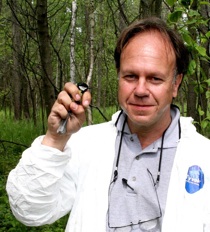
"Look we recognize that climate change is happening. The dilemma for society is addressing climate change, and balancing it with development. So we have to be realistic. Renewables and alternatives will all play a role, but even if those forms of energy grow by orders of magnitude over say the next fifty years, traditional hydrocarbons - oil and gas - will still make up the majority of the energy mix for at least the next century."
- Curtis Smith, Shell Oil.
That is Shell Oil spokesman Curtis Smith, speaking on the Platt's Podcast "Capitol Crude" June 1st, 20154. Curtis Smith was explaining why Shell Oil wants to spend $7 billion dollars looking for more oil in the Arctic.
In an internal Shell Oil paper, leaked by the Guardian newspaper, the company recognizes that their energy strategy will lead to 4 degrees Centigrade of warming - twice the safe limit, and then to 6 degrees of warming, a level scientists suggest could wreck civilization.
So they know. And they want to find more carbon to burn anyway.
Before you kiss our chances good-bye, there is some really good news from our feature guest this week. Author and financial expert Jeff Rubin says the carbon bubble is already bursting. Governments and mainstream media will hardly tell you. But the markets are already heading for the exits away from such stranded fossil assets. The stock values of companies in the mega-polluting Canadian Tar Sands have fallen by 70%. Coal company stocks are collapsing, down 90 percent.
Stay tuned for a ring-side view of a falling petro state, right here on Radio Ecoshock. Download or listen to this Radio Ecoshock show in CD Quality (56 MB) or Lo-Fi (14 MB).
Or listen on Soundcloud right now!
JEFF RUBIN: "THE CARBON BUBBLE"
With the Tar Sands and the crash in oil prices, Canada went from being a world petro-state to an economy in trouble. Our next guest says the carbon bubble is bursting in Canada, and that may not be a bad thing.
Jeff Rubin is no ordinary critic of fossil fuels. He was the Chief Economist for CIBC World Markets, the investment arm of a Canadian mega-bank. Since then he's written the books "The End of Growth" and "Your World is About to Get A Whole Lot Smaller". Now Rubin has a new work out: "The Carbon Bubble: What Happens to Us When it Bursts."
The obvious question, which everyone asks: what is a carbon bubble?
A bubble is an expansion which is based on a false premise. For example the 2007/8 housing bubble was based on an assumption that American mortgages were reliable, when they were not. In our present case, Rubin says, the false assumption is that we can burn as many fossil fuels as we need or want to. In reality, there is a limit to the amount of carbon dioxide the atmosphere can tolerate, before the climate becomes unsafe.
Canada, under the leadership of Conservative Prime Minister Stephen Harper, has bet it's economy on the Tar Sands in Alberta. Most of international and domestic policy is geared to further expansion of Tar Sands production and sales.
As a result, the Canadian currency became a "petro-dollar" that went up with Tar Sands production, until it was worth more than the U.S. dollar. Other Canadian sectors, like manufacturing and exports of commodities like lumber, suffered due to the high Canadian dollar. Then when OPEC decided to ramp up production, even as oil prices fell, the Canadian dollar crashed by over 20 percent, going less than 80 cents to the American dollar.
Manufacturing in Canada should rebound, but so many companies shrank or went out of business, it may be a slow climb back.
TAR SANDS AND COAL: THE ECONOMIC HIT
What ever politicians may say or do about climate change, Jeff Rubin says the market has already spoken. The stock value of coal companies in the United States lost an astounding 90 percent of their value. Canadian Tar Sands companies lost 70 percent of their value.
Rubin tells us the heavy oil from the Tar Sands (or "oil sands" as the industry tries to say) costs more to refine, and gets less on the market - perhaps forty something a barrel, versus the 50 or 60 dollars a barrel we hear quoted as "the price of oil". Considering even the most efficient Canadian producers of tar sands bitumen need to get at least $60 a barrel, somebody somewhere is losing big money.
Natually, the expansion promised by Tar Sands companies (and Stephen Harper) has been cancelled. Layoffs in the province of Alberta have been massive. Expected energy revenues to governments have crashed, meaning more cut-backs and layoffs. The carbon bubble has burst in Canada.
Rubin says that may not be a bad thing. Canada's real resources, that the world needs, are not climate-killing heavy oil, but food and water. A warming climate will change agricultural possibilities in Canada. A longer growing season means new crops can be grown - say corn and soy, instead of just wheat.
Rubin says Canada should aim to be "the breadbasket of the world." Farmland has become the new darling of billionaire investors and giant pension funds. The Canadian Pension investment board bought massive acreage in Assiniboine farm land, but Saskatchewan is banning some farm ownership schemes. See this.
Middle East Sheiks have purchased a large share in wheat distributor "The Canadian Wheat Board". Germans and Asians are buying giant farms in Canada. And not just in Canada. Wall Street investors and Chinese companies are buying farm land all over the world.
George Soros is reported to be buying farmland. Investment guru and billionaire Jim Rogers advised buying farm land several years ago. He was ahead of the curve.
SAVE YOUR INVESTMENT OR PENSION FUND: GET OUT OF FOSSIL FUELS
The crash of tar sands and coal stocks is just the beginning. Fracking companies are also losing big. University endowment funds are getting out, as Stanford University did with coal. After all, why educate students and then toss them into a wrecked world?
Jeff Rubin was one of Canada's top investment analysts with the Canadian Imperial Bank of Commerce. Now he advises investors to run, not walk, to the exits on the what have been the most profitable of all investments: oil and gas. People save their money, while saving the climate, Rubin tells us.
THE LNG BUBBLE
I ask Jeff Rubin about the multi-billion dollar proposals to build ports to export Liquid Natural Gas (LNG) from British Columbia. He says those projects are dead before they begin. Why? Because the major buyer was supposed to be China. But China just made a much cheaper deal for Russian gas brought in by pipeline. They have no need to go through the expensive process of freezing and compressing gas, and then decompressing it again before use. They don't need Canadian LNG.
THE WATER MARKET
Jeff Rubin says the other commodity Canada has, that the world wants, is water. However this discussion makes me, and many Canadians, very nervous. Most of the talk is about exporting water to the United States, where drought is already limiting farm production, and not just in California.
Most of Canada's big rivers actually run north to the Arctic Ocean. For decades, there's been talk about diverting them south. But remember, this plot to divert rivers was actually tried in the Soviet Union, under Stalin. The ecological devastation was spectacular. Today, we have no idea what happens to Arctic ecosystems, and the Arctic sea, if we siphon off fresh water flows. I'm guessing it would not end well.
But you can expect pressure from the United States to get more Canadian water, and who knows, in the future a solution forced by military threats is not impossible to imagine.
In the present, Rubin says we already export water - in our crops. Wheat uses a lot of water, and Canada exports a lot of wheat. Australia also exports water (that it can hardly afford) in it's wheat crops. At least agricultural exports are value-added water, and we don't have to divert rivers.
LEARN WITH RUBIN
I learned a lot just talking with Jeff Rubin. He's a very smart mind who sees further into the future than most of us. Listen to or download this interview with Jeff Rubin, in either CD Quality or Lo-Fi.
This new book "Carbon Bubble" is mainly about Canada. But it got me thinking about the fossil-dependent Middle East countries, Norway, and even the United States, which is trying to frack it's way back into an oil and gas superpower. This is really a global carbon bubble that is about to burst, with Canada as an early case study.
Here's another useful radio interview with Jeff Rubin, on the Canadian Broadcasting Network program "The Current" on May 19, 2015.
Find Jeff Rubin's web site here.
On You tube, Jeff Rubin talks about (the dismal) future of the Oil Sands here, on the Canadian CTV news channel, May 19, 2015.
HOW DO WE "HANDLE" THE WILD, NOW THAT CLIMATE CHANGE IS HERE?
We are not alone on this Earth experiencing a rapid shift of climate. Our next guest is a voice for the wild, and what we must do.
A new study in the journal Science finds climate change could push into extinction one of six plants and animals on this planet. That's a huge unimaginable loss. A climate shift won't respect the boundaries of parks and wilderness areas we've set aside. Can we just step back and watch?
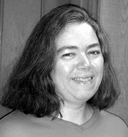
Emma Marris says "no". She's been a reporter for the journal Nature, and has a Master’s in Science Writing from Johns Hopkins University. Her controversial book is titled "Rambunctious Garden: Saving Nature in a Post-Wild World". Just lately, Emma's stirred up another storm among naturalists with a provocative article in Orion Magazine, called "Handle with Care".

Emma Marris, photo courtesy of Nature Conservancy
From Klamath Falls, Oregon, we welcome Emma Marris to Radio Ecoshock. We have a wide-ranging discussion about what our role is in preserving wilderness lands, now that climate change, invasive species and other human influences has re-shaped what we mean by "wild".
My own worry, and it's a big one, is that Emma's proposal could lead less sensitive and ethical people to a justification for "developing" the parks, or "managing" aspects of nature we don't understand very well. Humans are known for their hubris and natural failures. Can we overcome that threat?
It's interesting to compare environmentalism in the United States with Canada or Europe. In Europe, there is practically no original wild space at all, so the discussion there is quite different. Here in Canada, there is so much wilderness there is no hope or idea that humans could or should manage it. We'll have to see how Emma's proposals for "gardening" in Nature resonate in other parts of the world.
Most recently, Emma has been writing about wolves in the crowd-funded journalism site "Beacon". How wild are re-introduced wolves that wear GPS broadcasting collars, names, and intense study and tracking operations? Find that discussion in Beacon here.
Find more about Emma Marris here at her web site.
Download or listen to this Radio Ecoshock interview with Emma Marris in CD Quality or Lo-Fi.
You can also listen to Orion magazine host Scott Gast talking with Emma Marris about her controversial article here in a 12 minute podcast.
My thanks to Erik Hoffner of Orion Magazine for suggesting this guest.
NEW ALEX SMITH SONG: "SHE DIDN'T SAY"
To accompany this interview on the wild, I added my new song about the disappearing species at the end of this program. The piece is called "She Didn't Say". It's written and performed entirely with computer synthesizers. You can also listen to or download (free) this song from Soundcloud.
EXTINCTION RADIO
As long-time listeners will know, I don't agree with Professor Emeritus Guy McPherson's argument that humans will go extinct before mid-century, due to multiplying feedback effects and methane driven by climate change. However, I value McPherson's work to identify and track positive feedback effects, which few others do.

Mike Ferrigan, host of Extinction Radio
You can listen to this ongoing argument with a new extended online radio show coming out of Scotland, with host and producer Mike Ferrigan. It features some guests we've had on Radio Ecoshock, and some new voices, with not all of them agreeing with extinction either. It's a radio dialog. Find the web page, and listen to episodes of "Extinction Radio" here.
MY THANKS TO SUPPORTERS
Thank you to all who "friended" this program on Facebook. We just crested over 26,000 listens on Soundcloud, gaining quickly. We now have more listeners in more countries. Hello to listeners in Scandinavia, Switzerland and Austria, Israel, Russia, India, and many more.
There is a momentum now. It's not yet time to completely give up hope.
I'm Alex Smith. Thank you for listening, and thank you for caring about our world.