Showing posts with label solar. Show all posts

Wednesday, February 10, 2016

IS OUR FUTURE POSSIBLE?

SUMMARY: "Reality 101" with Nate Hagens, our minds, our world, the fossil trap. Scientists Alexander "Sandy" MacDonald of NOAA and Chris Clack of CIRES: yes we can power America with solar and wind power.

This week on Radio Ecoshock we'll see how hard it is, and how possible it is, to get out of the matrix. Resilience expert Dr. Nate Hagens talks about his college course "Reality 101".

Then we visit with two top American scientists whose recent study was published by the government-funded National Oceanic and Atmospheric Administration. A detailed study of sun and wind says yes we can replace fossil and nuclear power with renewable energy, and it won't cost any more than what we are doing now.

Thanks for joining us this week as we explore where we really are, and what we could do about it.

Download or listen to this Radio Ecoshock show in CD Quality (56 MB) or Lo-Fi (14 MB)

Or listen on Soundcloud right now!


NATE HAGENS: REALITY 101

I don't know about you, but I'm often stuck on Bob Dylan's words: "something is happening here, but you don't know what it is". Wouldn't it be great if we could take a course to understand reality?

The course exists. Dr. Nathan J. Hagens teaches "Reality 101 - A Survey of the Human Predicament" to graduate students at the University of Minnesota. Nate Hagens is a familiar name to anyone who tracks energy and resilience. Nate was a successful Wall Street trader. He left all that in 2003 to probe deeper. Nate is on the Board of Directors of the Post Carbon Institute, a Director of the Bottleneck Foundation, and he teaches. He's working on a book that he doesn't want to talk about yet. Hagens lives on a farm in Wisconsin with a collection of animals.


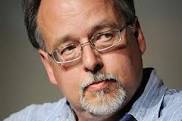
Dr. Nate Hagens

I first learned about Nate from speeches made at Peak Oil conferences. We talk about that a bit. But the bigger problem here is the big problem - the nexis of threatening developments that seem too large to grasp. We have guests that see everything in terms of energy. Others focus only on the environment. I've talked with a few eco-psychologists. Nate is one of the few who attempt to wrap them all up together.

The course begins with the real overview: the first photos of Earth from space. Then it gets into "Systems theory and complexity" with a combination of You tube videos and Nate's own unreleased writing.

A QUESTION OF EXTINCTION

There is a course section on geologic time, and paleclimatology. Dr. Peter Ward, a several-time guest on Radio Ecoshock, is twice featured in the syllabus. I've got Peter lined up for a return trip to Radio Ecoshock soon. He's one of the few scientist to crystalize a working theory of how mass extinctions in the past really worked. They all developed through climate change, except for the great asteroid strike in the Gulf of Mexico about 65 million years ago. And even there, the dying animals (including dinosaurs) and plants may have already been weakened by a planetary warming that began a few million years before the asteroid hit.

You can watch a video interview I did with Dr. Peter Ward on this page. Here are the two key interviews with Peter Ward on Radio Ecoshock, as audio files: "Under a Green Sky" (2008) and "The Medea Hypothesis" (25 minutes)(2009). This are still very valid and powerful today.

In the course "Reality 101" there is a segment on mass extinction. I ask Nate Hagens where he stands on the idea of human extinction, either this century, as suggested by Dr. Guy McPherson, or in the near-coming centuries? If I can summarize Nate's reply, it would be that humans are very ingenious and adaptable. He doesn't think there is any basis for worrying about a near-term extinction, certainly not in this century. But please listen to the interview to get it in Nate's own words.

COPING WITH A STONE AGE MIND

I watched a "Reality 101" course video about evolutionary psychology. It is a You tube interview with John Tooby and Leda Cosmides on "Stone Age Minds". Contrary to some tenets of psychology, they say the human mind arrives not as a blank slate, but with structures designed to cope with problems of a hunter-gatherer society. Tooby and Cosmides talk about mismatches between our ancient mental capabilities and the newly-minted modern world. That could explain a lot. Find that video here on You tube, courtesy of Reason.tv

Nate also offers his students an unpublished (yet) article "The Psychological Roots of Resource Overconsumption". You won't find that anywhere online, but it may appear in Nate's upcoming book "Bottleneck".

Then we have to consider how many of our problems dealing with the world are based on sexuality and addiction.

A PROSPEROUS WAY DOWN?

On Resilience.org I found another text required in the course. It's called "A Prosperous Way Down" by Howard and Elisabeth Odum. Actually, that article is a short-form introduction to their book of the same name. Is there a prosperous way down, and why should we accept going "down" at all? Nate explains why we either throttle back consumer society by choice and plan - or we collapse into a very nasty chaos.

The students wrap up the "Reality 101" course with a group discussion "What to do as individuals". That's a big one. As Nate wrote in an email to me: "What does a rational, non-sociopathic human facing the multiple bottlenecks of the 21st century DO?" Talk among yourselves.

There seem to be only two doors: (1) we keep on going and trust the next generation will figure things out, or (2) we are so completely doomed we might as well enjoy the end of days. Some of us hope there is a third door, but is there really?

This interview is kind of a warm up, for a longer interview I hope to do with Nate Hagens, when he and his co-author bring out their new book "Bottleneck" later this year.

Download or listen to this 30 minute interview with Nate Hagens in CD Quality or Lo-Fi

Nate has a Masters Degree in Finance from the University of Chicago, and a Ph.D. in Natural Resources from the University of Vermont. He left Wall Street money to become an alternative social critic. His personal web site is called "The Monkey Trap" (which is seldom updated).

Here is a cool Nate Hagens You tube talk, given for the Worldwatch Institute. I also like "The Converging Economic and Environmental Crisis" July 2014 found here.

DR. ALEXANDER "SANDY" MACDONALD AND DR. CHRISTOPHER CLACK

Scientists say wind and solar CAN power America

Wouldn't it be great if most of the electricity generated in America came from wind and solar, instead of climate-wrecking fossil fuels? Of course it can't be done, except it can. Who says so? Hippies from California? Not quite.

It's all in a new paper by a former senior scientist at NOAA, the National Oceanic and Atmospheric Administration, and a physicist/math whiz from CIRES, The Cooperative Institute for Research in Environmental Sciences, at the University of Colorado Boulder. Our guest are Dr. Alexander MacDonald, known as "Sandy", the recently retired director of NOAA’s Earth System Research Lab, and Dr. Christopher Clack from CIRES - all in Boulder Colorado.


Dr.Alexander MacDonald and Dr. Chris Clack

We talk about a new article titled "Future cost-competitive electricity systems and their impact on US CO2 emissions" published online in the journal "Nature" on January 25th, 2016.

Maybe the best way to begin is to give you the links sent to me by the Public Affairs Officer at NOAA Communications. My thanks to Theo Stein for getting me up to speed on this breaking paper.

The NOAA/CIRES press release is here.

"At the bottom of the CIRES release are animations of solar potential, wind potential and a power flow animation showing how a system dominated by renewables and supported by a HVDC grid might dispatch power around the country to meet demand."

The FAQ is here.

CIRES also put together this brief video explainer.

THE BIG NEWS ABOUT ALTERNATIVE ENERGY IN AMERICA (and everywhere else)

So what is the big news?

(1) The United States could power at least 80% of it's energy needs, maybe more with just solar energy and wind power. That's amazing and encouraging but there's more.

(2) Electricity from this system would not cost any more than it does today.

(3) Nuclear plants could be shut down. All coal-fired power could be closed. Only a few gas generators to pick up occasional slack would be needed.

(4) massive power storage would NOT be needed. That's a huge break-through.

(5) no new technology is required. We have the tools and we know how.

This system would require the construction of nation-spanning DC High Voltage lines. Current AC transmission lines are incredibly wasteful, losing up to half of all power created. And because AC cannot transmit power efficiently, (a) you have to build nuclear plants dangerously close to cities and (b) AC line cannot bring wind power from the central plains to New England (for example).

High Voltage DC lines already exist. There is one in Alberta Canada, and one running from Oregon to California. It's not unknown or untested tech. We can do it.

The real breakthrough comes from studying weather, in great detail, on a very big scale (across the United States). NOAA and CIRES has all the weather data to do it. They did and this paper is the result. So if you study alternative energy just within one state, it won't work to replace what we have. But if you look at national resources, and have a way to transmit them, it's all possible.

Of course the sun only shines during the day. But it turns out that the wind is strong enough at night to keep things going (when demand is lower anyway). We don't need storage, these two scientists say.

Just check out their press release, the short video, and their great maps and you'll see the future of energy.

Download or listen to this 24 minute interview with Alexander MacDonald and Chris Clack in CD Quality or Lo-Fi. Please pass these links on to your friends and on social media.

GET THE WORD OUT!

Don't forget you can find all our past interviews with scientists, authors, experts and activists on our web site, at ecoshock.org. Those are free for download or listening, anywhere in the world.

This program is also available by podcast. Currently my Itunes podcast is down - because this blog is too long, with too many links, for Itunes to digest. I'm working on a solution. In the meanwhile, you can get this podcast through podbean. Here is the link for that:

http://www.podbean.com/podcast-detail/nmdeq-3cceb/The-Radio-Ecoshock-Show

If you find this program useful, please tell your friends. I also welcome your financial support, if you are able. Find a link to donate on this blog, or other options here on my web site.

I'm Alex Smith. Thank you for listening, and caring about your world.

Wednesday, February 3, 2016

Climate: Misunderstood Impacts

We have three interviews this week, including 2 climate scientists. Andy Pitman: new science on how climate really hits us. Plus Johan Rockstrom, the Swedish leader of planetary boundaries, followed by Lynn Benander on community power in New England. Let's go.

Download or listen to this Radio Ecoshock show in CD Quality (56 MB) or Lo-Fi (14 MB)

Or listen on Soundcloud right now!


DR. ANDREW PITMAN: THE SCIENCE OF WHEN AND HOW MUCH

It may get hotter where you are, sooner than you think. New science reveals many parts of the world won't have to wait long to experience unsafe heating and disruptive changes in precipitation. Once again, we underestimate the climate threat.

Dr. Andy J. Pitman is a British atmospheric scientist. Now he's the Director of Australia's ARC Centre of Excellence for Climate System Science, at the University of New South Wales, in Sydney. [ARCCSS]


Dr. Andrew J. Pitman

Pitman is co-author of a new piece in the journal Nature, titled "Allowable CO2 emissions based on regional and impact-related climate targets". The lead author is Professor Sonia Seneviratne from the Swiss Institute for Atmospheric and Climate Science.

You can read an article/press release from the University of New South Wales, explaining this paper, here.

The title of the press release says a lot: "How a 2°C rise means even higher temperatures where we live. Land based temperatures rise much faster than global average temperatures".

I think one startling result in this paper is the timing of climate impacts. We are used to reports talking about things happening by 2100, after we are dead. Now science has shortened that fuse. Serious impacts are less than 15 years away, or, as Pitman points out, they are already happening.

Let's face it, the Arctic has already warmed well beyond the two degree C danger mark. We had reports that parts of Siberia were warmer in the last week of January than Taiwan, which is right on the edge of the tropics. North-Central Siberia reported temperatures 20 degrees Celsius above normal for this time of year. That's 36 degrees Fahrenheit hotter than it should be!

According to lead author Prof Seneviratne:

"At 1.5°C we would still see temperature extremes in the Arctic rise by 4.4°C and a 2.2°C warming of extremes around the Mediterranean basin."

In our interview, Andy Pitman says two important things about the two degree C "safe" level of warming.

First of all, two degrees C warming is demonstrably not "safe". We are already experiencing extreme weather events, ocean acidification, coral die-off and much more. Pitman says the two degrees was accepted not because it was scientific, but because it was thought to be possible.

Secondly, the whole concept of a two degree global mean temperature as a goal is almost meaningless. We do not live in "average" climates. Their study found several parts of the world that will warm by two degrees (or more) as early as 2030. We're talking about the Mediterranean for example. That region will dry out and heat even more. You think you've seen mass migration now? It's only going to become worse, as more agriculture fails in North Africa, the Middle East, and places like Greece, Italy, and Spain.

Here is more from that University of New South Wales press release (and pay attention to the methane warning!)

"The extreme regional warming projected for Alaska, Canada, Northern Europe, Russia and Greenland could have global impacts, accelerating the pace of sea-level rise and increasing the likelihood of methane releases prompted by the melting of ice and permafrost regions.

'The temperature difference between global average temperatures and regional temperature extremes over land not only has direct climate impacts, it also means we may have to reconsider the amount of carbon dioxide we can emit,' said co-author and Director of ARCCSS Prof Andy Pitman.

'For instance, to keep extreme temperature changes over the Mediterranean below a 2°C threshold, the cumulative emissions of CO2 would have to be restricted to 600 gigatonnes rather than the 850 gigatonnes currently estimated to keep global average temperatures increase below 2°C.'

According to the researchers, if global average temperatures warm by 2°C compared to preindustrial times this would equate to a 3°C warming of hot extremes in the Mediterranean region and between 5.5 -- 8°C warming for cold extremes over land around the Arctic. Most land-masses around the world will see an extreme temperature rise greater than 2°C.
"

From our Radio Ecoshock interview, Andy Pitman says:

"Two degrees isn't safe because a two degree warming is expressed over the land surface by warming of much more than two degrees. And it's not expressed as a regional average warming of two degrees. It's expressed for instance by earlier spring heat waves. Or the ability of a landscape to continue growing through winter because the winter is several degrees warmer than it used to be.

Or it's expressed by summer heat waves lasting longer. And as your listeners would know, if you have a heat wave that traditionally lasts three days, and it starts to last five days, the impacts that that has on ecosystems but also primarly on human health can be way out of proportion to only an extra day or two.
"

What Pitman doesn't say, but I know from previous interviews with scientists and doctors, is that extra day or two of extreme heat is when people can begin to die off in great numbers. It happened in Russia in 2010, in France during the great heat of 2003, where tens of thousands died, and now arrives too often in Australia during extended heat waves. We've been told that heat is now a greater killer in Australia than car accidents.

Talking about Canada (where some residents think they'd like to warm up a few degrees!) Pitman warns:

"If you manage to warm a region of Eastern or Western Canada by three degrees on the annual average, but all that warming happens in July, the amount it warms in July is vastly more than three degrees. You start to get serious heat wave conditions...."

It sounds attractive to have an average annual warming, but the actual impacts may be increased deaths, wrecked eco-systems, more forest fires, or perhaps a whole year's wheat crop wiped out (again, the wheat crop in Russia was devastated).

SCIENTISTS ARE MISTAKEN TO BE SO CONSERVATIVE ABOUT CLIMATE CHANGE

Andy Pitman on Radio Ecoshock:

"We have probably erred as a science community in being a little conservative in how fast climate can change. And we have also had our eye on the averages more so than the extremes.

Now that's a general statement. There have been some outstanding groups in North America and in Europe that have focussed on extremes. But in general the climate community has been really interested in how much will the global average warm.

I think what our paper says is: it doesn't matter, really, what the global average warms. It matters critically how climate warms spacially, by country, and how that warming is translated into days of heat or cold or days of extreme rainfall - because those are the things that can break a drainage system, break a health system, damage an ecosystem.

Most of what our paper is about is that we have been too generous on the scale of emissions that should be permitted, but if I was going to take the science further, I would encourage the research communities to be targeting the nature and statistics of extreme events into the future, over how much the planet as a whole will warm.
"

There's lots more in the interview. For me, this backs up people like Ottawa scientist Paul Beckwith, who is studying abrupt climate change, and extreme changes, rather than statistical averages.

Download, listen to, or share this 22 minute Radio Ecoshock interview with Dr. Andrew Pitman in CD Quality or Lo-Fi.

JOHAN ROCKSTROM: BIG WORLD, SMALL PLANET

There are limits to what humanity can do on this planet and still survive. Johan Rockstrom led a team that mapped out those Planetary Boundaries. Rockstrom is the Executive Director of the Stockholm Resilience Centre. He teaches at Stockholm University, and holds many roles in the scientific community. We talk about his latest book, written wtih Mattias Klum, "Big World, Small Planet" - and many other questions we all have about climate change.


Dr. Johan Rockstrom

Here is one for example: At a TED talk, Rockstrom told an audience that climate change may actually not be our greatest challenge! I asked what he meant by that.

His answer makes sense. There are multiple crisis happening on Earth at this time. One very serious and long-lasting change is in the climate. But we are also going through a mass extinction event (assuming we make it through). We can do something about greenhouse gases in the atmosphere, Rockstrom tells us, but once a species goes extinct, it's gone. And all the species that might have interacted with it are also endangered. You can decide to drive an electric car, or travel less, or support carbon capture research - but you can't take any action to bring back species from extinction, or really restore wrecked ecosystems.

I take issue with Rockstrom, when he wrote: "we can trigger a new wave of sustainable technological inventions" to solve our ecological crisis. On Radio Ecoshock, I just talked with another well-known Swede, Alf Hornborg. Alf says there is no technological solution to the problems of technology. We need social and ideological change instead.

Or course Rockstrom is aware of Hornborg's work, and doesn't suggest that a technical fix is all we need. A change in human civilization will also be required. But in general, in this interview and in their new book, Johan Rockstrom takes the positive outlook. He sees grave dangers, but apparently believes humans are smart enough to solve the crisis we create. I'm not so sure, but you decide, after listening to this interview.

Johan explains what is meant by "the Fourth Industrial Revolution" - and his involvement in a project called "Future Earth".

Along the way, of course, you will learn more about our situation. Rockstrom is acknowledged as one of the world's top scientists. His leadership in the concept of Planetary Boundaries is absolutely important for us all. Don't under-estimate him.

Download, listen to, or share this 23 minute Radio Ecoshock interview with Dr. Johan Rockstrom in CD Quality or Lo-Fi.

CO-OP POWER: LYNN BENANDER

What is the answer to giant power companies with equally giant greenhouse gas emissions? Citizens doing it for themselves. One of the best examples is Co-op Power in New England. We'll find out what it is, and how this could work in your community, from Lynn Benander. She's the CEO of Co-op Power and Northeast Biodiesel.

My first reaction was to picture a group of middle-class white folks getting together to bypass the system and save money. But as Lynn tell us, this came up at the very first organizing meeting. Some people rent, and still want green power. That's why community-owned power can make more sense than just well-off people installing solar on their rooftops.


Lynn Benander

GREEN BIODIESEL

Biodiesel got a terrible name as a false climate solution, when industrialized agriculture switched off growing food to make heavily subsidized gas substitutes. How is Northeast Biodiesel different from that? The company is opening a new plant this month, designed to produce over a million gallons of diesel fuel a year. The source stock is waste cooking oil! This doesn't displace agricultural food crops. The carbon load is already in producing the cooking oil, so burning what would otherwise be waste makes green sense. As Benander points out, for now, we still run our trucks, tractors and buses on diesel fuel. Until we can do better, green diesel, produced in the community, is a better solution.

Even the financing for this biodiesel plant came from the community. Read all about that here.

Lynn and I talk about how communities can raise money for alternative energy co-ops. I want you to hear this interview, and dig further into it. We so often have hopeless news on Radio Ecoshock, without enough solutions. Here is a group of New England communities that are not waiting for the grand scheme from the federal or state government, but doing it for themselves. It's inspiring.

Check out this slide and photo explanation of co-op power here.

Download, listen to, or share this 14 minute Radio Ecoshock interview with Lynn Benander in CD Quality or Lo-Fi.

Here are some more Lynn Benander/Co-op Power links, courtesy of my friend Erik Hoffner, who suggested this story.

Post Carbon Institute Interview with Co-op Power's Lynn Benander - "Community is Created by Filling the Cup" September 2, 2015

Center for Popular Economics - Presentation on Cooperative Paths to Fossil Fuel Freedom: Stories from Community Energy Co-ops in the Co-op Power Network with Lynn Benander and Temistoclese Blessed Ferreira from Co-op Power August 23, 2015

Grist article on Diego Angarita, "Meet the Food Justice and Clean Energy Advocate who Wants to Shake up the Nonprofit World", noting his work at Co-op Power August 14, 2015

We are out of time. My thanks to the listeners who support Radio Ecoshock with a monthly donation, or a one-time gift to keep this program going. Find out about that here.

Thank you for listening, and caring about our world.

Tuesday, December 22, 2015

CLIMATE HOPE & TRAGEDY

SUMMARY: First net-zero city fights off giant fracking leak in California.; Vancouver aims fossil free; 1st Nations vs. pipelines. Mayors & activists report. Scientist Paul Beckwith & RAN Exec Dir Lindsey Allen wrap up Paris climate talks. Carolyn Baker's seminar on how to cope.

WELCOME TO RADIO ECOSHOCK THIS WEEK

Reactions to the Paris climate agreement are all over the map. Unexpectedly, our correspondent Paul Beckwith suggests this may be a tipping point in human affairs, after extreme weather all over the planet. Lindsey Allen from RAN isn't so sure.

Before we talk with them, I want you to hear an extraordinary teleconference hosted by former Earthbeat radio host Daphne Wysham. We hear how West Coast cities are leading us out of the fossil age, even as they struggle with constant demand for more pipelines and ports. Oh by the way, one California mayor reports thousands are living under a toxic cloud, while fracking has poisoned the water system used for one quarter of North America's produce.

I'm Alex Smith, with all that and more, this week on Radio Ecoshock.

Download or listen to this Radio Ecoshock show in CD Quality (56 MB) or Lo-Fi (14 MB)

Or listen on Soundcloud right now!


MAYORS' REPORT ON GREEN ACTION

Just when things look bleak for the climate, we discover city Mayors are way ahead of national leaders. Daphne Wysham leads this story. She's the former host of the syndicated radio program "Earth Beat", and now director of the climate and energy program at the Center for Sustainable Economy.

I know good radio when I hear it. This conference call organized by Daphne contains some startling news, both good and bad. In this abbreviated for radio version, the guests are (in order of appearance):

Andrea Rheimer, Deputy Mayor of Vancouver, Canada

Rex Parris, Mayor of Lancaster California

Winona LaDuke, former Vice-Presidential Candidate and head of Honor the Earth

The whole purpose of the call was to unite more local politicians in the fight against constant pressure to approve or allow more and more fossil fuel infrastructure. By that we mean incessant pressure to build more ports for oil, gas, or coal, more pipelines, more storage facilities - all the instruments by which we can commit to a bankrupt economic plan, and a ravaged planet.

Daphne Wysham was among many who fought off such a proposal in Portland Oregon. Companies wanted to build a propane shipment facilities, bringing the propane from Alberta in Canada, to ship to Asia or who knows where. This in Portland, which has prided itself in being the first city in America to develop a green plan, a way out of fossil fuel dependence. It clashed, and was defeated at the civic level - not in Washington, not in Paris, but stopped in Portland. On November 12, 2015, Portland passed the strongest legislation against more fossil fuel infrastructure anywhere in America.

Activists realized they could not afford to fight off each and every such proposal, which are rampant on the West Coast, including in Canada, but also in the UK, in Australia, and around the world. The fossil fuel industry is still trying to grow, even as we know more must be left in the ground, even as we know humans must move AWAY from more fossil fuels, not toward them.

So a small non-profit web site was set up, simply named No More Fossil Fuel Infrastructure. As Daphne tells us in a preview interview, more than a dozen Mayors signed up almost overnight. In a surprising development, the Mayor of Richmond California, Tom Butts signed up from Paris- even though his city hosts a huge and polluting refinery owned by Chevron.

Andrea Rheimer, the Deputy Mayor of Vancouver, Canada, has some inspiring news. That city banned all new fossil fuel infrastructure in 2012. In 2013, Vancouver banned new coal ports. At the start of 2015, Vancouver was one of a handful of cities around the world declaring their intention to be fossil-free by 2050. Just this year, another 100 or more cities have said the same. The cities are far ahead of the politicians in Paris.


Mayor of Lancaster California, Rex Parris

I found Rex Parris's presentation loaded with ground-breaking and heart-breaking info. To mention just a little:

NORTH AMERICA'S FIRST NET ZERO CITY?

* His city of Lancaster passed a bylaw requiring all new homes to have installed solar power. As a result, the city now produces more electricity than it consumes. Lancaster California exports power to the grid, becoming a net-zero city (perhaps the world's first) as far as electricity goes. Mayor Parris expected complaints and push-back, but instead got a better economy and co-operation.

* The city is now engaged with a Chinese battery company, BYD, to install a 500 megawatt storage facility, to balance out the highs and lows of solar power. Again, this is a first for any city in North America.

THE PORTER RANCH BLOWOUT - CALIFORNIA'S BP

* Parris is a lawyer who now heads the class action suit against SoCal (Southern California Gas Company), and it's parent company, Sempra Energy, for a huge fracking well blow-out that has buried thousands of families under a toxic cloud. This one blow-out (still on-going, can't be stopped apparently) is thought to be emitting one quarter of all methane produced by the state of California. It's not just methane, but a toxic stew of cancer-causing chemicals like benzene. It's called the "Porter Ranch" disaster, or California's BP disaster.

SAN JOAQUIN VALLEY, SOURCE OF 25% OF NATION'S PRODUCE, POISONED?

In the teleconference, Mayor Parris says:

"Before the Porter Ranch blowout in the injection wells, what we discovered is that the water supply in the San Joaquin Valley that feeds 25% of our nation's food supply, grown food supply, comes from the San Joaquin Valley. And the aquifers appear to be poisoned. The cherry trees started to die, now the almond trees are dying. And the testing shows that in some cases we're getting benzene levels at a thousand times what what's acceptable. All kinds of hydrocarbon poisons are in there - and that's because the oil industry has been injecting directly into the drinking water of California.

The thing we should start recognizing is that this industry has no responsibility whatsoever. They have captive agencies regulating them, and as a result the impact they're having on the climate, the country and the citizens is beyond comprehension.

The Porter Ranch situation is an example of that. They used a 50 year old well, it was drilled in 1954, to pump oil, and they used that as an injection well to store natural gas under high pressures. The inevitable happened. It blew and now we have thousands of families living under this cloud, with very little we can do about it. We're trying to relocate them, the gas company is resisting. This is Sempra Energy which is responsible for this.

And we're going to have more and more of these situations develop as they take more and more risks in finding energy.
"

WINONA LADUKE - FIGHTING PIPELINES ON NATIVE LANDS

Winona LaDuke tells us the Ojibwe people are fighting no less than three new pipeline coming through their lands. The fossil fuel companies want to establish pipelines to a port on Lake Superior, to carry dangerous Bakken crude, or even-more polluting tar sands oil, out to the world by the East. They would bypass the barriers to the West in British Columbia, or Oregon, bypass the XL pipeline, and ship via the Great Lakes. Anything to make a buck.


Winona LaDuke

Find out more about Winona's activism here at Honor the Earth.

HOW TO FIND THE ORIGINAL TELECONFERENCE AUDIO

There isn't space here to tell it all. Please listen to this shorter report (edited for radio) on Radio Ecoshock, or listen to the whole press conference here.

Along with Mayor Parris, Andrea Rheimer and LaDuke, you will also hear from Patrick O'Herron from the Oregon Physicians for Social Responsibility and Nia Rivak, an activist from Portland. Oh yeah, and Bill McKibben sent an introductory clip from Paris, for this teleconference.

It's well worth your time. And can you help organize or support a similar movement against more fossil fuel infrastructure in your own city, where democracy still has a hope? Then sign up at nonewffi.org.

Download or listen to this 14 minute report from Mayors and activists, as edited for Radio Ecoshock, in CD Quality or Lo-Fi

PAUL BECKWITH WRAPS UP PARIS CLIMATE TALKS

I thought Paul would trash the Paris climate talks as way too little too late. No, Paul tells us why this may be a turning point, even a tipping point in human affairs. Then he explains what needs to be done from here, to really save the climate. As always, a trip with this PHD student (with already two Masters degrees, and teaching climate science at the University of Ottawa) - is also well worth your time.

We talk about James Hansen, the new climate-aware billionaires, the Arctic Methane Emergency Group, geoengineering, and much more.

I appreciate Paul taking the time to talk to us from Norway, where he is helping to found a new company, Gaia Engineering, which will provide climate-related technology. His two hour talk in Norway was recorded and will be found in a little while on the new web site being built.

Download or listen to this 21 minute interview with Paul Beckwith in Norway in CD Quality or Lo-Fi

LINDSEY ALLEN OF RAN ON PARIS CLIMATE TALKS

Lindsey Allen is the Executive Director of the Rainforest Action Network. That's a group that has earned my respect. In addition to their campaigns to save the rainforests, for their own sake, and for the climate - RAN, as it's known, also dug furthest into who, exactly who, is funding the new coal plants that will kill off our hopes for a livable planet. That turned out to be big name banks, some of who also claim to be getting greener. Get some of the details here, and I hope to do an interview soon on coal financing.

Lindsey tells us about the non-profit organizations who were active in Paris, and the role that the people's voice plays in bringing politicians as far as we've come. She also reminds us that the "developed" world has a lot to learn from the people actually living in rainforests, the indigenous people on all continents. But we're not listening yet, she tells us - at our peril.

Download or listen to this 11 minute interview with Lindsey Allen of Rainforest Action Network in CD Quality.

CAROLYN BAKER'S NEW SEMINAR

Carolyn Baker is a life coach and certified in psychology. She's taught at the university level. Carolyn has specialized in helping people cope with the awful news about climate change, and our impact on the planet in general. What should we think and feel? How can we go on?

To that end, she's organized a seminar which will be live with some really intriguing guests, and then later available via recorded video. It's not free, because this sort of project costs money to organize. But it's not all that expensive either. Carolyn describes the guests, which include Andrew Harvey founder of the Institute for Sacred Activism, writer/teacher Stephen Jenkinson, deep green activist Derrick Jensen, Carolyn herself of course, Linda Buzzell, journalist Dahr Jamail, Janaia Donaldson from Peak Moment TV, Mick Collins from the University of East Anglia, and Becca Martenson, counsellor and life coach (and wife of Chris Martenson). If you don't recognize any of those names, perhaps you spend too much time with mainstream news?

The thing is - I've seen some great conferences with speakers like this where they expect you to drive across the country, or fly across part of the world, and pay a lot of money for the conference, plus lodgings, food and all that. I've been waiting for the alternative community to organize real online conferences, complete with feedback from us, the participants. It's starting.

The seminar is called "Living Your Passion & Purpose", and further "In the face of humanity's greatest challenge, an interactive online symposium." To find out more, listen to this 5 minute interview, or just go to her web site, carolynbaker.net. Then it's up to you, whether you want to participate, in what Carolyn hopes will become a new supportive community.

Download or listen to this 5 minute interview with Carolyn Baker in CD Quality.

Of course you can also listen to Carolyn and her guests every week on her radio show "The Lifeboat Hour" on the Progressive Radio Network.


Like the fossil age, we are out of time. If you can help support this program, find out how on this page. Radio Ecoshock is paid for entirely by listener support. We run no ads on this site, or in the program. We are not sponsored by guests or anyone else. Just you.

Thank you for listening. Be sure and join us next week on Radio Ecoshock, when I'll play a full-length talk about why a famous scientist who knows how serious the climate threat is, has finally begun to hope.

Wednesday, November 11, 2015

Killing Solar, Killing Us All

SHOW SUMMARY: Who is trying to kill solar power in America? As energy activist Nancy LaPlaca reveals, state-by-state fossil fuels companies are trying to stop competition from safe renewable power. Then we look at developing court evidence in Canada - that fracking for gas and oil IS polluting drinking water. Veteran Canadian investigative journalist Andrew Nikiforuk fills in this key part of the shadows of fracking. We'll wind up with part of my on-going conversation with permaculture guru Albert Bates: why is the worst news more popular than the best solutions? Radio Ecoshock 151111

I'm Alex Smith, welcome to Radio Ecoshock this week.

Download or listen to this Radio Ecoshock show in CD Quality (56 MB) or Lo-Fi (14 MB)

Or listen right now on Soundcloud!


URGENT: I NEED YOUR HELP!

I need your financial support. The Ecoshock bank account is getting very low, and I will have bills to pay all through the coming holidays. I particularly need more monthly membership supporters. If you can afford $10 a month to keep Radio Ecoshock (and me!) going please check out this page and sign up. I only need a few dozen supporters to keep this program going out free to people all over the world. If you prefer a one-time donation of any amount, that's great too.

Sadly, I can't ask for donations in my radio program. The non-profit stations are raising money for their own needs, and don't allow fundraising for independent producers. I guess I'm supposed to be part of some big think-tank, or organization. But then I'd have to censor Radio Ecoshock to fit their policy, or try to sell you on their agenda. Please help me stay independent and free to take on the world!

It seems unfair that blog readers and podcast subscribers have to carry the load for all radio listeners. But that's the way it is, and so I'm asking for your help now. Please take a few seconds, and a few bucks, to help me keep going. Otherwise, Radio Ecoshock could go off the air.

NANCY LAPLACA: WHO IS KILLING SOLAR IN AMERICA?

In May of 2013, we asked energy activist Nancy LaPlaca why the sun-drenched state of Arizona burned so much coal. That hasn't changed. You can download or listen to that interview here, or read about it in my blog here.

Nancy has moved to North Carolina, where she's helping uncover a national plot by big power companies to slow down solar power in America. She's working with two activist groups: NC Warn (Building people power for climate and energy justice) and Climate Voices, the science speakers network.


Nancy LaPlaca

According to the Washington Post, March 7, 2015, big U.S. utilities are fighting a campaign against rooftop solar power. In the article "Utilities Wage War Against Rooftop Solar" the Post's Joby Warrick wrote:

"If demand for residential solar continued to soar, traditional utilities could soon face serious problems, from 'declining retail sales' and a 'loss of customers” to “potential obsolescence,' according to a presentation prepared for the group. 'Industry must prepare an action plan to address the challenges,' it said."

You can find that document from the industry group "Edison Electric Institute" online, free, here.

Here is an excellent article, "Blocking the Sun" from the group "Environment America". It names names of the industry groups and big energy companies organizing to make it harder or more expensive for Americans to install rooftop solar.

It's happening in Australia too!

What are we talking about? Mega-energy corporations are trying to protect their big investments in dirty power plants, and their virtual monopoly on our energy system. It's a blow against democracy, where you can choose your own clean power.

In some states, big corporate lobby groups, like "Alec" - the American Legislative Exchange Council - "help" states to write laws and regulations that penalize rooftop solar. In some states, they even charge people $50 a month if they install solar and go off-grid! Behind it all, and behind industry groups like the Edison Electric Institute, are a mix of billionaires like the Koch Brothers, and giant energy companies like Duke Energy.

They like polluting coal plants, very expensive nuclear plants, and any kind of fossil fuel generating facility. They've invested billions in these fossils, and can see their market evaporating as people and communities make their own power from the wind and the sun. They know their products will wreck the Earth's climate for all coming generations - but hey! it's the stock price and profits the Quarter that really matter to them! It all reads like "Mr Burns" from the TV show "The Simpsons" when he blocks out the sun, to increase profits for his nuclear plant.


Nancy LaPlaca describes how it all works. One of the almost unknown ploys are the so-called "Public Utility Commissions" that can set rates and regulations. There is nothing public about them, and the public hardly knows these Commissioners exist, even though they make decisions worth many billions of dollars. In most states, Commissioners are not elected, but appointed by the State Governor. Guess who then gets huge contributions to their next campaign?

It's a shadowy operation at best. In North Carolina, for example, meetings of the Public Utility Commission are not available online or by video. You have to physically drive there and attend if you want to know what is going on. Of course, you probably won't be allowed to speak or ask questions. The results are generally already decided, after local big utilities tell them what they want.

Solar is upsetting all that. "Sunlight is the best detergent".

Find Nancy on Facebook here.

Download or listen to (or share!) this interview with Nancy LaPlaca in CD Quality or Lo-Fi

NEW YORK STATE INVESTIGATES EXXON/MOBIL FOR CLIMATE LIES

This is Radio Ecoshock, covering what the mainstream media leaves out. We are often ahead of breaking news. On September 30th I interviewed Neela Banerjee from InsideClimate News about their investigation into Exxon/Mobil. That company was warned by their own scientists, starting in the 1970's, that their products would generate dangerous climate change. In the 1990's Exxon funded groups specializing in sowing doubt, or outright denial of climate change. Now two months later the Attorney General of the State of New York is investigating Exxon/Mobil. The state wants to know if the world's largest oil and gas company misled the public and shareholders. You heard it hear first.

Read that show blog "Criminal Activity" here. Or listen to my interview with Neela Banerjee here.

OBAMA FINALLY SAYS WHAT WE ALL KNOW

President Obama killed off the Keystone Pipeline project, which hoped to bring dirty Tar Sands oil south to American refineries on the Gulf of Mexico. In his Press Conference on the Keystone decision, President Obama actually spoke these words, which have been a theme on Radio Ecoshock for almost a decade:

"Because ultimately if we are going to prevent large parts of this Earth from becoming not only inhospitable, but uninhabitable in our lifetimes - we are going to have to keep some fossil fuels in the ground, rather than burn them, and release more dangerous pollution into the sky."

You can watch that full statement (8 minutes) on You tube here.

ANDREW NIKIFORUK: YES FRACKING IS POLLUTING SURFACE WATER - AND WE CAN PROVE IT!

The Keystone Pipeline decision is another nail in the collapsing Tar Sands projects. But fracking in Western Canada continues at a mad rate, causing Earthquakes, and widespread pollution of water resources. Let's reach out to the best reporter on the case.


Andrew Nikiforuk

Calgary Alberta is the headquarters of Canada's boom and bust oil and gas industry, including the infamous Tar Sands and fracking. It takes guts to live there doing exposes on the damage done. That's what investigative journalist and author Andrew Nikiforuk did for the past 25 years, and he's still at it. His latest book is "Slick Water, Fracking and One Insider’s Stand Against the World’s Most Powerful Industry".

The heroine of this book is Jessica Ernst. She worked on projects for the oil and gas companies for more than a decade. She's in insider who went along with the game - until her home near Rosebud Alberta was surrounded by noisy fracking rigs.

The frackers were after "coal seam methane". There are various types of rocks that can hold bubbles of methane (known as "natural gas"). The coal seams are very fragile rock, and tend to be closer to the surface. That makes them difficult and dangerous to frack - but profitable too. Jessica was getting all kinds of complaints from ranchers that their water was now laced with methane. Her own well was polluted.

The fracking companies, and then the Province of Alberta, tried to claim methane in their water was always there. Except she had solid proof it wasn't. Using her skills, Jessica thought the Province would act to protect drinking water. In fact, the government just did a phony "investigation" and white-washed the whole thing. So she sued the government and the fracking companies.

The government's defence was that they are not responsible for protecting drinking water - even though they issue the permits to polluters!

Usually, where there is solid proof of groundwater pollution by fracking, the companies want to settle with a cheque. That stops the lawsuit, and includes a confidentiality agreement that hides all the facts. The victims are not allowed to talk about the settlement or the pollution. A lot of damage from fracking has been hidden from the public records in this way.

But not Jessica. She's continued a ten year suit against the companies, mostly paid for out of the last of her savings. She is determined to get this fracking pollution into the court records, and keep it all public.

That's very brave. Other local farmers wanted her to settle because they got money for the use of their property. At one point, secret police - from the Royal Canadian Mounted Police terrorism squad, arrived at Jessica's house. They were told she was a terrorist. They demanded the names of all the ranchers who had complained. Of course she refused, and hosted the plain clothes cops on her porch, in metal chairs, in the Alberta winter. They went away empty handed, after apologizing. So who sent them?

I think that anyone faced with fracking, anywhere in the world, should check out this case and Andrew's book. He's a great writer, with super investigative skills. The facts apply in Australia, the United States, Europe - wherever there is fracking. I'm glad to help Andrew and Jessica get this on the record on Radio Ecoshock.


I've followed Andrew Nikiforuk's writing on the energy industry for years. You can find his other great stuff on his web site here. For example, his previous book is intriguing: "The Energy of Slaves, Oil and the New Servitude." His articles are published by mainstream Canadian media, but also by most of the alternative press.

Download or listen to this interview with Andrew Nikiforuk in CD Quality or Lo-Fi

As always, you can download or forward these interviews, as separate mp3 files, using links in this show blog.

BACK WITH ALBERT BATES

I've had an on-going discussion about solutions with Albert Bates. Regular listeners heard his talk and interviews at the recent Permaculture Convergence in London. Here is an excerpt from another talk with Albert, where I ask him about the mystery of our longing for news of the collapse, and the real meaning of a permanent culture.

I ask Albert to help me with a problem. If I do a Radio Ecoshock show covering how bad things are, we get twice the downloads of a program with positive solutions like permaculture. Why is that?

Bates says most people know, in their heart-of-hearts, that our fragile complex civilization is not sustainable, for a number of reasons. They expect it could, or will, collapse. So when a Radio Ecoshock program has experts pin-pointing those tipping points, and the big-picture risks, it actually helps listeners to formulate what they know for themselves. It's kind of a relief to know it's not just you worrying about the future. I love that Bates doesn't sugar coat it.

I think part of the difficulty is people can't grasp what permaculture is. It's hard. Albert teaches this subject in workshops around the world. What the heck is permaculture? His explanation is clear, I think.

I ask myself, if we want a permanent culture, rather than a crisis-to-crisis throwaway civilization, what would it look like? How could we live decently for a thousand years? For me, that's what permaculture is.

Lately I'm hearing of permaculture economics, maybe permaculture psychology. Can the definition of permaculture grow so large that it's core gets lost?

Albert says "no". In fact, the Australian originators of permaculture soon realized this needs more than a different kind of agriculture, or even food systems. The root of many problems is in our society, and we need "social" permaculture as well, and economics that don't endanger the planet or the future.

Stay tuned in the coming weeks, for more of my discussion with Albert Bates, former environmental lawyer turned permaculture teacher, at the intentional community "The Farm" in Tennessee. Keep up with Albert at his blog "The Great Change".

COMING UP

Next week, I'm scheming to bring you a devastating report on the lies we tell ourselves about climate change, as world leaders prepare for the Paris climate talks. It's harsh news that need to be told.

I'm Alex Smith. Thanks for being brave enough to listen, and for caring about our world. Please don't forget to help me keep going!

Wednesday, June 24, 2015

SUDDEN HEAT

Summary: Dr. Robert Kopp explains why humans die in heat waves, and why that will get worse as climate change develops. Then the incredible Dr. Jeremy Leggett on "Winning the Carbon War" Plus climate music from Melody Sheep. Radio Ecoshock 150624.

Welcome back to Radio Ecoshock. I'm Alex Smith with two powerful interviews for you. First Dr. Robert Kopp explains why humans die in heat waves, and why that will get worse as climate change develops. Then the incredible Dr. Jeremy Leggett returns, talking about his open source book "Winning the Carbon War", his booming solar business in the UK, and a project to light up Africa with solar lanterns. All that plus two climate songs.

Let's get going.

Download or listen to this Radio Ecoshock show in CD Quality (56 MB) or Lo-Fi (14 MB)

Or listen on Soundcloud right now!


WILL IT BE TOO HOT TO SAFELY GO OUTSIDE?

Are we making a world where it will be too hot to go outside? Is the latest deadly heat wave in India a sign?

We'll talk about all that and more with out next guest, scientist Robert Kopp. He's an associate professor in the Department of Earth & Planetary Sciences at Rutgers University in New Jersey. He's Associate Director of the Rutgers Energy Institute. He was an author in the Fifth Assessment Report from the Intergovernmental Panel on Climate Change.

Dr. Kopp is also a co-author of a thought-provoking op-ed in the New York Times, published June 7th. The title is "The Deadly Combination of Heat and Humidity". That was spurred by the massive heat wave that had just hit India, killing hundreds. It might just as easily have been written about the new deadly heatwave that struck this week in Pakistan, leading to more heat deaths. Read about that event, where the "wet bulb temperature" was over 33 degrees C. - in Robert Scribbler's blog here.

You can find Bob Kopps technical notes to the New York Times article on heat, humidity and climate deaths here.

DEADLY HEAT WAVE IN INDIA

Radio Ecoshock guest Dr. Jeff Masters also has a related post on India heat wave deaths here. Jeff Masters on the end of this heat wave, here. Jeff writes: "According to the India Meteorological Department, a warming climate increased heat waves in India by a third between 1961 to 2010." The source for that statement, with more data on deadly Indian heat waves, is here. You can also check out this study "Intensification of future severe heat waves in India and their effect on heat stress and mortality" Kamal Kumar Murari et al, published August 9, 2014.

OUR RADIO ECOSHOCK INTERVIEW

The key fact Kopp raises is one we understand physically, but poorly intellectually. We all know heat feels worse when it's humid, or muggy as we say. What happens in the body to make humid heat more dangerous?


Yesterday here in Western Canada it was 101 degrees in the shade, or 38 degrees Centigrade - pretty hot for mid-June. I was still out gardening, because it's very dry here, a semi-desert. I did not understand until I read that New York times article that a lower temperature, with high humidity, might actually be more dangerous than a hotter drier day. How can we communicate this better?

Canadian weather forecasters try to combine heat and humidity into something called the "Humidex Index". I think we need a better word to get the public to understand this danger.

It's not just India or Pakistan. It's Australia, Siberia, Brazil - and the United States.

HEAT/HUMIDITY PROJECTIONS FOR THE U.S.

In the U.S., in the New York Times, the article says:

"In work one of us (Robert Kopp) led for the Risky Business Project, we found that over the period from 1981 to 2010, the average American experienced about four dangerously humid days, with wet-bulb temperatures exceeding 80 degrees. By 2030, that level is expected to more than double, to about 10 days per summer. Manhattanites are expected to experience nearly seven uncomfortably muggy weeks in a typical summer, with wet-bulb temperatures exceeding 74 degrees, about as many as residents of Washington have experienced recently."

Kopp adds in the technical notes:

"These results come from the forthcoming book Economic Risks of Climate Change: An American Prospectus, much of the text of which is available as a report at ClimateProspectus.org. "

"Some summers would have days so stiflingly muggy that a healthy individual would suffer heat stroke in less than an hour of moderate, shaded activity outside.


These stiflingly muggy days are Category IV (‘extraordinarily dangerous’) on the ACP Humid Heat Stroke Index, with wet-bulb temperatures exceeding 92°F. Such days have no precedent in U.S. history. In the ACP analysis, they are expected with 6%/year probability in Illinois and 1%/year probability in New Jersey under RCP 8.5 in 2040-2059. By 2080-2099, 4 such days are expected per summer in Illinois and 1 such day in New Jersey. The average American is expected to experience such a day with 1%/year probability in 2040-2059 and 80%/year probability in 2080-2099.

About an hour of shaded, 150-watt activity at a wet-bulb temperature of 92°F leads to skin temperatures of 100°F and core body temperatures of 104°F (the threshold for heat stroke), based on a Danish study conducted on twelve trained, male endurance athletes, ages 23–34. 150 watts corresponds to ‘moderate effort’ on a stationary bike – about 40% of maximal aerobic capacity for these individuals. The athletes, dressed only in swim trunks and shoes, were asked to pedal to exhaustion on a stationary bike in a room with an air temperature of 95°F and relative humidity of 87%, corresponding to a wet-bulb temperature of about 91°F. After 45 ± 3 minutes of exercise without acclimation, or 52 ± 2 minutes with acclimation, these individuals reached exhaustion and a core temperature of 103.8 ± 0.2°F.
"

NO PLACE FOR HUMANS OR ANIMALS OUTSIDE IN 2200

"And carrying on this way through the 22nd century locks in a trajectory where summer outdoor conditions could become physiologically intolerable for humans and livestock in the eastern United States — and in regions currently home to more than half the planet’s population.

This remark is based upon a 2010 paper Matt co-authored with Steven Sherwood. This study found that conditions physiologically intolerable for humans (conservatively defined there as areas with peak wet-bulb temperatures exceeding 95°F during the peak of the summer, well into ACP Category IV, and well beyond the current planetary experience) cover regions home to more than half the planet’s population with about 11°C (20°F) of global warming. The regions affected include much of the eastern U.S., China, India, Brazil, and north Africa. Based on simulations with the MAGICC simple climate model, as run for the ACP, such conditions have about a 20% chance of being realized by 2200 under RCP 8.5
."

But this is not yet locked in, Kopp says, if we take greatly reduced emissions pathways.

STEPS WE CAN TAKE:

"Since we can’t avoid it now, we must make our communities more resilient to heat and humidity extremes. One step is to expand access to air-conditioning for those who can’t afford it. We must also improve cooling in stiflingly hot factories and warehouses, strengthen public health systems, improve public warnings when heat and humidity are dangerously high, and be willing to shift outdoor work schedules.

There are some additional options we didn’t have space to mention here. These include technologies for passively cooling buildings and urban areas, such as cool roofs and pavements, as well as the broader set of energy efficiency measures to reduce the need for active cooling.
"

Cool roofs and pavements link here.

Dr. Kopp told us on Radio Ecoshock:

"In the second half of this century that's where we really the effects of changes in greenhouse gases that we start making today. So if we continue on with a fossil fuel intensive growth trajectory, the average American might be experiencing around 17 dangerously humid days in a typical summer in the 2050's."

Bob Kopp also did background analysis that lead to the breakthrough report called "Risky Business", launched by luminaries like Hank Paulson and Michael Bloomberg. The report warned of the economic costs of climate change.

Along those lines, I ran into an new Australian study that found even indoor office workers, who presumably have air-conditioning at work, become a billion dollars less productive during heat waves - because their sleep is disturbed during hot nights. We talk about what hot humid weather really means in terms of worker productivity in a hotter world.

I also find it interesting the electric grid is also less productive during heat waves. It takes more power just to cool electric generating plants, and the actual grid is less efficient. Kopp notes that nuclear plants sometimes have to shut down during heat waves (just as millions of people are cranking up their air-conditioners) - because nuclear power plants cannot operate if their cooling water (often drawn from rivers or lakes) is too hot. The same limitations can apply to coal power plants which also have to cool their operations.

In a radio interview on WHYY radio in Philadelphia, Kopp talked about many risks that could be assigned a dollar value, easily understood by business. Then he said there are risks that cannot be expressed economically, but still keep him up some nights. That's in this Radio Ecoshock interview.

Listen to that Bob Kopp interview on Whyy audio, July 1, 2014, with Kate Gordon, Executive Director of the Risky Business project, on the RadioTimes show with Marty Moss-Coane, here.

Despite all this, Bob Kopp is not a total doomer, thinking it's all over. We discuss how we can cope with this climate mess, now that we have changed Earth's primary systems. Part of the problem, which Kopp outlines in his work, is climate change impacts vary from region to region, while the solutions need to be global. This adds a stumbling block to faster action. I may be experiencing a heat wave, just as you are thinking it's cooler than normal where you live. It's hard to get us all motivated at the same time.

Bob Kopp did his PHD thesis on the opposite world - the time where the planet nearly froze over. He tells us about "Snowball Earth", and how close we came to extinction of life at that time, about 650 million years ago. And yet life on Earth came back with a roar, as the first multicellular organisms appeared. It was so prolific of species, the time was called "The Cambrian Explosion" I suppose it's comforting to know that so far life systems can recover from climate catastrophes, even if most of the known species die off (likely including us in the worst case scenario).

Find out more about Dr. Bob Kopp at bobkopp.net.

Listen to or download this interview with Dr. Robert Kopp in CD Quality or Lo-Fi

MORE ON HEAT DEATHS AND A NEW FACE OF CLIMATE CHANGE BELOW - BUT FIRST SOME CLIMATE MUSIC

After we visit with out second guest, Jeremy Leggett, I've got more critical informaiton for you about heat, humidity, and human deaths. Then we can look into a new weather development where storms get stronger, not weaker, as they move over land. It's called the "brown ocean" effect.

Before we do that, let's get in a quick bit of music that is spreading into classrooms and chatrooms around the world. It's a technique of using a kind of hip rap to communicate science. The band calls themselves "The Melody Sheep" and you can find their series called "Symphony of Science" on You tube.

This piece is titled "Our Biggest Challenge". It's a climate change music video, posted on You tube September 12, 2012, with more than 600,000 views so far.

You can download the radio version here.

"Melodysheep is John D. Boswell, creator of the acclaimed Symphony of Science music video series and other viral web videos, as well as a host of unique audiovisual projects. His webby award winning work has been featured on CNN, NPR, Wired, Adult Swim and more."

WINNING THE CARBON WAR - DR. JEREMY LEGGETT

He's been involved in the climate battle for decades. Jeremy Leggett founded the business Solarcentury, and the charity SolarAid. He's Chair of Carbon Tracker, and author of many books on climate, energy and society. Until recently, Leggett felt what we all feel, that the fight to decarbonize, -to save the planet, - is being lost. Now his web site bears the banner "The Winning of the Carbon War".

It's a pleasure to welcome back one of our more popular Radio Ecoshock guests, Jeremy Leggett.


There was a time, way back when, that as an Earth scientist Leggett did research for the biggest oil companies. Then, worried about what he found, Jeremy started writing reports for Greenpeace. I remember in the mid and late 1990's, Jeremy brazenly told big oil they should stop looking for new reserves, because the deteriorating climate meant they could never be burned. He was way ahead of the game before the more recent pronouncements of unburnable carbon and "stranded assets".

As you'll hear in the interview, Jeremy Leggett went into a different kind of climate activism. He established a solar business in Britain, which isn't known for it's long sunny days. It's been a success, and gone international. Leggett tells us his firm Solar Century did over 200 million pounds of business last year, and is financianlly stable. That's quite an accomplishment, and it means a lot more renewable energy in Europe and abroad.

Solar Century takes 5% of it's profits to create a charity called SolarAid. That charity has distributed millions of subsidized afforadable solar lights in Africa. There are homes where students can study in the evening, and mothers can see to cook, because of SolarAid. It's a super vision.

Through all this, I've seen Jeremy keep a catalog of the most important news in energy, climate change, and the environment generally. He published it for years on his site, as the "Triple Crunch Blog". Now Leggett has taken that skill, plus about 5 hours out of every day, to collect the signs that we may finally be winning the war against depending on carbon emitting technology. Those first voices are becoming a chorus of demands for action, and real solutions, around the world. You and I may miss those signs, thinking we are stupidly going down with the carbon ship, but Leggett has moved from deep pessimism to possible optimism.

That reporting coming out monthly on his web site. These are really chapters in his upcoming new book titled "Winning the Carbon War". It's an inspiring combination of journalism and open publication of a book as it develops. The final chapter, he tells us, will be written at the end of 2015, after the Paris Climate talks.

Here's an easy to digest article about this new book.

We are at a pivotal moment in the history of this civilization. Leggett says it is still possible for humans to wreck our whole system, with something crazy like a major war. But except for such a major intervention, we may already be on a path toward saving ourselves from utter climate disaster. That's as good as optimism gets these days.

Listen to or download this interview with Dr. Jeremy Leggett in CD Quality or Lo-Fi

MORE ON THE ELUSIVE AND DANGEROUS "WET BULB" TEMPERATURE

Let's get back to what we need to know to prevent heat deaths, or at least some of them. The essential concept is supposedly easy, but I have a hard time wrapping my mind around it. Perhaps it's because the "wet bulb measurement" adds a new dimension to thinking about temperature.

Temperature is easy, whether you think in Fahernheit or Celsius. Bigger numbers are hotter. But when we add the dimension of humidity, a bigger number is not necessarily more deadly. It could be 100 degrees Fahrenheit, or 38 degrees C - but if it's dry, humans can still sweat and cool themselves.

But if we take a common thermometer, mercury in a glass tube, and wrap wet material around the bulb - the essential result is: at what temperature does that wetness evaporate, or conversely, take in even more water from the sourrounding atmosphere. That temperature/humdity ratio is called "the wet bulb temperature", but confusingly, it's also called "the dew point".

What is a dew point? Wikipedia defines it this way, quote:

"The dew point is the temperature at which the water vapor in a sample of air at constant barometric pressure condenses into liquid water at the same rate at which it evaporates. At temperatures below the dew point, water will leave the air. The condensed water is called dew when it forms on a solid surface."

Our interview with Dr. Kopp makes this clearer with some examples. A dew point of 86 degrees or above, he says, is dangerous for human health, especially for more vulnerable people like the elderly, babies, and people with certain medical conditions. It's not safe to work outside, doing strenuous tasks, if the dew point is 86 degrees or more.

How high can it go? Again, Wiki says this, quote:

"A dew point of 91 °F (33 °C) was observed at 2:00 p.m. on July 12, 1987, in Melbourne, Florida. A dew point of 90 °F (32 °C) has been observed in the United States on at least two occasions: Appleton, Wisconsin, at 5:00 p.m. on July 13, 1995, and New Orleans Naval Air Station at 5:00 p.m. on July 30, 1987. A dew point of 95 °F (35 °C) was observed at Dhahran, Saudi Arabia, at 3:00 p.m. on July 8, 2003. Dew points this high are extremely rare occurrences."

The very high dew point reading in Wisconsin in 1995 co-incides with the infamous Chicago Heat Wave that killed at least 750 people. I recall the city of Chicago morgue was overwhelmed, and had to bring in refrigeration trucks to stack the bodies. Note that the wet bulb temperature in the recent heat wave in Pakistan was a punishing 93 degrees F.

We already know from climate science that the world is getting hotter, and the atmosphere is getting wetter. Warmer air holds more water vapor. In general, the world's atmosphere contains about 7% more water now than it did in 1970. That's a huge amount, almost oceans of water, running through the air. In some cases it forms "atmospheric rivers". If those coincide with a heat wave, deaths of unprotected, uncooled humans will result.

We all need to learn this, and learn the numbers, whether it's called "wet bulb temperature", "humidex" or "dew point" - weather forecasters, city authorities, and citizens will need to really grasp this increasing threat with climate change.

SOMETHING NEW WITH CLIMATE CHANGE: THE BROWN OCEAN EFFECT

More and more, we are finding that climate change develops into new phenomenon not seen before. These are seldom good. That's why some prefer the term "climate disruption" for this transition into a different climate.

The novelty of these discoveries means we all need to become students again, no matter how old we are, or what our profession might be. Here's another one, courtesy of NASA, the U.S. The National Aeronautics and Space Administration. It's called the Brown Ocean effect. I owe our Radio Ecoshock guest Robert Marston Fanney a tip of the hat for bringing this to all our attention, in his entry in Robert Scribbler's Blog.

Here's my understanding of this new thing. In our experience of storms of the last century, in the 1900's, any hurricane, typhoon, or cyclone tended to pick up extra energy from a warm ocean, and then lose strength as it passed over land. There was less water over land to add energy through evaporation. All weather forecasts took this sort of law of storms for granted.

Now, in a climate changed world, that may not happen. NASA tells us that if certain conditions are met, storms may now keep their strength over land, or even get stronger.

Here is what NASA said in a study in 2013:

"A Brown Ocean environment consists of three observable conditions. First, the lower level of the atmosphere mimics a tropical atmosphere with minimal variation in temperature. Second, soils in the vicinity of the storms need to contain ample moisture. Finally, evaporation of the soil moisture releases latent heat, which the team found must measure at least 70 watts averaged per square meter. For comparison, the latent heat flux from the ocean averages about 200 watts per square meter."

So the wet land acts like a watery energy source, like a "brown ocean".

Let's go to a concrete example. There was a lot of concern that the most recent Tropical storm to hit Texas, named "Bill", might meet these conditions. Texas and Oklahoma had just been slammed with record rains and flooding. There was lots of water left on and in the ground. Would "Bill" pick up strength as it headed inland? In this case, it appears that did not happen. NASA has documented such "Brown Ocean" cases, with the best known storm happening in Texas and the central states in 2007. In fact, there have been 16 cases where tropical cyclones kept their power, or increased it, while travelling over land.

NASA also expects more brown ocean events as climate change develops. That turns storm forecasting on it's head. What used to weaken over land, can maintain it's destructive power, or get even worse. It's another development in our understanding of extreme weather events, in an era of human-induced climate change. You'll hear more about violent storms that won't quit, even if the weather person on TV doesn't tell you why.

HEAT AT RADIO ECOSHOCK

I don't know if this will be the hottest June the human world has ever recorded. It sure feels like it here, where the temperature soars over 100 degrees, or 38 degress Celsius, day after day, in what should be the Canadian spring. The fact that the El Nino hot water system in the Pacific has not declined probably aids our journey to another record hot year in 2015. Somehow that Southern and Central Pacific hot water seems to have split into a new hot blob of water off the coast of the Pacific Northwest. It's amazing. The rainy city of Vancouver Canada just had it's driest month of May ever. June is hot and dry. It's like San Diego moved way north.

That's why I'm reviewing Marjory Wildcraft's You tube video on gardening in hot weather. I'm hoping next year to begin some experiments of my own in cooling and adapting a garden for extreme climate change. Marjory is way ahead of us on that, and I hope to get her back to talk about ways to prepare your food production for extreme climate change.

We close out this program with one of my new songs, called "Step Out". It calls us all to move away from screens and tiny rooms, to get outside.


IS THERE ANYTHING LEFT TO SAY, AS CLIMATE CHANGE BLATANTLY ARRIVES?

Now that the Pope is saying what I and my guests have been saying for 8 years, is it time to retire? Not likely. But next week will be my last of the regular season. I produce 45 new shows a year, starting in September and running straight through until the end of June.

During the summer, I work through our archives, to find the key interviews many of you may have missed. There will be a "best of Radio Ecoshock" every week.

One more new show to go though. Stay tuned!

Alex

Radio Ecoshock

Wednesday, March 18, 2015

Climate Geoengineering and Chemtrails Conspiracy

SUMMARY: In this program we talk with one of the world's top experts on geoeningeering to cool the planet, Harvard's Dr. David Keith. Then from the UK, Dr. Rose Cairns investigates the internet phenomenon of chemtrails, the belief that aircraft are already poisoning the sky. Is it an expression of public fears about geoengineering? Radio Ecoshock 150318

I'm Alex Smith. Let's go.

Download or listen to this Radio Ecoshock show in CD Quality (56 MB) or Lo-Fi (14 MB)

Or listen on Soundcloud right now!


DR. DAVID KEITH ON CLIMATE ENGINEERING: SOLAR RADIATION MANAGEMENT

When people talk about geoengineering, for or against, one name keeps coming up. For over 20 years, scientist David Keith has kept open the door for discussion and research on climate modification. At Harvard University, David is a Professor in the School of Engineering and Applied Sciences. He's also a Professor of Public Policy at the prestigious Harvard Kennedy School. Dr. Keith wins awards and criticism for talking about technology to stave off the worst of climate change.


Like most scientists, David Keith works hard to get a society with fewer greenhouse gas emissions. He also has a Calgary-based company trying to remove CO2 from the air. But today we pick David's brain on technology to artificially cool the planet, by blocking out some of the sun's rays. It's called Solar Radiation Management, or SRM.

First David describes how spraying sulfur into the upper atmosphere would work. Essentially, if the particles are small, they stay up there for long periods of time, reflecting some of the sun's rays back into space. The sulfur droplets would be sprayed from an airplane, about 20 kilometers (12 miles) high in the atmosphere.

Scientists in the Arctic Methane Emergency Group have already called for regional SRM in the Arctic. They hope to preserve what is left of Arctic Sea ice, to slow glacial melt, and to prevent large-scale releases of methane from the clathrates or thawing permafrost. I ask David what he thinks of this proposal.

David Keith says the concept of regional Solar Radiation Management is meaningless. The particles will spread down over at least most of the Northern Hemisphere, rather than staying over the Arctic. Due to the way this planet's air mixes, the sulfur particles would not enter the Southern Hemisphere to any large degree. So trying to cool the Arctic means repeatedly recharging the sulfur spraying over the Arctic, and essentially cooling the whole Northern Hemisphere, with expected and unknown side effects for crops in Canada, the United States, Europe and Scandinavia, and Russia.

Not all scientists agree that regional cooling is impossible. Next week I'll talk with Dr. Alan Robock. His group ran models looking at what would happen if someone dumped about 5 million tons of sulfur over the Arctic. We'll find those results next week. U of Ottawa PHD student Paul Beckwith also thinks Arctic cooling could work. We just don't know for sure.

That is one reason Dr. Keith says more research is needed into SRM, and he supports the recent call for that research by the U.S. National Academy of Sciences. However the Academy support does not translate into real funding. That probably has to come from governments. That isn't happening yet. David says there is a political and social taboo about even researching geoengineering. Some groups, like the ETC Group, worry if the public thinks there is a quick technical fix, then we won't change away from burning fossil fuels.

One of the key unknowns is the impact of SRM on rainfall. It may reduce rainfall in some areas, but may also reduce extreme rainfall events. Again, we'll hear more about that next week with Dr. Robock. But David Keith says the idea that SRM will cause drought is a "false claim".

Don't get the idea that David Keith is a total supporter of geoengineering. He worries about things like damage to the ozone layer, and many other affects. Really Keith is not sure SRM should ever be used. He is sure we should do more research to see what it can and can't do.

We also discuss the possibility that the airborne sulfur might replace the cooling we currently experience by global dimming. Scientists like Dr. James Hansen (and many others) say that industrial pollution is blocking enough sunlight to hide at least 1 degree C of the heating we really create with current carbon dioxide levels. Millions of people a year, especially in Asia, but in all industrial countries, die every year because of this harmful pollution. If the public demands a clean up of the air, for health reasons, then the planet will warm significantly, due to the hidden heat "in the pipeline".

Dr. Keith thinks the relatively tiny amount of sulfur required to acheive the same global dimming would be far less harmful than the low-level smog humans are breathing. It takes 1/50th or 1/100th of the amount of sulfur to acheive the same effect.

And don't forget, we already put about 50 million tons of sulfur a year into the lower atmosphere, mostly from coal burning, but also from other industrial processes. The amount being suggested for the upper atmosphere might be 10 million tons a year. We don't know yet.

Of course we may also get more acid rain as the sulfur comes to ground. And SRM does nothing to stop ocean acidification - but Keith says there are plenty of tools we use, even though they don't solve everything.

David Keith claims SRM could reduce net effect of CO2 by about 100 gigatons, equivalent of US emissions over a century.

CHEMTRAILS ACTIVISTS VERSUS GEOENGINEERING SCIENCE

I ask David Keith specifically about chemtrails. He's not only on the radar of the chemtrails crowd, but is often demonized as a key figure in what they think is a world-wide conspiracy to hide the poisoning of the sky. Dr. Keith has received a few death threats, and gets hassled when he speaks at geoengineering forums and events. Anecdotally, some airline pilots have also become wary of chemtrails activists.

Keith notes in the earlier days of the chemtrails movement, say around the year 2000, a lot of internet posts thought the sky was being sprayed for mind control. Now that has shifted to one of two "reasons": either to control weather (as an economic or military weapon); or to cool off the planet. It is as though geoengineering for climate has been going on for a couple of decades (believers claim). We'll have more about chemtrails and the relationship with geoengineering science in the next interview.

Meanwhile, David Keith says geoengineering, encompassing many technologies (from sucking carbon out of the atmosphere, maybe seeding plankton, and solar radation management) - is the only way to significantly reduce global warming within a single lifetime. Maybe, given our current failure to reduce emissions, we will experience multiple climate-driven emergencies so serious, we will need this tool? David Keith says we should at least do the research to find out if SRM could work, and what the expected side effects might be. Then people and their governments could decide - although I'm not sure the public would be consulted if any government decided to go ahead and spray the sky.

Some SRM research is going on in the UK, in Germany, and likely in Russia. Like the American military, the Russian military has long had an interest in climate weapons. Most started with cloud seeding, but it may have gone much further. In that case, the chemtrails people may have actually seen real life secret experiments by the military. Who knows?

I ask David Keith if such experiments were taking place, would we know? Would he know? He replies that if the experiments were large enough to actually cool anything, various satellites and other tracking would pick it up. David Keith was approached by a CIA agency, asking many of the same questions I asked him. He says as a kind of "lefty" Canadian, he find it "pretty disturbing" that secret agencies were looking into this. DARPA, the Defense Advanced Research Projects Agency is also interested.

On the other hand, the military looks at a huge range of options, and their interest doesn't mean they are actually doing anything at this time. Plus Keith feels so plugged into the few geoengineering research projects around the world, he thinks he would probably know if large-scale experiments are happening. He says they are not, at this time.

FUNDING FROM BILLIONAIRES

It's not just the military. A few billionaires are aware of the climate risks to their wealth. Richard Branson comes to mind, and some geoengineering research scientists hope to win Branson's $25 million prize to suck significant amounts of CO2 out of the air. Maybe then Branson's aircraft fleet could keep flying?

David Keith acknowledges he and his study group have received several million dollars from one of the world's richest men, Bill Gates. The Gates money is being used to set up scientific conferences on geoengineering to exchange research and data. That is all public knowledge, not a conspiracy.

David Keith's landmark book "A Case for Climate Engineering" is available from MIT press and the usual book sellers.

If you would like more, here is a good BBC "Hardtalk" interview with David Keith on You tube (24 minutes long)

This 2012 David Keith lecture on solar radiation management at Stanford University is very informative.

Note that many David Keith video clips are posted by his adversaries in the chemtrails movement, so beware of selective editing. I suggest you stick with complete presentations, from reliable sources.

Download or listen to this 24 minute Radio Ecoshock interview with David Keith in CD Quality or the faster-downloading but lower quality Lo-Fi version.

On most computers, you right click with your mouse to save an interview file. Just note where the computer stores it!

ROSE CAIRNS: THE CHEMTRAILS CONSPIRACY

A group of people, perhaps even some of my listeners, believe there is a world-wide conspiracy to control the weather and maybe your mind and health - by dumping chemicals out of aircraft at high altitudes. They call these persistent high clouds "Chemtrails".

Now the internet phenomenon of the chemtrails movement sets itself up to fight off geoengineering, like solar radiation management, which it sees as more of the same. A sub-set of chemtrails believers also want to stop climate negotiations. They don't believe in human-induced climate change.

We are going to explore the meaning of the chemtrails meme. Our guest has written a sociological analysis of the chemtrails phenomenon. We will not argue whether of not the chemtrails conspiracy is true or false. Instead, Rose Cairns investigated the methods and possible meaning of this underground movement.


Dr. Rose Cairns is a research fellow at the Science and Technology Policy Research unit at the University of Sussex, in England. She's also been an environmental campaigner.

We talk about her paper titled "Climates of suspicion: 'chemtrail' conspiracy narratives and the international politics of geoengineering". It was published online in April 2014 by the Climate Geoengineering Governance project. Read the full paper as an online .pdf for free here. It's a great read!

Just for the record, Rose Cairns made plain in that interview that she doesn't believe in the chemtrails conspiracy. And just for the record, neither do I, although I keep an open mind about such things.

I don't doubt that the military in the United States, Russia, and probably now China, are working on experiments to develop weather weapons, like huge storms to strike an opposing army or navy. That's probably been going on since the 1960's. Here is a web site where you can find a lot of documents on this.

The video talk by Rosalind Peterson to go with this site is here. Rosalind believes experiments are going on to modify the weather, but stops short of saying there is a world-wide conspiracy to poison us from the sky. In this video at least, she sticks to statements that can be backed up to some degree by the documents she has collected. Peterson also links widespread tree death to common ground level air pollution. In this video, she declares against the widespead conspiracy theory. By all means, check out the many government and other documents she has collected. It's an education.

There are plenty of real conspiracies. Major banks admitted they fixed everything from interest rates to the price of gold. The George Bush Administration conspired to start a war in Iraq. So it is not irrational to believe in a conspiracy.

In my own exploration on the Net, I found a nexis of beliefs on the site called "Air Crap", and a link to a site called "His Heavenly Armies" - a Jesus blog. Both contained screeds against vaccines, abortion, the American HAARP installation, and of course, geoengineering. Is this coming from the Left or Right spectrum of political belief? Rose says it's a mixture of both. We have "left" ideas about evil corporations and protecting nature, along with "right" ideas about too much government control and the need for personal liberty.

Air Crap includes stories like: "UN Official Exposes The Intentional “Transformation Of The World Economy” As The True Purpose Of The Climate Change Lies".

One chemtrail activist wants people to go to the Paris Climate talks this year. She thinks those talks will just legitimate the spraying that is already happening, as geoengineering. And that's just the tip of the iceberg of climate change denial I found rampant on many chemtrails sites. We don't need "chemtrails" they say, because there is no global warming. It's all a hoax, they say, repeating many of the climate denial talking points common on the Net.

Being opposed to dumping chemicals in the sky, the chemtrails folks are all over any proposal to do solar radiation management. They attend public talks and conferences, posing questions that scientists find strange and hard to answer. On the other hand, chemtrails activists do monitor the situation closely, and serve as a news source for anyone concerned about geoengineering. Just be careful to cross check what you find.

Just how the chemtrails movement will affect any public discussion about geoengineering is yet to be seen. Here is a quote from Rose's paper:

"While this belief is marginal, it is not insignificant: a Google search of the term ‘chemtrails’ returns over 2.6 million hits, and a study by Mercer et al. (2011) found that 2.6% of a sample of 3105 people in the US, Canada and the UK believed entirely in the existence of a conspiracy involving chemtrails (and around 14% believed in the conspiracy to some extent)."

If we do run into a climatic emergency in the future, and scientists says they have a temporary way to cool things off, will the public response be partly shaped by the chemtrails movement now? That's where the research by Rose Cairns becomes so fascinating.

Some people encountering chemtrails go through an emotional and sometimes life-changing experience. I've heard the same from listeners who suddenly get the reality of climate change. Are they different?

Some of my Radio Ecoshock listeners are already deeply offended that we haven't spent our time proving chemtrails are real. Others are wondering how to deal with the chemtrails crowd. Are there avenues of communication, or are most chemtrails folks insulated from further facts or arguments? It's difficult, Rose says. She knows a few friends or even family members believe chemtrails are real. Once a person adopts that as their belief system, anyone questioning it becomes either (a) too blind to see the obvious record in the sky! or (b) obviously a dupe or an active part of the conspiracy. That doesn't leave us much room, or much choice.

I think there is ample evidence that if the upper atmosphere is cold enough, the moisture in air-plane exhaust becomes visible as a "contrail". Science has already shown that if we have enough contrails, in the right conditions they can stimulate the development of a layer of high cirrus-type clouds. There is more water vapor in the atmosphere of a warming planet (about 7% more since 1970, we've been told). And of course there are way more planes in the air. Aircraft traffic is traffic, just like cars.

All of that suggests to me that most impacts on the sky are not from a vast hidden conspiracy, but just the result of pollution from aircraft. But as I said, I'm willing to believe, based on some documents available, that the military of various countries have run, and may be still running, some very small scale experiments to modify the weather. These may generate "chemtrails". But personally, I doubt that's a very big impact.

Some chemtrails folks, like Dane Wigington, blame absolutely everything on this vast evil experiment to poison the sky. The California drought? That's not climate change - it's chemtrails says Wigington. Tree die off? Not our pollution, but chemtrails. Fukushima? Chemtrails. It's a single theory to explain everything, and like all such single answers, it's just not right.

That's my opinion.

Here are a couple of chemtrails skeptic sites: Contrails Science and Metabunk.

Or check out this article: by Grant Petty, Professor of Atmospheric Science, University of Wisconsin-Madison "Chemtrails: Real threat or urban legend?"

And here is Dane Wigington's site, geoengineeringwatch.org. Good luck!

A well-known pro-chemtrails movie is WIWATS - "What in the World Are They Spraying?"

Listen to or download this interview with Rose Cairns in CD Quality or Lo-Fi

SAVE THE SALAMANDERS!

We wrap up with a short piece about the endangered salamanders. It turns out North America, and not the tropics, has the most of these reclusive creatures. Japan and China have some over 5 feet long. Here's a video of a giant Japanese salamander coming out.

Matt Ellerbeck, "the salamander man" gives us an update on this threatened species - who hold the miracle of how to regenerate lost limbs, or even missing eyes. If only we knew what they know...

On Radio Ecoshock you often hear me try to expand our view beyond humans to the many other marvellous creatures that live on Earth. It's time to hear about one of them. Call them salamanders, or call them newts, but in too many parts of the world we have to call them endangered.

Our guest has dedicated his life to saving the salamanders. Matt Ellerbeck works through public education in schools and the media - and through his web site at savethesalamanders.com.

Download this short interview with Matt Ellerbeck (in CD Quality only).

Just like the planet, we are out of time this week for this program. My thanks to everyone who Tweets and spreads the word on Facebook. Find all our past programs as free mp3 downloads at our web site, ecoshock.org.

Thank you for listening, and please join us again next week for more thrills and spills.