Showing posts with label gas. Show all posts

Wednesday, November 11, 2015

Killing Solar, Killing Us All

SHOW SUMMARY: Who is trying to kill solar power in America? As energy activist Nancy LaPlaca reveals, state-by-state fossil fuels companies are trying to stop competition from safe renewable power. Then we look at developing court evidence in Canada - that fracking for gas and oil IS polluting drinking water. Veteran Canadian investigative journalist Andrew Nikiforuk fills in this key part of the shadows of fracking. We'll wind up with part of my on-going conversation with permaculture guru Albert Bates: why is the worst news more popular than the best solutions? Radio Ecoshock 151111

I'm Alex Smith, welcome to Radio Ecoshock this week.

Download or listen to this Radio Ecoshock show in CD Quality (56 MB) or Lo-Fi (14 MB)

Or listen right now on Soundcloud!


URGENT: I NEED YOUR HELP!

I need your financial support. The Ecoshock bank account is getting very low, and I will have bills to pay all through the coming holidays. I particularly need more monthly membership supporters. If you can afford $10 a month to keep Radio Ecoshock (and me!) going please check out this page and sign up. I only need a few dozen supporters to keep this program going out free to people all over the world. If you prefer a one-time donation of any amount, that's great too.

Sadly, I can't ask for donations in my radio program. The non-profit stations are raising money for their own needs, and don't allow fundraising for independent producers. I guess I'm supposed to be part of some big think-tank, or organization. But then I'd have to censor Radio Ecoshock to fit their policy, or try to sell you on their agenda. Please help me stay independent and free to take on the world!

It seems unfair that blog readers and podcast subscribers have to carry the load for all radio listeners. But that's the way it is, and so I'm asking for your help now. Please take a few seconds, and a few bucks, to help me keep going. Otherwise, Radio Ecoshock could go off the air.

NANCY LAPLACA: WHO IS KILLING SOLAR IN AMERICA?

In May of 2013, we asked energy activist Nancy LaPlaca why the sun-drenched state of Arizona burned so much coal. That hasn't changed. You can download or listen to that interview here, or read about it in my blog here.

Nancy has moved to North Carolina, where she's helping uncover a national plot by big power companies to slow down solar power in America. She's working with two activist groups: NC Warn (Building people power for climate and energy justice) and Climate Voices, the science speakers network.


Nancy LaPlaca

According to the Washington Post, March 7, 2015, big U.S. utilities are fighting a campaign against rooftop solar power. In the article "Utilities Wage War Against Rooftop Solar" the Post's Joby Warrick wrote:

"If demand for residential solar continued to soar, traditional utilities could soon face serious problems, from 'declining retail sales' and a 'loss of customers” to “potential obsolescence,' according to a presentation prepared for the group. 'Industry must prepare an action plan to address the challenges,' it said."

You can find that document from the industry group "Edison Electric Institute" online, free, here.

Here is an excellent article, "Blocking the Sun" from the group "Environment America". It names names of the industry groups and big energy companies organizing to make it harder or more expensive for Americans to install rooftop solar.

It's happening in Australia too!

What are we talking about? Mega-energy corporations are trying to protect their big investments in dirty power plants, and their virtual monopoly on our energy system. It's a blow against democracy, where you can choose your own clean power.

In some states, big corporate lobby groups, like "Alec" - the American Legislative Exchange Council - "help" states to write laws and regulations that penalize rooftop solar. In some states, they even charge people $50 a month if they install solar and go off-grid! Behind it all, and behind industry groups like the Edison Electric Institute, are a mix of billionaires like the Koch Brothers, and giant energy companies like Duke Energy.

They like polluting coal plants, very expensive nuclear plants, and any kind of fossil fuel generating facility. They've invested billions in these fossils, and can see their market evaporating as people and communities make their own power from the wind and the sun. They know their products will wreck the Earth's climate for all coming generations - but hey! it's the stock price and profits the Quarter that really matter to them! It all reads like "Mr Burns" from the TV show "The Simpsons" when he blocks out the sun, to increase profits for his nuclear plant.


Nancy LaPlaca describes how it all works. One of the almost unknown ploys are the so-called "Public Utility Commissions" that can set rates and regulations. There is nothing public about them, and the public hardly knows these Commissioners exist, even though they make decisions worth many billions of dollars. In most states, Commissioners are not elected, but appointed by the State Governor. Guess who then gets huge contributions to their next campaign?

It's a shadowy operation at best. In North Carolina, for example, meetings of the Public Utility Commission are not available online or by video. You have to physically drive there and attend if you want to know what is going on. Of course, you probably won't be allowed to speak or ask questions. The results are generally already decided, after local big utilities tell them what they want.

Solar is upsetting all that. "Sunlight is the best detergent".

Find Nancy on Facebook here.

Download or listen to (or share!) this interview with Nancy LaPlaca in CD Quality or Lo-Fi

NEW YORK STATE INVESTIGATES EXXON/MOBIL FOR CLIMATE LIES

This is Radio Ecoshock, covering what the mainstream media leaves out. We are often ahead of breaking news. On September 30th I interviewed Neela Banerjee from InsideClimate News about their investigation into Exxon/Mobil. That company was warned by their own scientists, starting in the 1970's, that their products would generate dangerous climate change. In the 1990's Exxon funded groups specializing in sowing doubt, or outright denial of climate change. Now two months later the Attorney General of the State of New York is investigating Exxon/Mobil. The state wants to know if the world's largest oil and gas company misled the public and shareholders. You heard it hear first.

Read that show blog "Criminal Activity" here. Or listen to my interview with Neela Banerjee here.

OBAMA FINALLY SAYS WHAT WE ALL KNOW

President Obama killed off the Keystone Pipeline project, which hoped to bring dirty Tar Sands oil south to American refineries on the Gulf of Mexico. In his Press Conference on the Keystone decision, President Obama actually spoke these words, which have been a theme on Radio Ecoshock for almost a decade:

"Because ultimately if we are going to prevent large parts of this Earth from becoming not only inhospitable, but uninhabitable in our lifetimes - we are going to have to keep some fossil fuels in the ground, rather than burn them, and release more dangerous pollution into the sky."

You can watch that full statement (8 minutes) on You tube here.

ANDREW NIKIFORUK: YES FRACKING IS POLLUTING SURFACE WATER - AND WE CAN PROVE IT!

The Keystone Pipeline decision is another nail in the collapsing Tar Sands projects. But fracking in Western Canada continues at a mad rate, causing Earthquakes, and widespread pollution of water resources. Let's reach out to the best reporter on the case.
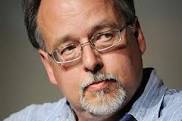


Andrew Nikiforuk

Calgary Alberta is the headquarters of Canada's boom and bust oil and gas industry, including the infamous Tar Sands and fracking. It takes guts to live there doing exposes on the damage done. That's what investigative journalist and author Andrew Nikiforuk did for the past 25 years, and he's still at it. His latest book is "Slick Water, Fracking and One Insider’s Stand Against the World’s Most Powerful Industry".

The heroine of this book is Jessica Ernst. She worked on projects for the oil and gas companies for more than a decade. She's in insider who went along with the game - until her home near Rosebud Alberta was surrounded by noisy fracking rigs.

The frackers were after "coal seam methane". There are various types of rocks that can hold bubbles of methane (known as "natural gas"). The coal seams are very fragile rock, and tend to be closer to the surface. That makes them difficult and dangerous to frack - but profitable too. Jessica was getting all kinds of complaints from ranchers that their water was now laced with methane. Her own well was polluted.

The fracking companies, and then the Province of Alberta, tried to claim methane in their water was always there. Except she had solid proof it wasn't. Using her skills, Jessica thought the Province would act to protect drinking water. In fact, the government just did a phony "investigation" and white-washed the whole thing. So she sued the government and the fracking companies.

The government's defence was that they are not responsible for protecting drinking water - even though they issue the permits to polluters!

Usually, where there is solid proof of groundwater pollution by fracking, the companies want to settle with a cheque. That stops the lawsuit, and includes a confidentiality agreement that hides all the facts. The victims are not allowed to talk about the settlement or the pollution. A lot of damage from fracking has been hidden from the public records in this way.

But not Jessica. She's continued a ten year suit against the companies, mostly paid for out of the last of her savings. She is determined to get this fracking pollution into the court records, and keep it all public.

That's very brave. Other local farmers wanted her to settle because they got money for the use of their property. At one point, secret police - from the Royal Canadian Mounted Police terrorism squad, arrived at Jessica's house. They were told she was a terrorist. They demanded the names of all the ranchers who had complained. Of course she refused, and hosted the plain clothes cops on her porch, in metal chairs, in the Alberta winter. They went away empty handed, after apologizing. So who sent them?

I think that anyone faced with fracking, anywhere in the world, should check out this case and Andrew's book. He's a great writer, with super investigative skills. The facts apply in Australia, the United States, Europe - wherever there is fracking. I'm glad to help Andrew and Jessica get this on the record on Radio Ecoshock.


I've followed Andrew Nikiforuk's writing on the energy industry for years. You can find his other great stuff on his web site here. For example, his previous book is intriguing: "The Energy of Slaves, Oil and the New Servitude." His articles are published by mainstream Canadian media, but also by most of the alternative press.

Download or listen to this interview with Andrew Nikiforuk in CD Quality or Lo-Fi

As always, you can download or forward these interviews, as separate mp3 files, using links in this show blog.

BACK WITH ALBERT BATES

I've had an on-going discussion about solutions with Albert Bates. Regular listeners heard his talk and interviews at the recent Permaculture Convergence in London. Here is an excerpt from another talk with Albert, where I ask him about the mystery of our longing for news of the collapse, and the real meaning of a permanent culture.

I ask Albert to help me with a problem. If I do a Radio Ecoshock show covering how bad things are, we get twice the downloads of a program with positive solutions like permaculture. Why is that?

Bates says most people know, in their heart-of-hearts, that our fragile complex civilization is not sustainable, for a number of reasons. They expect it could, or will, collapse. So when a Radio Ecoshock program has experts pin-pointing those tipping points, and the big-picture risks, it actually helps listeners to formulate what they know for themselves. It's kind of a relief to know it's not just you worrying about the future. I love that Bates doesn't sugar coat it.

I think part of the difficulty is people can't grasp what permaculture is. It's hard. Albert teaches this subject in workshops around the world. What the heck is permaculture? His explanation is clear, I think.

I ask myself, if we want a permanent culture, rather than a crisis-to-crisis throwaway civilization, what would it look like? How could we live decently for a thousand years? For me, that's what permaculture is.

Lately I'm hearing of permaculture economics, maybe permaculture psychology. Can the definition of permaculture grow so large that it's core gets lost?

Albert says "no". In fact, the Australian originators of permaculture soon realized this needs more than a different kind of agriculture, or even food systems. The root of many problems is in our society, and we need "social" permaculture as well, and economics that don't endanger the planet or the future.

Stay tuned in the coming weeks, for more of my discussion with Albert Bates, former environmental lawyer turned permaculture teacher, at the intentional community "The Farm" in Tennessee. Keep up with Albert at his blog "The Great Change".

COMING UP

Next week, I'm scheming to bring you a devastating report on the lies we tell ourselves about climate change, as world leaders prepare for the Paris climate talks. It's harsh news that need to be told.

I'm Alex Smith. Thanks for being brave enough to listen, and for caring about our world. Please don't forget to help me keep going!

Wednesday, June 17, 2015

BATTLING CARBON GIANTS IN PACIFIC NORTHWEST

SUMMARY: Pacific Northwest fights becoming a carbon colony. Vancouver protests American coal expansion (Kevin Washbrook, VTACC). Daphne Wysham: Oregon kicks out Canadian propane peddler. The unreported stories. Radio Ecoshock 150617

Welcome to Radio Ecoshock. This week we investigate attempts by the fossil fuel industry to capture otherwise green-thinking ports in the Pacific Northwest, of the United States and Canada, to export carbon to Asia. It's a battle you hardly hear about. Citizens are lining up against huge corporations with huge money, to fight off giant coal ports, liquified natural gas ports, even propane ports. If we commit to that infrastructure, we commit to devastating climate change - not to mention the explosive, toxic and polluting impacts of these big projects on the Pacific coast.

We first hear from activist Kevin Washbrook reporting from Vancouver, Canada, and then from green radio host and activist Daphne Wysham from Portland, Oregon.

I wrap up with some new science presented at a Harvard University research talk. Dr. James Anderson talks about why climate change is coming much faster than anyone thought possible. And why it's irreversible.

It's eco-shocking radio. I'm Alex Smith. Let's roll. But I first want to thank George from Australia. George generously covered all the telecommunications and download costs, for all Ecoshock listeners, for the whole summer. That's a load off my mind for sure. Thank you George!

Listen to or download this Radio Ecoshock show in CD Quality (56 MB) or Lo-Fi (14 MB)

Or listen right now on Soundcloud!


"GREEN" VANCOUVER, CANADA TARGETED AS CARBON PORT

Multinational corporations would like to turn the gorgeous port of Vancouver, Canada into another fossil fuel colony. After coal port proposals were blocked by public outcry in the American Pacific Northwest, they want to ship out coal to Asia through Vancouver. There is an active proposal to steer dirty Tar Sands oil into hundreds of tankers through Vancouver's scenic inlets. Even liquid natural gas is trying to use Vancouver at an outlet.

We've reached activist Kevin Washbrook in Vancouver. He's part of the group Voters Taking Action on Climate Change, or VTACC.

NASA scientist James Hansen famously was arrested protesting mountain top removal for coal. But in Vancouver, Simon Fraser University Professor and world energy expert Mark Jaccard was also arrested, blocking a coal train. The scientists are increasingly fed up with the failure of governments and official "climate talks" while carbon to the atmosphere keeps rising.


Trying to stop fossil fuel exports is like playing the game whack-a-mole. You find one project, and then another pops up, like the recent proposal to ship out Liquid Natural Gas via the historic Fraser River. We get a rather scary update on that project, with information anyone living near a proposed LNG terminal needs to know!

THE FIREBALL RISK OF LNG SHIPMENTS

Here's the scoop. Canada hardly requires any environmental assessment for liquid natural gas ports. Remember, these are not just "ports" but large industrial operations where natural gas is frozen at hundreds of degrees below zero Centigrade, which compresses it for shipments (often to Asia). The company on the Fraser River just looks at their immediate site, to list what environmental impacts that might have, and IS NOT REQUIRED TO ASSESS POSSIBLE DAMAGE CAUSED BY RIVER SHIPMENTS.

So the VTACC group had to look to the United States, which does require a full assessment, right out to the ocean. The U.S. Department of Homeland Security recognizes that liquid natural gas is a terrorist risk. The Canadian government under Prime Minister Stephen Harper talks a lot about the reality of terrorist theats to Canada, but doesn't assess the possibility of an attack on an LNG tanker or barge.

The U.S. Coast Guard also looks at possible risks. According to Kevin Washbrook, his group found a U.S. report by Sandia National Lab that says an "unignited" cloud of natural gas could spread up to 3.5 miles (5.6 kilometers) on either side of the ship used for transportation. Presumably, that cloud of gas could ignite into an unGodly big fireball. That's just one of the things they don't tell you.

Who knows what could happen if terrorists bombed and exploded a giant LNG tanker near any port or city. It would look nuclear.

You can find one report on all this from the U.S. Sandia National Lab, published in 2008, here.

AMERICAN COAL SNEAKS OUT OF CANADIAN PORTS

Tsawwassen, a suburb of Vancouver, Canada hosts one of the busiest coal ports in North America. It's called "Westport", shipping 33 million tons of carbon-loaded coal a year. About 8 million tons of that is American coal brought up from the Powder River open pit coal mines in Wyoming. It comes on U.S. trains owned by Warren Buffett.

The obvious question: why don't they ship this coal out of American ports? As we'll hear next from Daphne Wysham, that's because coal port proposals in Oregon and Washington States have been shot down by public resistance. Nobody wants them, and no wonder. The coal trains themselves leave unhealthy coal dust all along the way. The companies say they don't but photographs taken by activists show they do. Plus the trains are way above the World Health Organization guidelines for night- time noise. Every train going by leads to more storms, droughts, and heat.

Four out of six coal ports proposed for the US Pacific Northwest were shot down. The largest still being pushed by industry is for Cherry Point in Washington State, near the Canadian border. That's been rejected by the local tribe.

So as Kevin puts it, British Columbia has become the back-door dirty doormat to ship American coal to China and Asia generally. The coal industry always wants to expand their ports, to double their shipments and their profits, and to double their emissions into the already damaged atmosphere. There is another proposal to build a coal port in another Vancouver suburb, the City of Surrey.

Naturally, in the environmentally-conscious Vancouver area, there is lots of push-back from concerned citzens. The regional government has objected to the Surrey coal port. But the port system is not run by the City of Vancouver, but rather by the fossil- friendly Federal Government.

There is no democratic input into where these shipping facilities are built, and whether they should be built at all. Building coal ports now seems like such a waste of capital. It's like building barns and herds of horses in the year 1905, just as the horseless carriage was starting to take over. Coal is so done.

Keep in touch with Kevin Washburn on his Facebook page.

Listen to or download this interview with Kevin Washbrook, in CD Quality or Lo-Fi

"GREEN" PORTLAND, OREGON FIGHTS OFF CARBON EXPORT SCHEMES

What's happening on the U.S. West Coast, where fossil fuel companies race to export carbon to Asia? Let's tune in with a long-time friend of the environment, Daphne Wysham. For 8 years, out of Washington D.C., Daphne hosted the syndicated radio show "Earthbeat",on the Pacifica network. Her articles have been published by both mainstream and alternative media. Now Daphne is in Portland Oregon, as Director of the Climate and Energy Program, at the Centre for Sustainable Economy. At the same time she's an associate fellow at the Institute for Policy Studies.

Daphne and I were just on Post Carbon radio, on KWMR in Northern California, with Bing Gong and Karen Nyhus. It was a wide-ranging talk and you can listen to it here.


Green radio host, researcher, and activist Daphne Wysham

In this show we drill into what is happening in Portland, the state of Oregon, and the Pacific Northwest - when it comes to transporting fossil fuels. Note that Portland was the first city in the United States to have and implement a climate action plan. Even so, the Mayor pushed a proposal to open a propane loading facility.

The corporation involved, Pembina Pipeline Corp., operates in the Canadian Tar Sands of Alberta. For them, propane is just a bi-product they can sell. Of course it's wildly explosive, and adds more carbon to the atmosphere. Natural gas is lighter than air, so it rises when it leaks. Propane is heavier than air, so it flows along the water or land, into low spots, where it can pool and then violently explode.

Pembina tried to tell the public the propane would go to help poor women in Asia have lighting and cooking facilities. Environmental groups found out the real destination was for making propylene in Chinese factories. The carbon emissions from this one propane port over a few decades would be larger than the emissions from the whole city of Portland. What good are bicycle routes and electric cars if the propane port overwhelms all the green good we can muster?

The Portland propane facility has been turned away for now, being wildly unpopular. But the situation always requires vigilance, and these projects are seldom killed forever.

Meanwhile, there's another fossil fuel port proposed for Vancouver, Washington, right across the river from Portland. If approved, that could be the largest oil terminal in the United States - larger even than the giants in the Gulf of Mexico.

Daphne Wysham tells us the whole Pacific Northwest is in the cross-hairs of the fossil fuel industry. They want to build ports and shipping facilities that would allow a carbon river much larger than the Keystone Pipeline. Projects arrive, and small environment groups can't possibly match corporate funding for research and legal battles. The infamous corporate lobby group Alec, which funds politicians who write fossil-friendly laws, makes Oregon it's number three biggest target for funding, Wysham tells us.

That is why Oregonians are now demanding a moratorium on new fossil fuel infrastructure. That's the real answer. The moratorium movement is spreading to Washington State, and only needs British Columbia to get on board, to stop this fossil madness.

We all seen what happens when mega-corporations start playing with local or state politics. The money and big promises of jobs lure in the politicians. Are these forces compatible with democracy and self-determination? Is there still enough freedom left on the Pacific Coast to avoid becoming the kind of carbon colonies that developed in Texas, Alberta, and Louisiana?

Listen to or download this Radio Ecoshock interview with Daphne Wysham in CD Quality or Lo-Fi

Follow Daphne Wysham on Twitter here. IRREVERSIBLE CLIMATE CHANGE: JAMES G. ANDERSON

In the short time we have left, I'd like to pass on some quotes and some notes from a deep and important talk from Climate Week at the Harvard University Center for the Environment. The speaker is Dr. James Anderson and the title is: "Coupled Feedbacks in the Climate Structure That Set the Time Sale for Irreversible Change: Arctic Isotopes to Stratospheric Radicals."

Watch the full talk by James G. Anderson on Vimeo here.

This talk on April 8th, 2015 was part of a series of presentations. I found this on Vimeo thanks to a tip from a Radio Ecoshock listeners, and I'm so glad I did.

The talk, as Anderson tells us, is fairly high level, a presentation of on-going research into some important developments in the climate. Anderson covers a wide range of science. I can only cover a few important points.


James G. Anderson, Harvard

For example, research into past ages showed the stratosphere, that upper layer of Earth's atmosphere above the weather, was far wetter than today, in past greenhouse ages. The wetting of the stratosphere should be happening now, but until very recently, nobody knew how that could happen.

Anderson also points out a key difference between past hot house worlds and today. This time around, humans also injected chlorinate substances, like ozone-destroying CFC's, that were never there in past ages. How does that affect climate change?

And as we'll hear from this opening quote, scientists are gaining new knowledge on changes we've made that cannot be reversed, at least not in any time scale that matters to humans. Here are some key quotes from Dr. Anderson, speaking at Harvard.

Quote 1

"This is really a research talk about two aspects of the climate structure both of which are coupled through irreversible connected cycles. So I'm going to talk about experiments done 5 meters above the surface, and then experiments done 20 kilometers above the surface. And you'll see why those are linked.

I want to emphasize some points. The first is this global climate structure is changing far more rapidly than we believed was possible even five years ago.....

The next issue is the feedback in the climate structure because it's these feedbacks that set the time scale for irreversibility, and I'm going to take a very brief tour through the climate system to show how that functions.
"

Next we'll hear about the fragile Arctic and how that determines so much of our weather. Note how Anderson also stresses a point made again and again by our guest scientist Paul Beckwith, when explaining the new disruption of weather in the Northern Hemisphere: the temperature difference between the tropics and the poles, and as polar regions warm up, that difference is declining. The result is a slower and wavier Jet Stream.

Quote 2

"The climate structure depends in large measure on the temperature gradient between the tropics and the polar regions."

"During the Eocene there was very little temperature difference between the tropics and the polar regions, and in that particular structure the stratosphere had to be wet ... I don't think there's any possibility of having that climate structure without a moist stratosphere. And as we'll see, moisture entering the stratosphere today has a very different connotation because it triggers catalytic cycles involving chlorine and bromine that were not present during the Eocene.

I'll also talk about deep convective injection North of the sub-tropical Jet which, as we saw from Brian's talk, is a potential way of transitioning from the current structure of the climate to one in which there is a far smaller difference in temperature between the equator and the polar regions. So this convective injection of water turns out to be unique over the U.S. And it's couple to also anti-cyclonic flow over the U.S. that's created by the North American monsoon. So we have this convective injection into this anti-cyclonic motion which is a demonic combination created by the dynamics, but is has a very strong coupling into the catalytic chemical structure of the stratosphere.
"

GEOENGINEERING

As a side-note, Anderson explains why both the Left and the Right may support further research into geo-engineering. First he refers to the National Research Council report on climate engineering, particularly solar radiation management. Quote 4

"It [Geoengineering research] is being pushed, actually in a bi-partisan way. The right would like to have solar radiation management so more fossil fuels can be burned. And the Left believes that intruding in natural systems like this is a very dangerous adventure. So research on the topic is gaining bi-lateral support, which is highly unusual these days. And we'll see that it engages exactly the same catalytic chemistry."

"GLOBAL WARMING" - BAD NAME FOR THE PROBLEM

Next we hear why James Anderson thinks "global warming" is so horribly wrong as a term to describe the current climate shift.

QUOTE 3

"This term 'global warming' applied to this problem makes me shudder, because 70 per cent of the globe is covered by ocean with an average depth of 3500 meters, and it has massive heat capacity. So in my mind the most degenerate variable you can discuss is mean global temperature. And it also carries this connotation of something that's happening slowly. You know, 1 degree Centigrade per century doesn't carry a huge amount of political imperative behind it. It also carries the connotation that you could watch things slowly change and then if you don't like it you can just slow down the release of carbon dioxide and return to the initial [state] - and nothing could be further from the truth. I always avoid the term ['global warming'], and I cringe every time I hear it."

METHANE AND CLATHRATES

We'll never have time to get to all the great science in this talk, but I want you to hear this:

"The next point involves these methane clathrates. These are these beautiful structures: ice cages within which Nature inserts methane produced anaerobically [without oxygen] by decomposition of organic material. It's entropy that's driving this entirely because Nature of course abhors a vacuum. You want to stuff molecules into every possible nook and cranny in order to engage the inclusion of the energy states. And it turns out methane fits beautifully into these water cages. This is ubiquitous. Methane clathrates contain about three times the chemical energy of all known fossil fuel reserves in coal, petroleum, and natural gas.

And they reside not only in the surface soils of Siberia and Northern Alaska but also they are ubiquitous across the ocean basins
."

Anderson gives the example of a clathrate pulled up off the West Coast, from a depth of about 100 meters, that could be ignited with a match.

"But the numbers, as Steve Wassi (sp?) pointed out are quite concerning. If you plot the CO2 emissions from fossil fuel burning in gigatons of carbon per year (so you have to convert back from CO2)....In 1990, about 6 gigatons of carbon was added to the atmosphere by fossil fuel burning - and that was basically a textbook number for many, many years. But in 2000 it started to take off, and when the 2007 IPCC report came out these were the release scenarios. This was the worst possible case this upper red line. And of course we've exceeded it every year subsequent to 2007.

The key point is that just a half a percent of the labile carbon in the suface soils of the North Slope of Alaska and Siberia - just half a percent release rate per year gives us around 8 to 9 gigatons per year which doubles the carbon added to the atmosphere by all fossil fuel burning world-wide.
"

So that constitutes the next exhibit for feedbacks.

EXHIBIT A - THE ARCTIC

Anderson starts with data produced at the Polar Science Center at the University of Washington. Their research focuses not so much on the area covered by Sea Ice, but on the volume of the ice (which also accounts for it's thickness). Shockingly, in 2007, there was less ice in the Arctic than the 2007 IPCC report predicted for the end of the century.

"The volume allows you to calculate the heat, the internal energy going into the system to melt that amount of ice, per year. And that turns out to be about 1 part in 40,000 of the circulating infrared radiation between the Earth's surface and the atmosphere/water/carbon dioxide cloud structure. And so just a very small shift in the Meridional inflow of heat into the Arctic has huge ramifications in terms of losing this permanent ice."

"So the second point here is it's these feedbacks within the climate structure that are driving both the first and second derivative of that ice volume. And of course as ice pulls back, one of the feedbacks is that the ocean exchange brings in warm water from lower latitudes bringing heat into the Arctic basin. The other thing that happens is that as ice and snow disappear, the atmospheric transport that used to come in and radiate as T to the Fourth into the cold ground below it - would be stripped of it's internal energy before it even got into the Arctic Basin. That's not true any more. In fact about three quarters of the heat transport is by the atmosphere."

"Then of course the most obvious is the rejection of incoming solar forcing. Ice reflects 90 per cent of it, ocean water absorbs about 90 per cent of it. On the face of it that's important to the energy balance of the climate. But the University of Washington also discovered that what in retrospect is quite obvious but very important - and this that the dominant amount of that energy goes into just the upper few meters of the Arctic Ocean. And the mean depth of the remaining ice is only a meter and a half. The entire edges are slushy and gets broken up. And so all of that solar forcing goes right into the heat bath within which that remaining ice resides. And this is why you see such a dramatic combination of feedbacks."

Due to the multiple feedbacks in place "...from my perspective it's from the Arctic that all these problems evolve. This brings up the problem of high latitude melting of clathrates and permafrost. Of course the immediate question is can we lose 70 percent of the ice volume in 30 years and return to a stable condition. I don't know anybody who has suggested how heat can be extracted from this system to re-form the ice structure. All of these feedbacks are operating in the same direction. And there's no known mechanism that can extract heat to re-form these ice structures... and so when you look at this question [of reversing Arctic ice loss], the answer quite clearly 'no'.
"

LOTS MORE IN THE TALK

Well, we didn't get to the strange way chlorinated substances play back on other climate feed-backs in the atmosphere. Plus, and this is a spoiler alert, scientists have discovered a way the stratosphere can become wetter, as it did in past greenhouse worlds. Many, many hours flying around the world found the stratosphere has the same low amount of water vapor.

But in a kink in the system, a collision of weather factors over the continental United States creates a kind of heat funnel that does inject more water into the stratosphere. There are several other sites like that, Anderson says. They have the mechanism that will wet down the stratosphere over time.

As I say, there is a huge range of cutting science in this talk by James Anderson. Some of it is difficult for the lay person to understand. But most of it is very clear, and we learn of feedbacks which make this developing climate shift into a major geological event that cannot be reversed. We have already gone over the climate cliff. How far we fall depends on whether we can reign in our fossil burning emissions before they trigger much, much larger carbon or methane inputs from the previously frozen lands and sea bed in the Arctic.

Then Anderson wraps up with a passionate talk on why Harvard University MUST divest it's multi-billion dollar investment fund from fossil fuels.

OUT OF TIME

Ahh, we've blown through the time barrier again. Get all our past programs as free mp3s from our web site at ecoshock.org. Listen any time on the Radio Ecoshock page on Soundcloud. Support the on-going work of Radio Ecoshock here.

I'm Alex. Thank you for listening, and caring about our world.

Wednesday, June 10, 2015

THE CARBON BUBBLE BURSTS

SUMMARY: Author and finance guru Jeff Rubin "The Carbon Bubble: What Happens To Us When It Bursts". Science journalist Emma Marris on re-crafting the wild. Radio Ecoshock 150610

"Look we recognize that climate change is happening. The dilemma for society is addressing climate change, and balancing it with development. So we have to be realistic. Renewables and alternatives will all play a role, but even if those forms of energy grow by orders of magnitude over say the next fifty years, traditional hydrocarbons - oil and gas - will still make up the majority of the energy mix for at least the next century."

- Curtis Smith, Shell Oil.

That is Shell Oil spokesman Curtis Smith, speaking on the Platt's Podcast "Capitol Crude" June 1st, 20154. Curtis Smith was explaining why Shell Oil wants to spend $7 billion dollars looking for more oil in the Arctic.

In an internal Shell Oil paper, leaked by the Guardian newspaper, the company recognizes that their energy strategy will lead to 4 degrees Centigrade of warming - twice the safe limit, and then to 6 degrees of warming, a level scientists suggest could wreck civilization.

So they know. And they want to find more carbon to burn anyway.

Before you kiss our chances good-bye, there is some really good news from our feature guest this week. Author and financial expert Jeff Rubin says the carbon bubble is already bursting. Governments and mainstream media will hardly tell you. But the markets are already heading for the exits away from such stranded fossil assets. The stock values of companies in the mega-polluting Canadian Tar Sands have fallen by 70%. Coal company stocks are collapsing, down 90 percent.

Stay tuned for a ring-side view of a falling petro state, right here on Radio Ecoshock. Download or listen to this Radio Ecoshock show in CD Quality (56 MB) or Lo-Fi (14 MB).

Or listen on Soundcloud right now!


JEFF RUBIN: "THE CARBON BUBBLE"

With the Tar Sands and the crash in oil prices, Canada went from being a world petro-state to an economy in trouble. Our next guest says the carbon bubble is bursting in Canada, and that may not be a bad thing.

Jeff Rubin is no ordinary critic of fossil fuels. He was the Chief Economist for CIBC World Markets, the investment arm of a Canadian mega-bank. Since then he's written the books "The End of Growth" and "Your World is About to Get A Whole Lot Smaller". Now Rubin has a new work out: "The Carbon Bubble: What Happens to Us When it Bursts."

The obvious question, which everyone asks: what is a carbon bubble?

A bubble is an expansion which is based on a false premise. For example the 2007/8 housing bubble was based on an assumption that American mortgages were reliable, when they were not. In our present case, Rubin says, the false assumption is that we can burn as many fossil fuels as we need or want to. In reality, there is a limit to the amount of carbon dioxide the atmosphere can tolerate, before the climate becomes unsafe.

Canada, under the leadership of Conservative Prime Minister Stephen Harper, has bet it's economy on the Tar Sands in Alberta. Most of international and domestic policy is geared to further expansion of Tar Sands production and sales.

As a result, the Canadian currency became a "petro-dollar" that went up with Tar Sands production, until it was worth more than the U.S. dollar. Other Canadian sectors, like manufacturing and exports of commodities like lumber, suffered due to the high Canadian dollar. Then when OPEC decided to ramp up production, even as oil prices fell, the Canadian dollar crashed by over 20 percent, going less than 80 cents to the American dollar.

Manufacturing in Canada should rebound, but so many companies shrank or went out of business, it may be a slow climb back.

TAR SANDS AND COAL: THE ECONOMIC HIT

What ever politicians may say or do about climate change, Jeff Rubin says the market has already spoken. The stock value of coal companies in the United States lost an astounding 90 percent of their value. Canadian Tar Sands companies lost 70 percent of their value.

Rubin tells us the heavy oil from the Tar Sands (or "oil sands" as the industry tries to say) costs more to refine, and gets less on the market - perhaps forty something a barrel, versus the 50 or 60 dollars a barrel we hear quoted as "the price of oil". Considering even the most efficient Canadian producers of tar sands bitumen need to get at least $60 a barrel, somebody somewhere is losing big money.

Natually, the expansion promised by Tar Sands companies (and Stephen Harper) has been cancelled. Layoffs in the province of Alberta have been massive. Expected energy revenues to governments have crashed, meaning more cut-backs and layoffs. The carbon bubble has burst in Canada.

Rubin says that may not be a bad thing. Canada's real resources, that the world needs, are not climate-killing heavy oil, but food and water. A warming climate will change agricultural possibilities in Canada. A longer growing season means new crops can be grown - say corn and soy, instead of just wheat.

Rubin says Canada should aim to be "the breadbasket of the world." Farmland has become the new darling of billionaire investors and giant pension funds. The Canadian Pension investment board bought massive acreage in Assiniboine farm land, but Saskatchewan is banning some farm ownership schemes. See this.

Middle East Sheiks have purchased a large share in wheat distributor "The Canadian Wheat Board". Germans and Asians are buying giant farms in Canada. And not just in Canada. Wall Street investors and Chinese companies are buying farm land all over the world.

George Soros is reported to be buying farmland. Investment guru and billionaire Jim Rogers advised buying farm land several years ago. He was ahead of the curve.

SAVE YOUR INVESTMENT OR PENSION FUND: GET OUT OF FOSSIL FUELS

The crash of tar sands and coal stocks is just the beginning. Fracking companies are also losing big. University endowment funds are getting out, as Stanford University did with coal. After all, why educate students and then toss them into a wrecked world?

Jeff Rubin was one of Canada's top investment analysts with the Canadian Imperial Bank of Commerce. Now he advises investors to run, not walk, to the exits on the what have been the most profitable of all investments: oil and gas. People save their money, while saving the climate, Rubin tells us.

THE LNG BUBBLE

I ask Jeff Rubin about the multi-billion dollar proposals to build ports to export Liquid Natural Gas (LNG) from British Columbia. He says those projects are dead before they begin. Why? Because the major buyer was supposed to be China. But China just made a much cheaper deal for Russian gas brought in by pipeline. They have no need to go through the expensive process of freezing and compressing gas, and then decompressing it again before use. They don't need Canadian LNG.

THE WATER MARKET

Jeff Rubin says the other commodity Canada has, that the world wants, is water. However this discussion makes me, and many Canadians, very nervous. Most of the talk is about exporting water to the United States, where drought is already limiting farm production, and not just in California.

Most of Canada's big rivers actually run north to the Arctic Ocean. For decades, there's been talk about diverting them south. But remember, this plot to divert rivers was actually tried in the Soviet Union, under Stalin. The ecological devastation was spectacular. Today, we have no idea what happens to Arctic ecosystems, and the Arctic sea, if we siphon off fresh water flows. I'm guessing it would not end well.

But you can expect pressure from the United States to get more Canadian water, and who knows, in the future a solution forced by military threats is not impossible to imagine.

In the present, Rubin says we already export water - in our crops. Wheat uses a lot of water, and Canada exports a lot of wheat. Australia also exports water (that it can hardly afford) in it's wheat crops. At least agricultural exports are value-added water, and we don't have to divert rivers.

LEARN WITH RUBIN

I learned a lot just talking with Jeff Rubin. He's a very smart mind who sees further into the future than most of us. Listen to or download this interview with Jeff Rubin, in either CD Quality or Lo-Fi.

This new book "Carbon Bubble" is mainly about Canada. But it got me thinking about the fossil-dependent Middle East countries, Norway, and even the United States, which is trying to frack it's way back into an oil and gas superpower. This is really a global carbon bubble that is about to burst, with Canada as an early case study.

Here's another useful radio interview with Jeff Rubin, on the Canadian Broadcasting Network program "The Current" on May 19, 2015.

Find Jeff Rubin's web site here.

On You tube, Jeff Rubin talks about (the dismal) future of the Oil Sands here, on the Canadian CTV news channel, May 19, 2015.

HOW DO WE "HANDLE" THE WILD, NOW THAT CLIMATE CHANGE IS HERE?

We are not alone on this Earth experiencing a rapid shift of climate. Our next guest is a voice for the wild, and what we must do.

A new study in the journal Science finds climate change could push into extinction one of six plants and animals on this planet. That's a huge unimaginable loss. A climate shift won't respect the boundaries of parks and wilderness areas we've set aside. Can we just step back and watch?

Emma Marris says "no". She's been a reporter for the journal Nature, and has a Master’s in Science Writing from Johns Hopkins University. Her controversial book is titled "Rambunctious Garden: Saving Nature in a Post-Wild World". Just lately, Emma's stirred up another storm among naturalists with a provocative article in Orion Magazine, called "Handle with Care".


Emma Marris, photo courtesy of Nature Conservancy

From Klamath Falls, Oregon, we welcome Emma Marris to Radio Ecoshock. We have a wide-ranging discussion about what our role is in preserving wilderness lands, now that climate change, invasive species and other human influences has re-shaped what we mean by "wild".

My own worry, and it's a big one, is that Emma's proposal could lead less sensitive and ethical people to a justification for "developing" the parks, or "managing" aspects of nature we don't understand very well. Humans are known for their hubris and natural failures. Can we overcome that threat?

It's interesting to compare environmentalism in the United States with Canada or Europe. In Europe, there is practically no original wild space at all, so the discussion there is quite different. Here in Canada, there is so much wilderness there is no hope or idea that humans could or should manage it. We'll have to see how Emma's proposals for "gardening" in Nature resonate in other parts of the world.

Most recently, Emma has been writing about wolves in the crowd-funded journalism site "Beacon". How wild are re-introduced wolves that wear GPS broadcasting collars, names, and intense study and tracking operations? Find that discussion in Beacon here.

Find more about Emma Marris here at her web site.

Download or listen to this Radio Ecoshock interview with Emma Marris in CD Quality or Lo-Fi.

You can also listen to Orion magazine host Scott Gast talking with Emma Marris about her controversial article here in a 12 minute podcast.

My thanks to Erik Hoffner of Orion Magazine for suggesting this guest.

NEW ALEX SMITH SONG: "SHE DIDN'T SAY"

To accompany this interview on the wild, I added my new song about the disappearing species at the end of this program. The piece is called "She Didn't Say". It's written and performed entirely with computer synthesizers. You can also listen to or download (free) this song from Soundcloud.


EXTINCTION RADIO

As long-time listeners will know, I don't agree with Professor Emeritus Guy McPherson's argument that humans will go extinct before mid-century, due to multiplying feedback effects and methane driven by climate change. However, I value McPherson's work to identify and track positive feedback effects, which few others do.


Mike Ferrigan, host of Extinction Radio

You can listen to this ongoing argument with a new extended online radio show coming out of Scotland, with host and producer Mike Ferrigan. It features some guests we've had on Radio Ecoshock, and some new voices, with not all of them agreeing with extinction either. It's a radio dialog. Find the web page, and listen to episodes of "Extinction Radio" here.

MY THANKS TO SUPPORTERS

Thank you to all who "friended" this program on Facebook. We just crested over 26,000 listens on Soundcloud, gaining quickly. We now have more listeners in more countries. Hello to listeners in Scandinavia, Switzerland and Austria, Israel, Russia, India, and many more.

There is a momentum now. It's not yet time to completely give up hope.

I'm Alex Smith. Thank you for listening, and thank you for caring about our world.

Wednesday, September 24, 2014

Is Global Collapse Immanent?

QUICK SUMMARY: "Is Global Collapse Immanent" by Australian academic Graham M. Turner. Linda Doman from US Energy Information Administration says world will burn 30% more oil and gas in 2040. Marc-Andre Parisien from the Canadian Forest Service tells us about record mega-fires in the Canadian far north. Radio Ecoshock 140924

Are we really in "recovery". A comparison of predictions made in the 1970's in the Limits to Growth study, suggest we may be heading toward collapse instead.

Key to the theory advanced by Dr. Graham M. Turner of the Melbourne Sustainable Society Institute, University of Melbourne, is that more and more capital will be diverted into getting difficult oil and gas (fracking, Tar Sands, deep water drilling) - with less available for manufacturing and consumption of products.

In the decline, you and I get less purchasing power. At some point, the global system collapses - perhaps even before climate change delivers devastating extreme weather.

On the other side, Linda Doman, chief energy analyst for the US Energy Information Administration predicts the world will use even more oil and gas as the decades advance. Oil use by OECD countries (US, Canada, Europe, Japan) hit a peak in 2005, but continues to ramp up in India, China, and the Middle East, swamping our gains from energy efficiency.

Dr. Jason Box, the Danish ice specialist, has released stunning pictures of normally white Greenland turned sooty black. It's partly from coal burning and general pollution. But another boost of black soot comes from record fires in the Canadian Boreal forest and Arctic this year. Black soot is a warming agent of it's own, absorbing more of the sun's heat over vast northern areas - instead of reflecting sunlight back into space.

Northern forests are becoming a carbon source, instead of a carbon sink. Our guest Marc-Andre Parisien is a wildfire specialist with the Canadian Forest Service.

Download or listen to this Radio Ecoshock show in CD Quality or Lo-Fi

Or you can listen to (and download) it right now on our Sound Cloud page.


IS GLOBAL COLLAPSE IMMANENT? - GRAHAM M. TURNER

If you are wondering how long this high-consumption civilization can keep going, you are not alone. It's not just counter-culture types either. A small parade of billionaires have appeared on the financial blog Zero Hedge, predicting a shattering financial crash. But seldom do we find academics asking "Is Global Collapse Immanent?"

That is the title of a new research paper, which adds "An Updated Comparison of 'The Limits to Growth' With Historical Data". The author and our guest is Dr Graham M. Turner. He is a Principal Research Fellow at the Melbourne Sustainable Society Institute, part of the University of Melbourne in Australia.

Find this paper here. It's not a difficult read, and well worth your time.

You can also read this interesting take on the paper by Graham Turner and Cathy Alexander in the Guardian newspaper, September 2, 2014.


This is Turner's second review of the Limits to Growth. His first was in 2008: Turner, G.M. 2008 "A comparison of The Limits to Growth with 30 years of reality" Global Environmental Change, 18, pp. 397-411.

The original "Limits to Growth" study in the 1970's helped shape the entire environmental movement. It was remorseless trashed by pro-business writers, as proven wrong, and consigned to the dustbin of history. Now many of us sense we are teetering on the edge, so I'm really pleased to have this opportunity to talk with Dr. Turner.

It seems to me, reading this paper, Turner has returned to the Peak Oil scenario, saying the ever-increasing diversion of capital into more difficult to extract fossil fuels is, quote "the primary cause of collapse of the BAU [business as usual] scenario."

Keep in mind, Graham Turner is not absolutely PREDICTING an immanent global collapse. His research shows we are following a path that could lead there. I asked him what signs we should watch for, and one suggestion was infrastructure falling apart. You know, bridges falling down, sewers that don't work, things don't get repaired.

Why? Because governments, corporations (and you) will have to put more and more of our social capital into simply getting more fossil fuels. Think about the costly Tar Sands, deep water drilling, Arctic drilling - these are very capital intensive. As the cheaper easier oil (like from the Middle East wells) gets used up, it will cost more and more to get less and less. Richard Heinberg has released a study saying this applies even more to fracking, as wells run dry quickly, needing more and more expensive drilling.

At some point, there is not enough money left to you and I to consume, not enough money left to start new manufacturing, not enough to re-pave the roads. That snowballs, compounded by continuing climate-driven weather disasters, agricultural crisis and rising population (all part of the Limits to Growth, except climate change.)

The charts which Turner presents in his paper, showing predictions made by the MIT group in the 1970's Limits to Growth track very well with what has actually happened in the more than 30 years since. We don't have to guess.

We can measure what happened, and he does. All the signs point to an eventual collapse of our current system, perhaps our civilization as well.

Download or listen to this interview with Graham M. Turner in CD Quality or Lo-Fi

WILL WE BURN 30% MORE LIQUID FOSSIL FUELS IN 2040?

There is another world out there. That's the flow of business, oil, and governments toward an increasingly high-carbon future. It's stunning to consider, but the majority view is the world will produce, consume, and burn ever more oil, gas, and petroleum produced from coal. Check this out.

I'm on a ton of media press lists, including several from the U.S. government. An American government department has just predicted the world will increase the supply, demand, and consumption of liquid fossil fuels (oil, gas, and petroleum products converted from coal) as this century progresses. Is it a nightmare, or just the hot reality?

LINDA DOMAN

We are joined by Linda Doman, the lead energy analyst for their publication, the "International Energy Outlook". Their latest report, released September 9th, 2014, is from the U.S. Energy Information Administration, the EIA.

You can download or read that EIA publication online as a .pdf here.

Jonathan Cogan from the EIA helps put this report in perspective when he tells me by email:

"The projections in International Energy Outlook 2014 (IEO2014) are not statements of what will happen, but what might happen given the specific assumptions and methodologies used for any particular scenario. The Reference case projection is a business-as-usual trend estimate, given known technology and technological and demographic trends. EIA explores the impacts of alternative assumptions about oil prices in a low-oil-price scenario and a high-oil-price scenario. The price cases examine a range of potential interactions of supply, demand, and prices in world liquids markets IEO2014.

All of the cases generally assume that current laws and regulations are maintained throughout the projections.

Thus, the projections provide policy-neutral baselines that can be used be used to analyze international energy markets.

Keep in mind that the U.S. Energy Information Administration is a policy-neutral statistical and analytical agency. We are not involved in formulating, promoting, or advocating energy policies.
"

So what does this report really say about coming oil and gas demand and production?

First of all, they don't foresee a huge rise in prices, which is an important factor in consumption. Oil may be $140 2012 dollars in 2040 they say, although several scenarios are contemplated. Production is expected to increase from the current 87 million barrels a day in 2010 to 119 million barrels a day by 2040.

That's about a 30% increase. When you consider we are already putting record amounts of carbon dioxide into the atmosphere now, with extreme weather as a result, fires, floods, rising seas and all that - a 30% INCREASE as the century goes forward must be absolutely disastrous. But that's not the concern of the EIA, which is only concerned with plotting our trajectory from the now.

Linda Doman tells us production expectations have been raised from the 2013 report, due to the extra production from fracking. They expect fracking to expand from it's base in the United States to countries all over the world.

The EIA says use of oil and gas in developed OECD countries (U.S., Canada, Europe, Japan) peaked back in 2005. More efficient cars, savings by power companies, and an economic recession have all helped push consumption back in these countries. But that is overshadowed, in fact increased, by higher demand in Asia (China, India, Indonesia mainly) and in the Middle East.

Why the Middle East? 1. The young population is coming of age to get driver's licenses. 2. Oil producing governments subsidize fuel prices (like 25 cents a gallon for example) which doesn't limit demand. And 3. (which I will add) - there is a movement toward more industrialization in some Middle East countries. They will consume their own oil and gas in petrochemical refineries, and other manufacturing activities.

There is still a lot of uncertainty about how much oil and gas China and India will burn in the future. The EIA created three possible scenarios. In the highest use picture, BY 2040, India and China would consume about as much in liquid fossil fuels as the whole world does today. That is truly frightening if it happens.

Where will all this oil and gas come from? From fracking for sure. But the EIA also expects more millions of barrels from OPEC members. Plus countries like Iraq and Mexico have not developed their full potential, partly due to lack of investment and infrastructure from larger oil companies and international banks, Doman suggests.

It would be very interesting to get Richard Heinberg's response to this report. I'll send him a link, and see what he says. In the meantime, I thought you should hear what the experts are saying about our carbon-rich future.

Download or listen to this short interview with Linda Doman here.

If you REALLY want to dig deep into fossil fuel projections, here is the You tube recording of a presentation September 22nd 2014 by Adam Sieminiski, the Administrator of the EIA, on this very report (the International Energy Outlook for 2014).

NORTHERN CANADIAN FIRES "A MAJOR EVENT IN THE LIFE OF THE EARTH SYSTEM"

Slate Magazine is running a stunning story "Why Greenland's 'Dark Snow' Should Worry You." Don't miss those photos from Danish scientist Jason Box. They show what should be the white ice and snow of Greenland have turned dirty black. That means the surface absorbs far more heat from the sun, instead of reflecting light back into space. Expect record ice melt, and another jump toward rising seas.

Where does that dirt come from? Certainly from coal power plants in America and China. From polluting industries in Europe and Russia. But I suspect the largest amount comes from soot. Siberia has plenty of fires, but northern Canada just experienced the greatest fire season ever recorded. A Canadian scientist calls them "a major event in the life of the earth system".

The soot from these fires may be a primary cause of Greenland turning from white to dirty black.


Photo by Jason Box.


br>
br>
FIRE EXPERT MARC-ANDRE PARISIEN

Regular Ecoshock listeners know wildfires in the Arctic are bigger and badder than ever. Scientists predict a huge increase over the coming decades due to changes in climate, and various feed-backs triggered by global warming. Could the whole boreal forest burn down?

New research has taken us deeper into fire behavior in the far north. The paper that caught my eye is titled "Resistance of the boreal forest to high burn rates." Our next guest is one of the authors. Marc-Andre Parisien is a research scientist for the Northern Forest Centre of the Canadian Fire Service, located in Edmonton Alberta.

Along with scientists at the Centre for Northern Studies in Quebec, Parisien is an author of the new paper "Resistance of the boreal forest to high burn rates" published in PNAS, the Proceedings of the National Academy of Sciences on August 4th, 2014. You would need to be a paid member of PNAS to read this, but find the abstract here.

Marc most of us can barely imagine the size and condition of the great Boreal forest. It runs from Alaska right across the whole of Canada to Labrador - and that's just in North America. There is more in Scandinavia and Siberia.

Television doesn't report on fires in Canada's far north. Most of these blazes run their course with no one trying to put them out. How large can a fire get? A single large fire can be bigger than the island of Manhattan, which is 9,000 hectares, or more than 22,000 acres. One fire in the Canadian province of Quebec was 560,000 hectares, or 1.3 million acres.

This summer of 2014, Parisien tells us, over 4.6 million hectares of forest burned (11.3 million acres) - that is larger than Switzerland. It's a stunning amount of carbon taken from trees and forced into the atmosphere. That is when forests become a carbon source, rather than a carbon sink. It's also a huge burst of black soot, a global warming agent on it's own, and a contributor to the blackening of Greenland.

There are very different estimates for the increase in northern fires as the planet warms. By 2100, some scientists suggest forest fires in that region will increase by 30%. Others have suggested they might increase by 500%. If that becomes reality, we can doubt whether northern forests will continue to exist.

The one possible saving agent, and the point of the paper by Parisien and scientists from a Quebec University - statistically, forests that burned within the last 40 or 50 years are LESS likely to burn again in our time. It looks like there is a kind of negative feedback loop at work here, at least for forest fires. However, I feel all that is uncertain as the Boreal and Tundra continue to heat up much more than the rest of the planet. We're running a big experiment here on planet Earth.

In this interview, Marc-Andre notes that fires are not the only threat to northern forests. As the permafrost melts, trees can lose their hold in soil, tipping over in a phenomenon known as "drunken forests". These can already be seen in Alaska and the Yukon. We may also see changes in hydrology (when it rains or snows) as the planet warms. And forests have already been hit hard by changes in insects, like the Rocky Mountain Pine Bark Beetle which is killing off whole valleys of pines. These were enabled in such great numbers by a continuing lack of winters cold enough to kill them off.

We didn't have time to talk about the other big threat: logging the Boreal forest. It's huge, all for toilet paper and other items we throw away. Find out about endangered Boreal forest logging at Greenpeace here, Forest Ethics here, or Canopy here.

Marc-Andre listed other Canadian scientists who are studying the impacts of climate change on fires and the Canadian northern forests (despite Stephen Harper, the Prime Minister of the Tar Sands). He also recommends this web site: the Canadian Wildlands Information System. There you can find all kinds of helpful maps, charts and information. It's a super resource for those who care about what happens in the North. Since the future of the world may be partly determined by what happens there, that's you and everybody else in the world.

Download or listen to this Radio Ecoshock interview with Marc-Andre Parisien in CD Quality or Lo-Fi

AND THIS...

Next week we'll find out why the U.S. government, and governments around the world, are lying to themselves, and us, about the true threat of methane gas. A group of top climate scientists have written a powerful letter to change that.

Join us next week on Radio Ecoshock. You can find all our past programs, as free mp3 downloads, at our web site, ecoshock.org. Don't forget our Soundcloud page.

My special thanks to the hardy band of people who support my reporting with a monthly $10 donation. Find out how you can help here.

I'm Alex Smith. Thank you for listening, and thank you for caring about your world.

Wednesday, May 7, 2014

What to Do While Waiting (for the Crash)

SUMMARY Author Richard Heinberg on geopolitics, finance, and environment of the slow crash. Global Crossing and Green Festivals President Kevin Danaher on transition to green economy. Unicyclist for climate Joseph Boutelier. Radio Ecoshock 140507 1 hour.

Welcome to Radio Ecoshock. I'm Alex and in this program we'll visit with Kevin Danaher, a founder of Global Crossing and President of the Green Festival, plus a visit to the studio by young Joseph Boutelier, riding his unicycle across the Rocky Mountains to draw attention to climate change.

But first, I need to ask one of the old hands about what to do while waiting for the crash. Richard Heinberg is next.

Listen to/Download this Radio Ecoshock show in CD Quality (56 MB) or Lo-Fi (14 MB).

RICHARD HEINBERG: WAITING FOR THE CRASH

There's a movie "What to Do in Denver When You are Dead". Now we know this carbon-based civilization is dead-ending in bankruptcy and climate chaos. What are we supposed to do while we wait for collapse?

It's time to call in a life-line. Richard Heinberg has written about this future for decades, in books like "The Party's Over", "The End of Growth" and his recent fracking book "Snake Oil". He is the Senior Fellow-in-Residence at the Post Carbon Institute in California.


My food stash from 2009 is still in my basement unused. Everyone is predicting the crash that never seems to come. What if this crazy, deadly system just keeps eating up the earth and the atmosphere for another ten or twenty years?

MICHAEL C. RUPPERT - WAS IT LEADER BURN-OUT?

There's also the problem of leader burn out. The most glaring recent example is Michael C. Ruppert, the 911 activist, founder of Collapsenet, and host of the Lifeboat Hour radio show who killed himself.

Richard has known Mike Ruppert for years, and spent more time with him when Mike was living in Sebastapol. Is Mike's death a reflection on a whole movement? Heinberg says "no". Mike had his own personal problems, and had talked about suicide on many occasions. Ruppert's former lawyer says the same thing. If you are interested, the best explanation I've found is here on the Cherispeak blog. The best radio show, consisting of a half dozen interviews with those who knew Mike, was just done by Global Research. Info on the program is here or download that one hour show as a free mp3 here (from the famous radio4all.net).

There are times when I feel tired, when I feel beat. I interview scientists warning about climate change, and really bright people trying to bring the world's attention to absolutely critical threats. But my show never gets the million viewers of a single cat video. People talk about celebrity scandals, or errant billionaires, but a dying future just doesn't make the news or even dinner table conversation.

I've had scientists like Dr. Tim Garrett on Radio Ecoshock, explaining why this fossil economy has to crash, to prevent an all-out climate catastrophe. We've had economists explain the whole banking system is based on fraud and corruption. How does this planet-killing machine keep on going?

ENERGY AND GEO-POLITICS: THE UKRAINE

We hear the drum beats for a divided world again, with US and Europe versus Russia and China. Is it a sign of desperation, the need to distract the population from dead-end jobs and a dead-end civilization? Is it a kind of military bail-out? Richard says an expected bonanza of fracked gas is likely not behind this geopolitical tussle. After all, Poland was supposed to be a fracking Mecca, but most companies have pulled out of there. It's a very expensive way to develop gas or oil.

Another big piece of news hardly anyone will hear: western energy companies are in bed with Vladimir Putin. BP owns part of one of the world's biggest energy companies, the Russian firm Rosneft. Exxon/Mobil has a giant play with Rosneft to do exploratory drilling in the Arctic Sea north of Siberia. The first drilling will cost more than a half billion dollars, for a reserve estimated at over 9 billion dollars. Now the CEO of Rosneft is banned from travelling to the US, and the American energy companies might get caught up in the boycotts. Everything is so interconnected with globalization that I can't help but think this so-called economic war will blow-back into a nasty fall for the world as a whole, including the United States.

The bright side could be this: nobody should be drilling in the Arctic anyway. Their is no way to "clean up" spills there, like the BP spill in the Gulf of Mexico. Plus, the extra fossil fuels will kill off the planet for sure.

FOOD PRICES AND COMMUNITY

Then there's food prices. California, the whole state, is now declared in drought. The Texas cattle industry sold out last year, herds are down due to their drought. Anybody and everybody can see food prices going up and up. Will it drive more people into urban farming, back-to-the-land, kitchen gardens or what?

In the interview, we try to come up with a short-list of projects every community, and maybe even small groups of friends, can take on, to build our resiliance, and maybe a sustainable future. I'll start: I think all lawns should be ripped up and turned into food gardens. If you don't have time to garden, let a new industry of urban farmers do it.

Ripping up streets is another. We could keep a few for emergency access, but most of that pavement is helping kill us. Cars can make good planters. I've seen a couple in Vancouver that were flourishing with flowers and food, once you hack the roof off....

When a community comes to Richard, and they do, he shares that kind of advice with us that a small town, or even a mid-sized city, can proceed toward a sustainable future.

What about our culture! Richard plays a mean violin, and does public speaking, like to real people instead of just TEXx on You tube. Richard tells us a sustainable planet needs culture, and gives us some examples.

We've talked a little about really living, as though the future mattered. I hope people do it. But I also think we're soft and unprepared for what our system failure, and natural system failure, will bring. Are people ready, in their heads, to sweat out a few months of hundred degree plus weather, over 30 C.? Can we withstand flooding of coastal cities time after time? Doesn't there come a point when this already bankrupt system just cannot rebuild?

Is there a way for people to get ready for a one-two punch of economic crash and climate disruption, beyond putting bullets and beans in the basement? We can't cover all that, but we try.

Richard Heinberg is one of the pioneers in the post carbon world to come. Richard appears in major publications and media. His books are all still essential reading. Try "The Party's Over", "Peak Everything", and recently "Snake Oil: How Fracking’s False Promise of Plenty Imperils Our Future." Find Richard as the senior Fellow-in-Residence at the Post Carbon Institute, postcarbon.org, follow his ongoing "Museletter", or just visit richardheinberg.com.

He also publishes regularly at the Post Carbon web site called "Reslience.org". That used to be Energy Bulletin, until they realized it was about much more than that. Reslience.org often runs Radio Ecoshock features as well. It's a great resource, take a look.

Listen to/download this 31 minute in-depth interview with Richard Heinberg in CD Quality or Lo_Fi

KEVIN DANAHER: CONSUMERS VERSUS GREEN FESTIVALS

In the world of activism, we split into two branches. One attacks the existing human system, things like globalization, the World Bank, and social inequality. The other protests our destruction of nature, while struggling to create a pathway to a survivable future.


Our guest is one of the rare souls who marries both together. Dr. Kevin Danaher is the author, co-author, and editor of 11 books. Some expose the World Bank, the International Monetary Fund, and the cabal of the 1 percent. Others lay out the grassroots of a greener world. Kevin co-founded the Global Exchange, long dedicated to social justice. But he also founded and continues to share leadership of Green Festivals in major American cities, including Los Angeles and New York, and coming up, Washington DC at the end of May 2014.

He's an activist in San Franciso as well, where he founded Friends of the SF Environment. Kevin's PhD from the University of California is in sociology.

Many of us desperately hope we can avert a catastrophic disruption of our climate. Kevin has talked about this, asking if humanity can save itself. Can we?

Many, if not most of us, have given up on government as an agency that can help us out. Princeton just released a study saying America is an oligarchy, not a democracy. Quoting a summary of that study by Mike Krieger "even when 80% of the population favored a particular public policy change, it was only instituted 43% of the time." Now we understand why banks get bailed out but ordinary people just lose their homes. Is democracy dead?

Kevin makes me laugh out loud with one simple idea. Members of Congress should wear uniforms he say, like other public servants, such as firemen or policement. These Senators and Congressmen could wear jump suits like NASCAR drivers, with the logos of their corporate sponsors on the outside for all to see (instead of on the inside, where we can't see those $$$).

I can see why Kevin is in demand as a public speaker. He covers everything from the corporate take over of the world to a transition to the Green economy.

Then we get down to Green Festivals. Kevin is basically in charge of those conglomerations of green businesses and speakers that visit a half dozen major American cities. There was just a Green Festival in New York in April, and Kevin will deliver a major speech at the Washington DC Green Festival at the end of May. After listening to this lively interview, D.C. listeners should get down to hear Kevin on the 31st.

Are these festivals just another excuse for more consumerism? I know some of my listeners think that. But after attending a Mother Earth News Fair last year, I found small family-run business - real people who want to make a living without damaging the Earth, and maybe even offering tools to lead a sustainable life. Even though I'm suspicious of trying to buy our way out of this eco-mess, I'll cut some slack for people trying to make an honest living. They may be the vanguard of a new, truly sustainable economy. That's my opinion. You decide after listening to Kevin in this interview.

Download or listen to this 21 minute interview with Kevin Danaher in CD Quality or Lo-Fi

UNICYCLIST FOR THE PLANET

Climate change hangs over the next generation even more. What can one person do?

Joseph Boutilier has set off on a cross-Canada trip to raise public awareness. His vehicle is just a single wheel, a unicycle. Joseph cycled into my village, after crossing the Coastal mountains of BC. That's not easy!


Unicycles have no gears like a mountain bike. He has a small kind of aluminum suit case attached to the unicycle, built by his Uncle. This climate activist worked at a regular job for three years saving up the money to do this trip. He's depending on finding friendly homes to stay in as he crosses Canada, so if you hear Joseph is coming, please reach out to give your support, a meal and a bed. He'll be meeting with Mayors and media all along, to bring attention to the inter-generational injustice of climate change.

As you'll hear in the interview, Joseph is well spoken, an inspiring young man. I'm so please to see youth in motion. He's certainly that. This journey began in Victoria, British Columbia, and should end this fall in Canada's captial, Ottawa BC, several thousand miles in all. Joseph hopes to get more attention for climate change before the Canadian elections.

Joseph Boutilier is an example of a young person who can't just let climate disruption sweep the Earth and keep quiet about it. He's found his way of speaking out. Have you found yours?

Follow Joseph Boutlier at his web site here.

You can listen to Radio Ecoshock on our new Soundcloud page. The opening music for this program featured links from Festival Trance 2 by Function Loops. You'll find more new music from me on the SoundCloud page, like this short 2 minute piece called "Drum Wood".

My sincere thanks to everyone who donated to Radio Ecoshock over the past month. We now have enough money to cover all the bills into the new fall season in September. Listeners make this show possible.

Thanks for paying attention to what matters. I'm Alex, for Radio Ecoshock.