Showing posts with label Colorado. Show all posts

Tuesday, September 17, 2013

Can We Escape?

From U. of Arizona, Gary Nabhan growing in hotter drier times. Ecoshock correspondent Gerri Williams on getting out of town. From Boulder, Carolyn Baker on the flash floods. Radio Ecoshock 130918 1 hour. Plus Voices for Climate Change from Jamaica.

Ready for climate change? Ready or not, it's here.

Maybe you are dreaming of leaving the city for a more sustainable life. We'll talk with our Radio Ecoshock correspondent Gerri Williams about her adventure leaving Washington D.C. for the Mid-West. What does it take to really get out of town?

We'll also touch base with Carolyn Baker, from her home in Boulder Colorado. That's the scene of the latest amazing extreme rainfall event. Last year it was fire. This year floods.

Download or listen to Radio Ecoshock in CD Quality or Lo-Fi.

But first...

GROWING IN A HOTTER DRIER WORLD
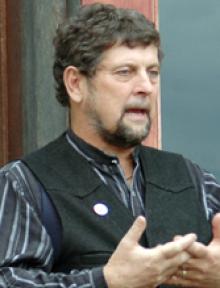


Gary Nabhan

How can we feed ourselves as the climate becomes unstable? Let's find out more with Gary P. Nabhan. Gary is a research scientist at the Southwest Center at the University of Arizona. He's the author of the new book “Growing Food in a Hotter, Drier Land: Lessons From Desert Farmers in Adapting to Climate Uncertainty.”

Gary's book about adapting to a hotter, drier world comes out of a combination of his writing and his own practical experience growing. He tells us about their experimental farm.

A few years ago, James Lovelock released a map of the world in 2100. It was based on climate projections made by the Tyndall Centre in the UK. Giant bands of deserts appeared around the world in the sub-tropics. Southern European countries like Spain and Italy became more like North Africa. China's deserts expanded, as did the dry hot weather of the U.S. South West, and Mexico.

Do you see Arizona growing conditions becoming more prevalent in the world? Gary cautions not all places will become hotter and drier. Some will become much wetter. But those people will also have to adapt their growing conditions.

He hopes to see a network of grass-roots food producers sharing information about what plants survive extreme weather and climate the best. Part of that is ensuring the widest possible biodiversity. Nabhan suggests we could start by saving the hundreds of thousands of varieties of seeds and seedlings found in all the catalogs, before they disappear. We never know which we will need.

What kind of things can we do to adapt for food production in uncertain times?

The big issue in the Southwest is water. But that's huge in northern India, the whole Middle East, and North Africa.

Gary Nabhan, did research in the Middle East. He raises the solutions used by farmers around an oasis in the desert. Air temperatures can be up to 140 degrees Fahernheit, and soil temperatures even hotter. And yet there are layers of plants, from the high palms or date trees, down through layers of shade and cooling, perhaps to low berries at the bottom.

That gave me some hope. We can grow food, if less of it, in a hotter world.

The Saudi's were using lots of oil to desalinate sea water, and them pumping vast amounts into fields to grow their own wheat. That is hardly a sustainable path.

Sticking with the Middle East for a minute, it's one of the world's population hot spots. At least half the population are kids under 21. Can those countries feed themselves in the future without fossil fuel revenues? If we go off oil to save the climate, what happens to those places and peoples?

Gary Nabhan sounded the alert about seeds - not just farm seeds, but plants we need to stabilize the soil and the ecosystem. Gary co-founded a non-profit devoted to saving seeds. And we talk about the pollinators who help us produce fruits, nuts and vegetables.

I ask Gary about food forests. What are they?

One big problem that concerns me is when the temperature gets too hot for the needs of our food plants. Hot nights in the spring can prevent fruit setting, or the recent flash-drought in the mid-West reduced crop yields. How serious is this?

At what temperatures do plants stop growing and start dying? You'll be hearing more about this on Radio Ecoshock.

Some scientists worry we could see a quick jump in temperatures. For example, flipping to an El Nino cycle could release more heat from the ocean, or we could get a methane burst from the Arctic. What would happen to our food production? Gary sees this as a real possibility, and a major risk which demands we become more prepared, if we can. His book can help.

And I ask Gary: What changes can we make as a society to help us get food production ready for climate change?

When you think of how deeply invested we are in agri-business, and the tools of the mid-1900's, we have to consider some harsh questions. Do you think humans can avoid a period of mass starvation in the coming decades?

Listen to/download the Gary Nabhan interview here.

THE GREAT COLORADO FLOOD

Before we talk with Gerri Williams, who left the busy capital of America - let's look at the latest climate-on-steroids rainfall event in Boulder Colorado.

Extraordinary extreme rainfall events are popping up all over the world. The latest was an astounding dump of water and severe flooding in Boulder Colorado.

Here is a report from Weather Underground weather historian Christopher Burt, published September 12th:

"An all-time 24-hour record rainfall of 9.08” (as of 6 p.m. 9/12 MT--almost double the previous record) has deluged the city of Boulder, Colorado resulting in widespread flash flooding and the deaths of at least three people so far. 12.27" has accumulated since Monday 5 p.m. (September 9th). Needless to say, these are numbers that surpass most tropical storm events. Other locations in the Boulder and Rocky Mountain Front Range have picked up over 11” of precipitation in just the past 24 hours.

According to the Western Regional Climate Center’s historical data set, Boulder’s former 24-hour precipitation record was 4.79” on July 31, 1919. The September record was 3.05” on September 4, 1909. Records began in October 1893 with some months missing.

Boulder is the most at-risk city for flooding in Colorado, due to it's position. There have been at least a dozen major floods over the past 100 years. This was rated as a 1 in 100 year flood by the National Weather Service. Still, the rainfall was DOUBLE the previous record for 24 hours."

End quote from Chris Burt.

And this wasn't just Colorado. One place in the New Mexico's Guadalupe Mountains got 11 inches of rain in 24 hours. Incredible.

Here is more from Radio Ecoshock guest Jeff Masters at wunderground.com:

"Devastating flash floods swept though numerous canyons along the Front Range of Colorado's Rocky Mountains Wednesday night and Thursday morning, washing out roads, collapsing houses, and killing at least three people. The flood that swept down Boulder Creek into Boulder, Colorado was a 1-in-100 year event, said the U.S. Geological Survey. A flash flood watch continues through noon Friday in Boulder.

According to the National Weather Service, Boulder's total 3-day rainfall as of Thursday night was 12.30". The city's record rainfall for any month, going back to 1897, is 5.50", so this week's rainfall event is truly extraordinary. Some other rainfall totals through Thursday night include 14.60" at Eldorado Springs, 11.88" at Aurora, and 9.08" at Colorado Springs.

These are the sort of rains one expects on the coast in a tropical storm, not in the interior of North America! The rains were due to a strong, slow-moving upper level low pressure system to the west of Colorado that got trapped to the south of an unusually strong ridge of high pressure over Western Canada.

This is the same sort of odd atmospheric flow pattern that led to the most expensive flood disaster in Canadian history, the $5.3 billion Calgary flood of mid-June this summer. The upper-level low responsible for this week's Colorado flood drove a southeasterly flow of extremely moist tropical air from Mexico that pushed up against the mountains and was lifted over a stationary front draped over the mountains. As the air flowed uphill and over the front, it expanded and cooled, forcing the moisture in it to fall as rain."

CAROLYN BAKER FROM BOULDER


We just have time for a quick check in with a favorite Radio Ecoshock guest, Carolyn Baker from Speaking Truth to Power, based in Boulder Colorado. Carolyn is an experienced news person, with her own private need-to-know news service.

She was right at ground zero for this extreme rainfall event and reported as the rain continued to fall, with the number of dead and the total damage still unknown. We get a quick glimpse of this major weather event and tragedy for the residents of Boulder and Colorado.

Carolyn will be back next week. I think this extreme event is close to Hurricane Katrina in New Orleans for it's local damage, but also the international implications. The Governor promises to rebuild everything. We'll talk about what can be replaced, and what is changed forever.

GERRI WILLIAMS - LEAVING THE BIG CITY

Then we talk with long-time Radio Ecoshock and Earthbeat correspondent and volunteer Gerri Williams. Gerri has left Washington D.C. for the Mid-West. She left a job at a local college, with good roots into alternative agriculture. Why?

What does it take to leave the big city? Many of us dream about it. We'll be hearing from those who do. Gerri does a great job of raising the difficult issues - both personal and social, involved in changing our lives toward sustainability and survival.

I should be out of Vancouver by October 1st. Radio Ecoshock will continue from the mountains.

We finish up with a bit of Jamaica. This climate music is from a You tube video posted by undpjamaicatv. It's called Voices for Climate Change with various Jamaican artists, directed by Robin Chin.

I'm Alex Smith, that's it for Radio Ecoshock. Let's meet again next week.

Wednesday, May 8, 2013

Fracking: Sacrifice Zones of the American West

Fracking: Sacrifice Zones of the American West. What can other countries expect? Four voices from the Bakken shale lands. Polluting oil & gas extraction impacts in Colorado, Wyoming, Montana & North Dakota. The dark side of the fracking boom. Radio Ecoshock 130508 1 hour http://tinyurl.com/cgkhq8s

INTRODUCTION: FRACKING HELL

Tonight and tomorrow, gas flares burn over the dry and dryer lands of the Western United States. There is a fracking boom exploding rock ten thousand feet down, and miles all around. In Colorado, North Dakota, Montana, and Wyoming villages become overnight towns, big trucks fill small roads, gas floats over prairie and foothills. The last waters in great rivers, reservoirs, and aquifers are poisoned, 50,000 years worth in ten years, billions of gallons a day. The frack water kills the ground it touches, or disappears forever into subterranean Earth.

As climate change works against the browning landscape of the American West, crazed humans use all the water they can find to make still more methane and carbon dioxide, to make more money with oil and gas.

We go to those sacrifice zones. You hear four voices. The ranchers and a native American woman are part of an organization calling for regulations and safety protection. Instead they have the enabling state where fossil fuel companies control the capitol, selling the dream of wealth to the people, while their environment careens beyond reclamation. Farming may collapse, and without drinking water, communities will eventually leave too.

It's happening all over the world, the invasion of the well-drillers, coming as close as 500 feet to homes, like-it-or-not. Ask the disgusted people from Queensland Australia about the fracking blight, or coal seam gas, as they would say. Get ready Britain, where the government sees fracking as salvation. Eastern Europe will be conquered and fracked. People all over North America, and all over the world, need to listen to our speakers today. Because when it's gone, it's gone.

Listen to this Radio Ecoshock Show right now, courtesy of Archive.org


FREE MP3 DOWNLOADS THIS WEEK

Listen to/download this Radio Ecoshock Show in CD Quality (56 MB) or Lo-Fi (14 MB)

Free audio downloads: interviews with our guests -

Robert LeResche of Powder River Resource Council and the Western Organization of Resource Councils in CD Quality or Lo-Fi

Bob Arrington, Chair of the Energy Committee of the Western Colorado Congress in CD Quality or Lo-Fi

Pat Wilson, 4 generation rancher and member of the Northern Plains Resource Council in Montanna, CD Quality or Lo-Fi

Theodora Bird Bear, Fort Berthold Reservation & Dakota Resource Council in CD Quality or Lo-Fi

MUSIC CREDIT:

All music in this program is by the Desert Dwellers, from their new album "Far From Here" - courtesy of Black Swan Sounds. Find the band here.

ROBERT (BOB) LERESCHE

Bob LeResche is a biologist with lost of experience in Alaska. He twice held cabinet level positions, being in charge of natural resources, executive director of Alaska's Power Authority, and then the state's coordinator for the Exxon Valdez oil spill. Now Bob and his wife are operating a small ranch in Northern Wyoming.

Bob speaks both for the Powder River Basin Resource Council - an area famous for giant coal mines, but now being flooded with rigs for hydraulic fracturing of shale gas and oil ("fracking"). LeResche also spoke for the umbrella group WORC, the Western Organization of Resource Councils.

Parts of Wyoming have become like overnight boom towns as the fracking rigs move in. Bob tells us the previous coal bed methane operations have mostly shut down because of gas fracking. That coal bed methane is mostly in shallower ground, and tends to reduce water in Wyoming's vital aquifers - as does fracking. Since 1992, when the State ruled water use for fossil fuel development was a "beneficial use" - the companies have been pumping "unlimitted" amounts of groundwater, with no accounting or cost. Nobody knows how much has been taken out, or what remains.

From 1997 to 2012, LeResche says a MINIMUM of 309 billion gallons of water was pumped out. Most of that was dumped on to the ground, with little being reinjected. The waste water was generally contaminated with various toxic materials, plus the salt from underground. Even some radioactive materials. Such water dumping destroyed pastures, croplands, and nature zones.

Some of these reservoirs recharge at 0.15 inches a year. That means it would take over 50,000 years to recharge what was taken out in ten years by the Wyoming energy industry. Bob LaResche worries agriculture may be harmed due to lack of water in the future. Even some communities may run out of water and have to "disappear".

About 300 deep horizonal fracking wells were drilled in the Powder River Basin since 2010, with thousands more coming.

After it's all done, Wyoming has at least 100,000 unplugged bore holes, which can lead back to contamination of the underground water supplies. LeResche feels Wyoming is a "sacrifice zone" for the energy needs of the rest of the country, and big company profits.

WORC, the Western Organization of Resource Councils, has put out a report on the misuse of scarce water supplies called "Gone Good, Fracking and Water Loss in the West" Find that here.

BOB ARRINGTON

Bob is a retired engineer living in Battlement Mesa. That's in Colorado, where up to 200 natural gas wells have been proposed in that one area alone. Bob is Chair of the Energy Committee of the Western Colorado Congress. He testified before the Colorado Oil and Gas Conservation Commission. Bob champions the health impact assessments of oil and gas, has led local air monitoring efforts, and takes international media around the gas fields. Or find the Western Colorado Congress on Facebook here.

Each of these deep fracking wells can use from 3 to 6 million gallons for every "frack job" - when the explosives shatter the rock below. A single well may be fracked several times. Add this all up for tens of thousands of wells and you get an idea of the tremendous amount of water required by this industry.

In Colorado, the MacKenzie Report showed health impacts from bad air quality up to half a mile away from a fracking operation. But since most land-owners in the United States do NOT own the sub-surface rights, an energy company has the right to come very close to your home and set up a noisy, dangerous, and polluting fracking well. In Colorado they just got legislation requiring a 500 foot setback from homes. Five hundred feet away from your bedroom window!

Some fracking wells are even closer, if the homeowner agrees. Remember, the energy companies do not need your permission to drill those wells. You could be on a peacful ranch, farm, or country retreat and suddenly find yourself in industrial hell for a decade or two. Many people give up and try to sell out - but who would want to buy. There is no compensation for those lost dreams and homes.

Air quality tests of fracking operations in Colorado found lots of volatile organic compounds - like the poisons benzene and toluene, and carcinogens like xylene. The University of Colorado is planning a 3 year study, but that's way too slow and too late. A NOAA study has already showed benzene coming from fracking sites. Some of the fracked water turns out to be radioactive, and contains heavy metals plus salt. Some of it is just dumped on the ground, killing the vegetation. Some is trucked as dangerous cargo over America's highways. Accidents happen.

Doctors in Colorado were poorly trained to recognize health impacts from fracking, and industry-friendly legislation makes it illegal for them to share information about cases.

None of this counts the masses of methane billowing out of fracking wells. Methane isn't harmful to health, but sure hurts the global atmosphere, being at least 20 times more powerful a greenhouse gas than carbon dioxide.

Colorado is drying out, with a recent record of super fires. It's also been hit with drought - even as the fracking industry drains it dry. The State of Kansas won a lawsuit against Colorado for withholding water. The Army Corps of Engineers has agreed to drain out some reservoirs to serve the energy industry.


P.S. Blogger Peggy Tibbetts has a few articles on the Parachute Creek spill and Bob Arrington here.

PAT WILSON

Next up is a long-time rancher along the Missouri River near Bainville Montana. Pat Wilson's family has been there for over a century. Pat can tell us about the oil and gas rush in the famous Bakken shale field, and draining huge volumes of water from the Missouri River. He is a member of the Northern Plains Resource Council.

Pat does get some money from oil wells right on his family land. But he still thinks the fracking boom is a danger to the community and the environment. He's particularly concerned that the State Legislature is allowing water allocated for agriculture to be used for fracking instead.

The oil-bearing shale in his area is about 9,000 feet (2700 meters) below the surface. You can't see the Bakken oil shale formations on the ground above. There are about 800 Bakken wells in Montana, and another 8,000 in North Dakota. Companies are proposing seven times more wells!

The region only gets ten to fourteen inches of rain annually, so water is scarce even without all this drilling. Even when the State of Montana found 13 illegal water depots, instead of leveling charges, they made it easier for energy companies to appropriate the water!

Pat tells us about the social impacts of having thousands of people showing up, many temporarily, in the area of his home village of Bainville - former population 300. Schools and sewer systems can't keep up. There are two "man camps" on either side of town. There is even talk of building a Marriot hotel there!

You can find a good film about the social impact in this film by the University of Montana.

Read more about plans for super-development of Bainville in the Billings Gazette here. (Plus there's a video of Pat Wilson)

Pat Wilson isn't sure if he is living in a dream or a nightmare.

THEODORA BIRD BEAR


Beyond the old-time ranchers, humans have been living in the American North West for more than ten thousand years.

Theodora Bird Bear is a lifetime resident of the Fort Berthold Reservation. She serves on the Board of Directors for the Dakota Resource Council.

This is a fascinating interview, for it's insight into how some Native Americans feel about the fracking boom. Theodora tells us some tribal leaders are also involved in businesses serving the fracking industry, so there may be a conflict of interest.

When she attends local meetings of concerned citizens, white people complain they feel like they are being "invaded". "Now they know how we feel" says Theodora, when a federal government is pushing a migration into the West.

We talk about the impact on wild animals. With all the noise, trucks, new roads - deer are hard to find. We don't know how many have been poisoned drinking dumped frack water. In fact, without telling local residents, one company was digging a big pit right near the town to dump oil drilling waste. That was stopped when word got out.

The Fort Berthold Reserve is under Federal Government administration, not State - but Theoroda tells us there is precious little regulation going on. Don't miss this interview! Plus - Theodora offers us some wisdom on how to cope with and get out of this fracking mess.

WHAT COULD BE CRAZIER THAN TAKING WATER FROM THE DROUGHT-STRICKEN WEST?

As the American West continues it's breath-taking drought, what could be crazier than draining away the rivers, reservoirs and aquifers to power the underground war of fracking. To poison the last of the fresh water, with the great rives of the Colorado and the Rio Grande already a dry gulch before they reach the sea. All to fill the sky with more oily carbon dioxide, and gigatonnes of methane, a more powerful agent of climate change.

This is also a human positive feedback effect. The West, which has a history of natural drying cycles, has been triggered into another event by global warming. At the same time, we remove billions of gallons of water from any human reach, and right out of the water table, by polluting it an injecting it deep underground. It's a suicidal reinforcement of the drought.

And of course the product is more and more fossil fuels to heat up the atmosphere even more. It's classic positive feedback cycle created by human industrial civilization Hell-bent on sefl-destruction.

WATCH OUT IN OTHER COUNTRIES: IT'S COMING TO YOU People in the UK, where Saint Maggie Thatcher saved the country with the "dash for gas' in the North Sea, are now being sold on the new miracle of fracked gas. Hopefully they'll hear about the American experience in time to avoid their own sacrifice zones. I'm asking my podcast and online listeners in Europe to pass this program around as well. We may even have some warnings for Canada and Australia, where fracking and coal bed seam gas capture are already well underway.


If you have oil or gas bearing shale deep beneath your country, act early to prevent this trans-generational tragedy. See the new film by Josh Fox, Gasland II. Organize your own groups. Find more info on industry push-back on this film, plus the trailer, here at DeSmog Bog.

Let your elected representatives feel the heat. Protect your water if you still can. Protect your climate. Stop this fracking madness.

I'm Alex Smith. Try out our library of files at ecoshock.org. They are all free. You can donate if you want to. Look for my interview with Robert Howarth - how fracked gas ends up emitting as much greenhouse warming power as burning coal. The Howarth interview and a speech he gave as ASPO (the Association for the Study of Peak Oil and Gas) are both in my Radio Ecoshock Show for November 23, 2011 - found here.

It turns out "natural" gas as "clean fuel" is a bridge to the nowhere of extinction.

THANK YOU LISTENERS!

Thank you to the listeners who tune in each week, taking your chances on what you find. Opening your mind. I'm Alex Smith, and I am grateful you are there.

Plus a special thanks for those who donated or became a subscribing member for the show. (Find out about that here.) I've used a little of your money to get hardware and software to translate some Radio Ecoshock interviews and shows into Youtube videos - we'll reach a whole new audience.

Find my first-try video, Nicole Rycroft of Canopy on the Boreal Forest - right here.

Or if any problems, directly on Youtube.